
Lieferung heute & morgen

Qualitätsgarantie

Willkommens-Angebote freischalten: KOSTENLOSE Lieferung | Bis zu 80 % RABATT | Kostenlose 30-Tage-JoyPlus-Testphase
App herunterladen
A remote-controlled drift car for kids can bring racing, slalom courses and stunts to the living room, courtyard or other level outdoor surfaces. However, eye-catching LED wheels, high top-speed claims and terms such as “4WD” do not automatically mean a vehicle is the right choice. What matters is a controllable speed, a suitable surface and replacement parts that are genuinely available for everyday use.
This buying guide from the Joybuy Product Recommendation Officer provides an objective overview of the most important specifications and shows which models may suit different usage profiles.
A 4WD RC car transfers power to all four wheels. This can be useful for drifting and setting off on slightly uneven surfaces. However, an RC drift car with narrow drift tyres is not automatically a genuine off-road vehicle. For grass, gravel or wet surfaces, buyers should check the ground clearance, tyre tread and whether the model is explicitly described as suitable for off-road use.
A remote-controlled car with LED lights is highly visible in low-light conditions and certainly stands out visually. However, the lighting says nothing about range, battery life or steering stability. Details about the battery, charging method, run time and replacement tyres are more relevant for regular use.
A stunt car with 360° drifting can be more demanding to control than a conventional RC racing car. For children and beginners, two speed settings, responsive steering and—where available—an adjustable gyroscope are useful features. Without them, a vehicle travelling at high speed can quickly collide with furniture, walls or kerbs.
For controlled drifting on smooth floors, interchangeable tyre sets are practical. Drift tyres make sideways movement easier, while racing tyres can provide better straight-line stability and grip on level surfaces. Before buying, check the following:
A compact 1:24-scale vehicle is better suited to smooth floors and limited spaces. Larger models require more room and can generate greater force in collisions.
An RC car with a rechargeable battery generally costs less to run than a model powered by disposable batteries. Important features include a rechargeable lithium battery, clear charging instructions and protection against overcharging and deep discharge, where specified by the supplier.
Actual run time depends on speed, surface and driving style. The second model presented below is listed as offering approximately 20 to 40 minutes of play time per charge. This should be treated as a guideline rather than a guarantee. For longer sessions, a separately available replacement battery can be worthwhile, provided it is compatible and expressly approved for safe use. The battery should only be charged under adult supervision and in accordance with the manufacturer’s instructions.
For a remote-controlled car for children aged 6 and over, parents should consider more than just the stated age range. Size, speed and ease of operation are equally important. Before the first drive:
A CE marking does not replace supervision. For younger children or busy outdoor areas, an RC model may still be unsuitable despite having an appropriate stated age range.
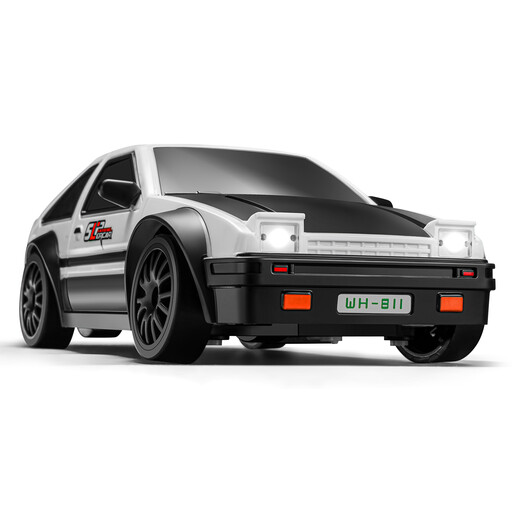
Why does it suit this profile? This compact model is aimed at children and beginners who want to try drifting and simple courses on a limited surface. Two speed settings make it easier to get started.
The description lists interchangeable drift and racing tyres as well as a low-speed setting. This makes it possible to switch between practice sessions and races.
4WD drive, ABS body, two speed settings, adjustable gyroscope and LED lights at the front and rear.
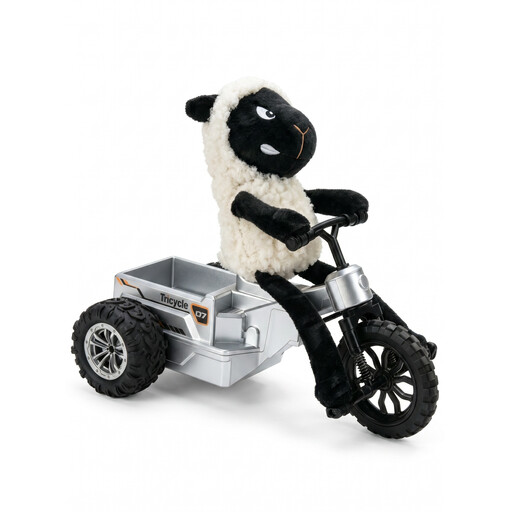
Why does it suit this profile? This model is appealing to users looking for a rechargeable vehicle with multiple play modes, drift tyres and racing tyres. According to the product description, it is intended for children aged 6 and over.
The specifications mention USB charging, a removable battery and two sets of tyres. This provides greater flexibility than a vehicle with just one driving mode.
4WD drive, LED lighting, mechanical steering structure, lithium battery and a stated run time of approximately 20–40 minutes per charge.
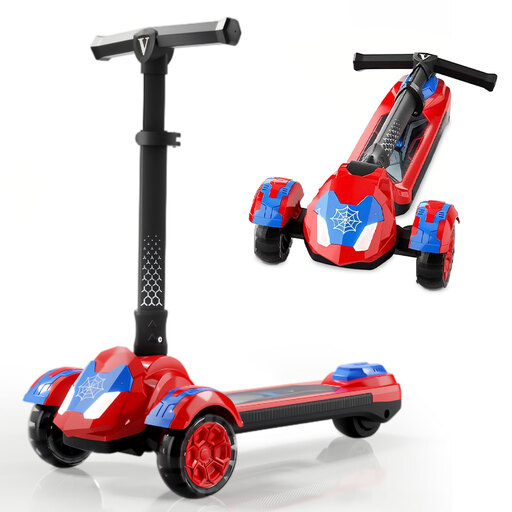
Why does it suit this profile? This product is not a remote-controlled toy car, but an alternative for families looking for an outdoor toy that encourages active play and who do not require RC functionality.
This clear classification prevents false expectations: there is no remote control, battery or drift mode.
Three wheels, non-slip deck, height-adjustable handlebar and illuminated wheels according to the product specifications.
We have compiled an up-to-date selection of products that can be compared based on their features, intended use and available product information.
That depends on the speed, vehicle size and controls. The supplier’s stated age range is an important indication, but it does not replace a parent’s own assessment. Beginners should start at low speed on a clear, level surface. Adult supervision is particularly important for models with powerful motors or high-speed stunt functions.
Run time depends on the model and how it is used. The 1:18 model mentioned above is listed as offering approximately 20 to 40 minutes per charge. Frequent full-throttle driving, carpet, inclines and repeated changes of direction can reduce battery life. After use, the battery should be stored according to the manufacturer’s instructions and not left connected to the charger indefinitely.
Drift models generally perform best on smooth, dry surfaces such as tiles, laminate, concrete or asphalt. Carpet, wet grass, sand and coarse gravel can place greater strain on the steering and drive system. For indoor racing, leave sufficient clearance around furniture; outdoors, private areas away from traffic are preferable.