
Lieferung heute & morgen

Qualitätsgarantie

Willkommens-Angebote freischalten: KOSTENLOSE Lieferung | Bis zu 80 % RABATT | Kostenlose 30-Tage-JoyPlus-Testphase
App herunterladen
Choosing an RC drift car can be a challenge given the vast array of models and technical specifications. This guide is designed to provide you with objective information and clear direction. It analyses the crucial features you should look for and presents a selection of vehicles suited for different needs. The goal is to provide you with a solid basis for making an informed purchasing decision.
To find the right model for your needs, it helps to understand a few technical fundamentals. The following points are essential for a controlled and satisfying drifting experience.
A 4WD RC drift car (all-wheel drive) is often the preferred choice for drifting. Powering all four wheels allows for better vehicle control during the controlled oversteer required for a drift. This makes it significantly easier for beginners to learn the technique.
Another key feature, especially for a beginner's RC drift car, is an integrated gyroscope. An RC drift car with a gyro uses a sensor to detect unintentional rear spin-outs and corrects them with automatic counter-steering inputs. This stabilises the vehicle, enabling more precise and sustained drifts without the driver needing years of experience.
The scale indicates the size ratio of the model to the original vehicle. The 1:24 scale RC drift car has established itself as a popular choice. These models are compact enough for indoor use in garages or large living rooms, yet durable enough for smooth outdoor surfaces like asphalt car parks.
Ensure the vehicle includes two sets of tyres: special low-friction hard plastic drift tyres and high-grip rubber tyres. This interchangeability transforms a specialised drift vehicle into a versatile racing car, significantly expanding its range of use. This elevates it from a simple hobby device to a high-end drift car toy for discerning teenagers.
A proportional 2.4 GHz remote control is standard today. It allows for fine-tuned control over speed and steering angle, which is essential for remote control car drifting. Unlike simpler on/off controls, it enables precise manoeuvres. Powerful, high-RPM motors provide the necessary force to spin the wheels and initiate the drift.
Here is a curated selection of models that stand out for their specific features and equipment packages.
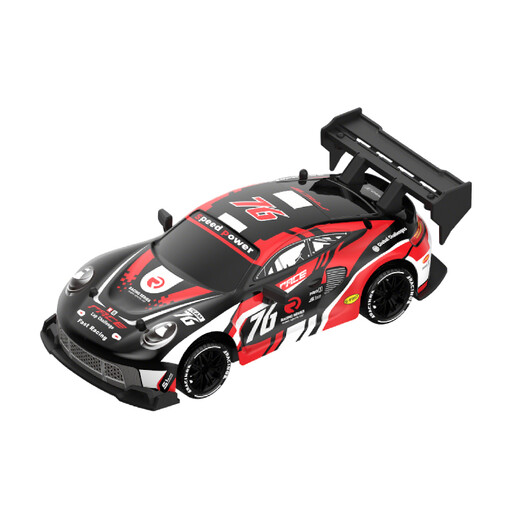
Why it stands out: This model combines a classic sports car design with a powerful motor. At 25,000 RPM, it delivers impressive speed, enabling fast drifts and races.
Pros:
Who it's for: Beginners and younger drivers aged 8 and up who want a fast, visually appealing RC car that is suitable for both initial drift attempts and regular racing.
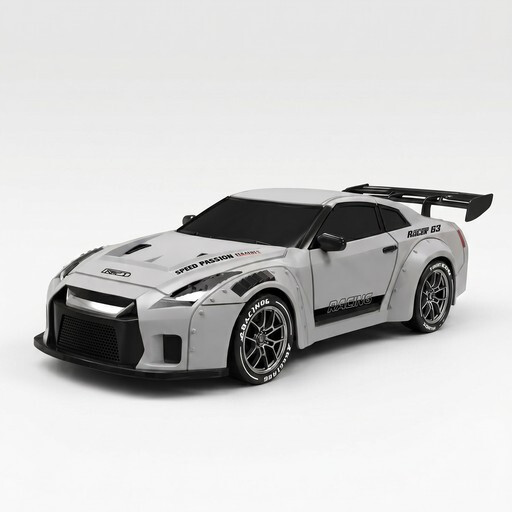
Why it stands out: This model is aimed at ambitious drivers. The adjustable gyro stabiliser and professional-grade steering servo allow for exceptionally precise control. The gyro's sensitivity can be adjusted to suit your driving style and track conditions.
Pros:
Who it's for: Teenagers and adult RC enthusiasts looking for a vehicle with advanced tuning options and professional components for a sophisticated drifting experience.
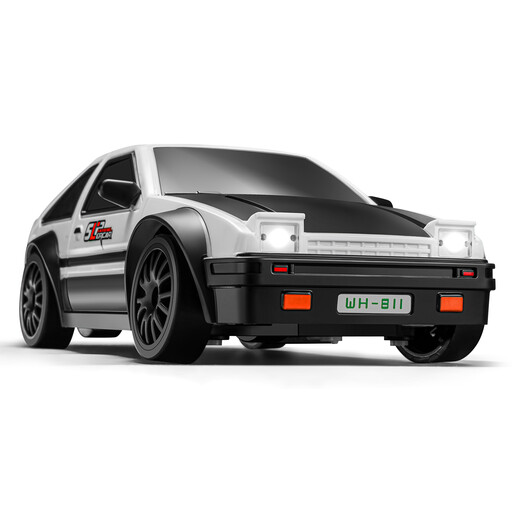
Why it stands out: This vehicle represents a well-balanced package, combining the most important technologies for RC drifting. It features a gyro stabiliser, all-wheel drive, and an independent suspension system that ensures stable handling on uneven surfaces.
Pros:
Who it's for: Hobbyists and advanced beginners looking for a reliable RC drift car with all the necessary features to improve their skills.
If precision drifting isn't your main interest but you share a fascination for remote-controlled vehicles, our selection of functional models might be for you. Discover highly detailed remote-controlled construction vehicles and trucks that impress with their realistic movements and functions.
An RC drift car with a gyro (gyroscope) uses an electronic sensor to measure the vehicle's yaw rate (rotation around its vertical axis). If the car begins to spin out unintentionally, the gyro system automatically sends a counter-steering input to the steering servo. This stabilises the vehicle and helps the driver maintain control during a drift. This feature is especially helpful for beginners.
In theory, you can drift with many rear-wheel or all-wheel drive RC cars, but the result is often uncontrolled. True RC drift cars are specifically optimised for it. They feature very low-grip hard plastic tyres, a powerful motor, often an all-wheel drive (4WD) system, and a chassis geometry designed to facilitate controlled oversteer. A standard RC car with rubber tyres is more likely to flip over or lose traction abruptly.
The 1:24 scale is an excellent choice for beginners. Models of this size are affordable and compact enough to be used safely indoors, where you can practise drifting on smooth floors. At the same time, they are large enough to be fun outdoors on suitable surfaces. Larger scales like 1:10 often offer more power and tuning options, but they are also more expensive and require more space.