
Lieferung heute & morgen

Qualitätsgarantie

Willkommens-Angebote freischalten: KOSTENLOSE Lieferung | Bis zu 80 % RABATT | Kostenlose 30-Tage-JoyPlus-Testphase
App herunterladen
The thrill of a perfectly controlled drift is undeniable, but the path to the right model is often paved with disappointment. Many beginners invest in a remote control drift car only to find it doesn't meet their expectations and quickly ends up collecting dust. Before you make a decision, it's crucial to understand the common pitfalls that can spoil the fun. Often, it's the seemingly minor technical details that make the difference between joy and frustration.
Three common problems lead to bad purchases:
To ensure your new model delivers the performance you want, you should look for a few fundamental technical features. These characteristics separate a simple toy from a serious hobby-grade device.
A 4WD RC car (all-wheel drive) is essential for a controlled drifting experience, especially for an RC drift car for beginners. In a 4WD system, the motor's power is distributed to all four wheels. This allows the driver to put the vehicle into a controlled drift with targeted throttle inputs and maintain balance while sliding. In contrast, rear-wheel-drive models tend to spin out uncontrollably, which quickly leads to frustration. All-wheel drive provides the necessary stability and predictability in handling.
The type of control system is another critical point. A proportional 2.4 GHz remote control is the standard for ambitious drivers. It enables seamless and precise regulation of speed and steering angle, allowing you to initiate, hold, and correct a drift with exactness.
The 1:24 RC car scale has established itself as a popular sweet spot for beginners. These models are compact enough for indoor use on smooth floors but large enough to offer detailed aesthetics and stable chassis geometry. An additional feature like an RC car with lights not only enhances the visual appeal but also allows for use in low-light conditions.
A key advantage of many high-quality sets is the inclusion of two different tyre sets:
The ability to easily swap the tyres doubles the vehicle's versatility, making it an adaptable remote control car for adults and teens alike.
Based on the criteria above, we have identified several models that are well-suited for different user profiles.
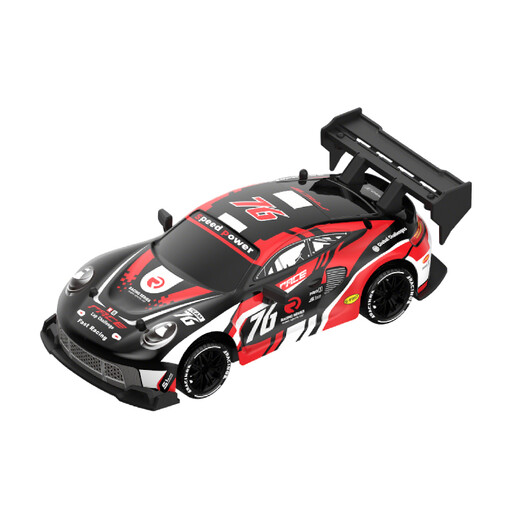
Why This Fits Their Persona: Offers all the essential drift features, like all-wheel drive and interchangeable tyres, at an accessible price point. Ideal for a first taste of the RC drifting world without a major investment.
It comes with a dedicated set of drift tyres and a set of racing tyres, so there's no need to compromise on performance. The 4WD drivetrain provides the necessary control right from the start.
Provides a straightforward entry into two driving disciplines (drifting & racing) with a simple tyre swap. The ready-to-run (RTR) set includes everything needed to get started immediately.
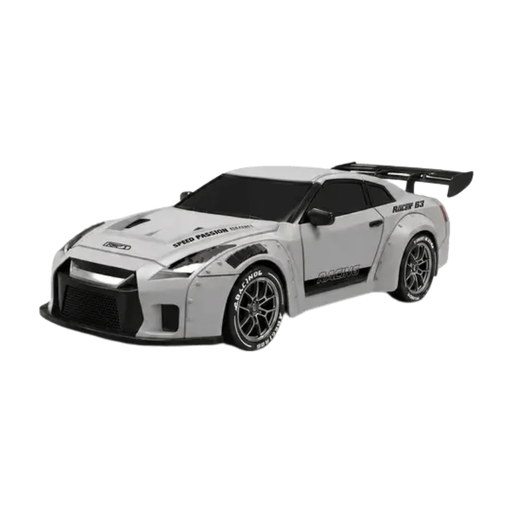
Why This Fits Their Persona: Appeals to drivers who value precise control and technical refinement. The gyroscope system actively assists in stabilising the vehicle, enabling even more exact drifting manoeuvres.
The proportional 2.4G control and adjustable gyro stabiliser prevent the uncontrollable spin-outs typical of basic models, elevating the handling to a higher level.
An adjustable gyroscope and professional servo steering deliver a high-precision, customisable driving experience. The independent wheel suspension further enhances road holding.
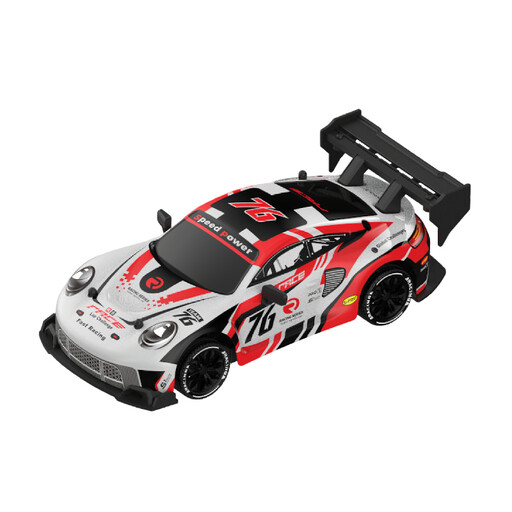
Why This Fits Their Persona: Perfect for users seeking a visually striking model for driving fun by day or night. The eye-catching lights make it a standout and extend the fun into the evening hours.
The integrated body lighting is more than just a gimmick; it's a functional feature. It allows for use at dusk and indoors, significantly increasing its utility.
Vibrant, colourful LED light effects create impressive night-driving scenes. The model combines all key drift features (4WD, interchangeable tyres) with a high visual impact.
We have compiled a complete, real-time list of products that fully satisfy these strict selection criteria and UK safety regulations.
The main difference lies in the setup and equipment. An RC drift car is specifically designed for controlled sliding through corners. It typically features a 4WD drivetrain for stability, sensitive proportional controls, and special hard-plastic tyres with very low grip. A normal RC racing car, on the other hand, is built for maximum speed and grip, using soft rubber tyres to achieve this.
Battery life depends on the battery's capacity and the intensity of use. For most 1:24 scale models, you can expect a run time of about 20 to 40 minutes per charge. Many sets include a USB-rechargeable lithium battery, which makes charging straightforward.
Yes, 1:24 RC car models can be driven outdoors, but they are best suited for smooth, clean, and flat surfaces like asphalt, concrete, or paving stones. They are not suitable for uneven terrain such as grass, gravel, or sand due to their low ground clearance and suspension designed for flat surfaces.