
Lieferung heute & morgen

Qualitätsgarantie

Willkommens-Angebote freischalten: KOSTENLOSE Lieferung | Bis zu 80 % RABATT | Kostenlose 30-Tage-JoyPlus-Testphase
App herunterladen
The search for a high-performance 4WD off-road RC car can quickly become overwhelming. Whether it's a gift for a tech-savvy teen or your own entry into the RC hobby, the market is flooded with models whose marketing promises often suggest more than the technology can deliver. Many buyers invest in a vehicle that shows its first defects after just a few off-road runs. This guide will help you identify the crucial features and avoid common buying traps.
Before we dive into the technical details, it's important to understand the most common issues that lead to disappointment. Knowing these pitfalls will help you search more effectively for a durable, high-performance model.
To make an informed decision, you should check three key technical aspects. These are the primary factors that determine the performance, durability, and enjoyment of your RC car.
The drivetrain is the heart of any off-road vehicle.
For beginners and most hobbyists, a brushed motor is an excellent choice. It delivers high torque at low RPMs, which is advantageous for climbing and driving on rough terrain. Models marketed as RC cars for adults often rely on this proven and robust technology. While brushless motors offer higher top speeds, they are more expensive and are generally aimed at experienced drivers.
The term Ready to Run RC car (RTR) suggests that everything needed to get started is included. However, you should always check the package contents carefully. A complete set should include the following:
Check if batteries for the remote controller need to be purchased separately. A good RTR package saves you from making additional purchases and allows you to get started right away.
Instead of making a one-size-fits-all recommendation, we have identified models tailored to specific user profiles and their requirements.
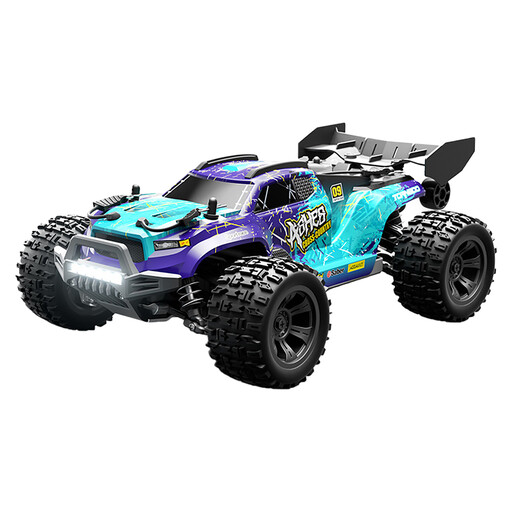
Why This Fits Their Persona: This model offers a balanced combination of performance and durability, ideal for anyone looking for a reliable vehicle for various terrains without investing in a professional-grade model right away.
The reinforced aluminum-metal chassis withstands hard landings. The 7.4V 1500mAh lithium battery provides a solid foundation for extended run times, and its waterproof design is built for driving through mud, sand, and shallow water.
The 4WD all-wheel drive, combined with the high-torque brushed motor, ensures excellent climbing ability and control. The complete Ready-to-Run set allows you to get started immediately.
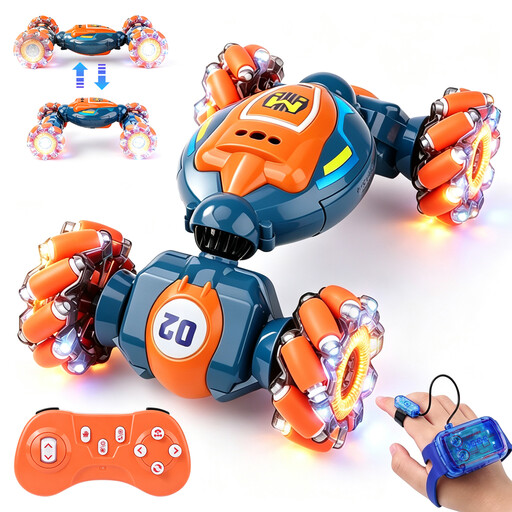
Why This Fits Their Persona: For drivers who care less about pure speed and more about showmanship and innovative controls. This remote-controlled stunt car offers unique manoeuvres and interactive control options.
Instead of relying on a cheap gimmick, this model combines stunt capabilities with a solid foundation. The robust ABS body is shock- and drop-resistant, and the 4WD system provides stability even during complex manoeuvres.
The omnidirectional Mecanum wheels allow for lateral drifting and 360° spins. The dual control system, featuring a classic remote and a gesture-control wristband, offers versatile fun.
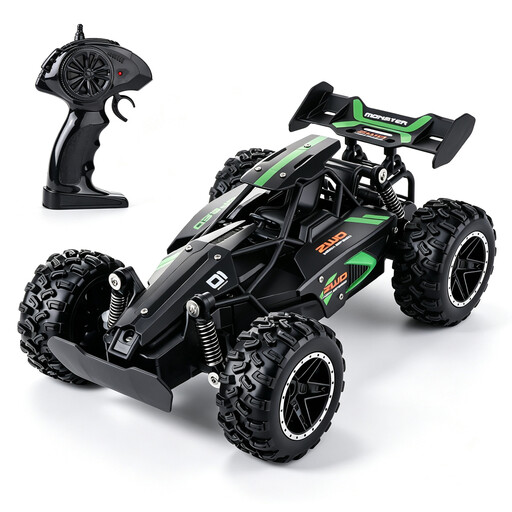
Why This Fits Their Persona: A solid choice for entering the world of RC buggies without a large budget. Ideal for driving on less demanding terrain like lawns, gravel paths, or asphalt.
This model is transparently advertised as a 2WD vehicle. It avoids the battery trap by including two rechargeable batteries, extending the run time to over 30 minutes. Shock absorbers and anti-slip tires provide better durability than basic toy cars.
Excellent value for money for getting started. The package, including two batteries and a USB charging cable, makes it an attractive Ready to Run RC car package for beginners.
We have compiled a complete, up-to-date list of products that fully meet these strict selection criteria and German safety regulations.
1. How long does the battery of a 4WD off-road RC car really last? The actual battery life heavily depends on your driving style and the terrain. While manufacturers often claim 30-40 minutes, a figure of 15-25 minutes is more realistic for aggressive off-road driving. Models with batteries of 1500mAh capacity or more generally offer longer endurance. It's always a good idea to have a second battery on hand.
2. Is a "waterproof" RC truck truly suitable for driving through water? Caution is advised. "Waterproof" usually means the electronics are protected against splashes and rain. However, the vehicle is not a submarine. Deep puddles or streams that rise above the chassis height can cause damage. The vehicle should always be dried and cleaned after driving in wet conditions.
3. What is the difference between an RC buggy and a monster truck? An RC buggy is typically lower, lighter, and designed for speed and agility on relatively flat off-road tracks. A remote-controlled monster truck has larger tires, more ground clearance, and a more robust suspension to climb over large obstacles and absorb jumps. For rough, rugged terrain, a monster truck is often the better choice.