
Lieferung heute & morgen

Qualitätsgarantie

Willkommens-Angebote freischalten: KOSTENLOSE Lieferung | Bis zu 80 % RABATT | Kostenlose 30-Tage-JoyPlus-Testphase
App herunterladen
A RC Offroad Truck 4WD should perform reliably on grass, sand, mud or uneven forest floors. In practice, however, it isn’t just high speed claims or flashy product images that determine everyday usability. Vague battery specifications, fragile drivetrain components or a misunderstanding of water resistance often lead to poor purchases.
This buying guide explains which technical details matter before you purchase a 4x4 RC vehicle, and which model might suit different usage profiles.
With a model described as a “waterproof remote-controlled car”, you should check which components are actually protected. A product description like this doesn’t automatically mean the vehicle can be permanently submerged. After driving through wet grass or mud, the battery, connectors and housing must be dried. The battery should only be charged according to the manufacturer’s instructions.
A powerful motor is of little use if the gears, differential, drive shafts or tyres cannot transfer that power to the ground. For an all-wheel drive RC truck, it’s not just the motor and top speed that matter. Metal bearings, reinforced drive shafts, differentials and a sturdy chassis also affect how the model handles inclines and changing terrain.
“Ready to Run” is used inconsistently. Before buying, the packaging should state whether the driving battery, charging cable and remote control are included. With the 1:18 model described here, a 7.4 V battery with 1,500 mAh and a USB charging cable are part of the package. The pistol-grip remote control requires three AA batteries, which are not included.
A 4WD drivetrain powers all four wheels and can offer advantages over a two-wheel-drive RC buggy on loose surfaces. For off-road driving, the following points are also relevant:
A climbing car isn’t automatically designed for high speed. If you mainly tackle inclines and obstacles, you should prioritise traction and suspension articulation over pure speed figures.
The battery specification consists of several values. 7.4 V describes the voltage of a 2S lithium battery, while 1,500 mAh indicates its capacity. A higher capacity can enable longer run times, but the actual duration also depends on the terrain, motor, driving style and temperature.
Also important are:
A 2.4 GHz remote control is typically used for interference-free single and multi-user operation. Before buying, you should check the range, functions and type of control. A pistol-grip transmitter feels comfortable in the hand for many RC trucks, while a traditional control box may seem simpler for younger users.
For children, the age and safety instructions of the specific product apply. The model described is not suitable for children under three years old and, according to the product information, should only be used under the direct supervision of an adult. Small parts, fast-spinning wheels and the lithium battery require particular attention.
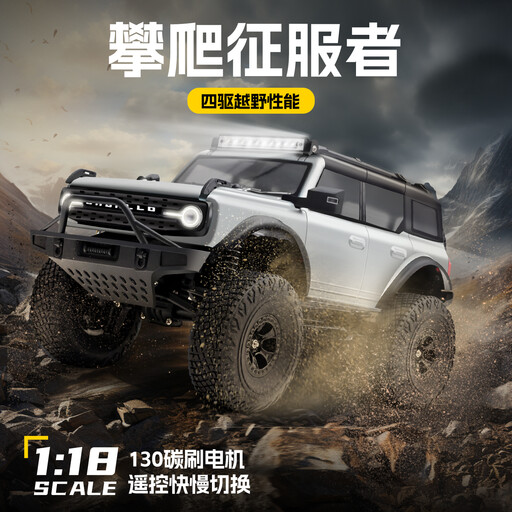
Why this product fits the profile: The 1:18 scale and description as an electric 4WD climbing vehicle appeal to buyers looking for a compact model for their first off-road drives. The available details should be checked before ordering.
The product name explicitly highlights electric drive, 4WD and climbing use. Details on the battery, remote control and water resistance should be verified before purchase.
Compact 1:18 scale; 4WD concept for intended off-road use.
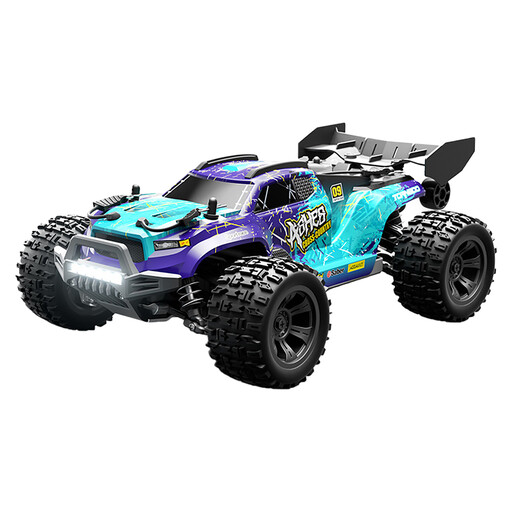
Why this product fits the profile: According to the product details, this model combines 4WD, a reinforced aluminium chassis, differential and metal bearings with shock absorbers and LED headlights. The battery, USB cable and 2.4 GHz remote control are listed as part of the set.
The description names specific drivetrain components rather than just a speed figure. The battery is specified; AA batteries for the remote control need to be supplied separately.
7.4 V 1,500 mAh lithium-ion battery; aluminium chassis, metal bearings and LED headlights according to the product description.
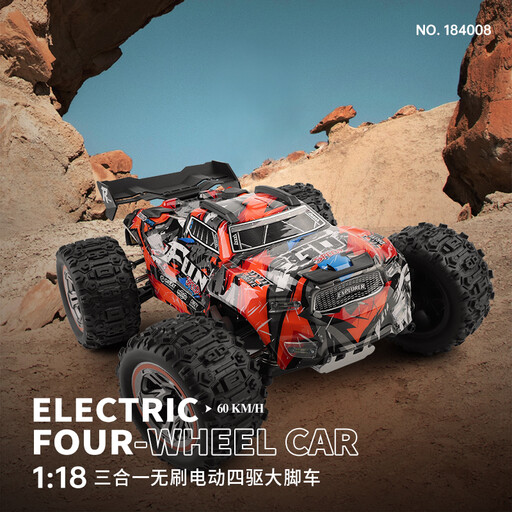
Why this product fits the profile: The product name describes a 1:18 model with a brushless motor, 4WD and a monster truck design. This could appeal to users looking for a specific brushless RC car. Technical details should be checked on the product page.
The name makes the motor type and all-wheel drive clear. Before buying, you should particularly check the spare battery, charger, spare parts and the exact meaning of “3-in-1”.
Brushless drivetrain according to the product name; 4WD and monster truck concept designed for off-road use.
We’ve put together a complete, regularly updated list of products that fully meet these strict selection criteria and the safety regulations in force in the EU.
After every drive, you should clean the tyres, suspension and drivetrain area of sand and grass. Moisture must not be left inside the housing or on connectors. If you hear unusual noises, check the gears and drive shafts. Wear parts such as tyres, body shell, shock absorbers or gears can be more important in the long run than a small price difference at the time of purchase.
A spare battery adds extra cost, but can be more practical than long charging breaks if you use the vehicle regularly. For storage, a lithium battery should not be fully discharged or exposed to high heat. The respective manufacturer’s instructions are definitive.
First, charge the driving battery according to the instructions and insert it. Then put batteries into the remote control, switch on the transmitter and vehicle, and check the control functions on a clear, level surface. Before your first off-road drive, check the steering, braking function and range.
The lifespan depends on driving style, terrain, maintenance and the availability of spare parts. Regular cleaning, dry storage and proper battery use reduce unnecessary wear. A general lifespan cannot be derived from the product data alone.
That depends on the age, speed and safety instructions of the specific model. A vehicle with small parts or a lithium battery is not automatically a toy for younger children. For the model described: not suitable for children under three years old and use only under the direct supervision of an adult. For older children and teenagers, you should also consider the driving environment, speed and a safe distance.