
Lieferung heute & morgen

Qualitätsgarantie

Willkommens-Angebote freischalten: KOSTENLOSE Lieferung | Bis zu 80 % RABATT | Kostenlose 30-Tage-JoyPlus-Testphase
App herunterladen
By Joybuy Product Recommendation Officer, August 29, 2026
An RC Stunt Car promises action, fun, and delight on any child's face. But the huge selection of models with features like gesture control, 360-degree flips, and mist spray can quickly become overwhelming. Unfortunately, many purchases end in disappointment when the expensive gift breaks after just a few days or its advertised features fail to impress in practice.
As your Joybuy Product Recommendation Officer, I'm here to help you spot the common pitfalls and make an informed decision. We'll focus on the objective features that define a durable and entertaining toy, rather than on empty marketing promises.
Before we look at the features to seek out, you should be aware of the three most common issues that lead to frustration and wasted money:
A good RC stunt car must not only look spectacular but, above all, be robust, durable, and intuitive to operate.
When making your choice, pay attention to the following three core parameters. They are crucial for the vehicle's durability and actual play value.
The control method significantly influences the driving experience. There are two main systems:
The wheels determine where and how the car can drive.
Durability is a must-have for any stunt vehicle.
Here are a few models that represent a smart choice for specific use cases, based on their objective features.
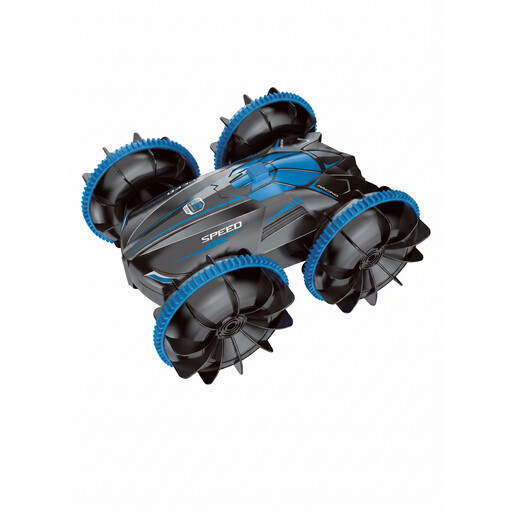
Why This Fits Their Persona: Ideal for kids who take their toys everywhere, whether it's to the beach, the garden, or even the paddling pool. The amphibious function opens up entirely new ways to play in the summer.
The sealed, waterproof housing and robust propeller tyres are specifically designed for use on various surfaces and in water, minimising the risk of damage from moisture or rough terrain.
Amphibious Capability: Drives seamlessly on land and water. Double-Sided Driving: No need for manual resets after a flip.
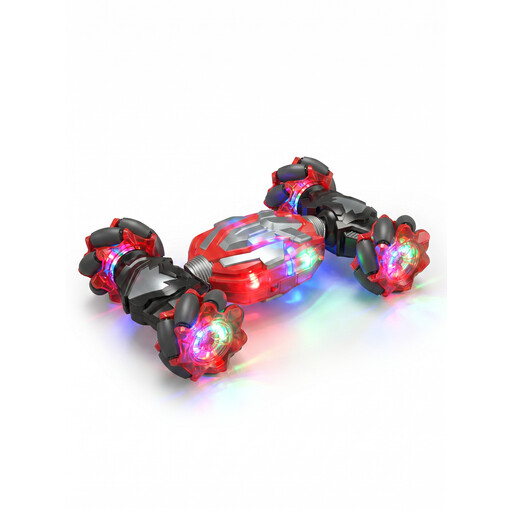
Why This Fits Their Persona: Perfect for older kids and teens who are bored with standard RC cars. The combination of Mecanum wheels and a transformable body allows for complex stunts like sideways drifting and climbing.
Instead of relying on a single, often unreliable stunt, this model's design (bionic spine, Mecanum wheels) offers a variety of real, physically possible manoeuvres that maintain high play value over the long term.
Omnidirectional Driving: Thanks to Mecanum wheels, lateral and diagonal drifts are possible. Transformable Body: Adapts to the terrain at the touch of a button.
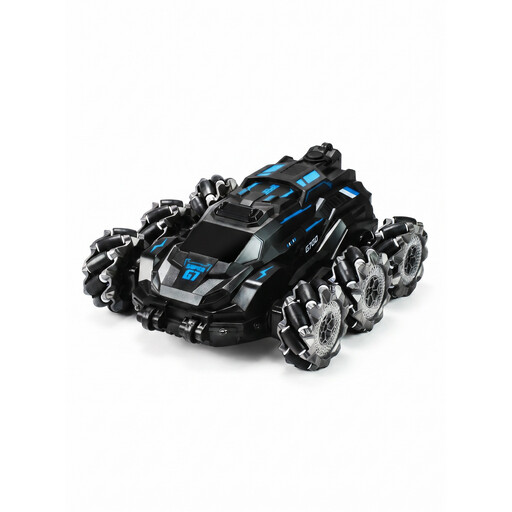
Why This Fits Their Persona: This model is a true all-rounder. It combines off-road capabilities with its 6-wheel drive and show-stopping effects like mist spray, lights, and sound. A great overall package for kids who love variety.
The body, made of high-strength ABS plastic, and the robust rubber tyres are designed for durability. The mist spray is generated using only plain water, making it safe and simple, unlike systems that require special fluids.
6-Wheel Drive: Provides high stability and all-terrain capability. Safe Mist Effect: Simulates a nitro boost using only water for a cool visual highlight.
We have compiled a complete, real-time updated list of products that fully meet these strict selection criteria and comply with stringent safety standards.
The 2.4 GHz technology is the modern standard for remote controls. Its main advantage is that it creates a stable and interference-free connection between the controller and the vehicle. This means that multiple RC cars can be driven at the same time without their signals interfering with each other. This is especially important for racing or playing with friends.
The actual battery life depends on the battery's capacity (measured in milliampere-hours, mAh) and the intensity of use. On average, most models offer a playtime of 15 to 30 minutes per charge. Some sets include a second battery, which doubles the playtime and bridges the gap while the other one is charging. Pay attention to the mAh rating: a higher number usually means a longer runtime.
Yes, gesture control can be very appealing and intuitive for children from around 6 years old, as the direct movement of the hand is translated into vehicle motion. It promotes an interactive play experience. However, for very precise manoeuvres or for developing fine motor skills in steering, a classic handheld remote often remains the better choice. Models that offer both control methods are a great option that can grow with the child.