
Lieferung heute & morgen

Qualitätsgarantie

Willkommens-Angebote freischalten: KOSTENLOSE Lieferung | Bis zu 80 % RABATT | Kostenlose 30-Tage-JoyPlus-Testphase
App herunterladen
An RC stunt car should do more than simply drive fast—it should also handle flips, drifts and different types of terrain. For parents and grandparents, however, the challenge is knowing which specifications actually matter. Terms such as “off-road,” “all-wheel drive” or “high speed” reveal little about ease of use, battery life or durability.
This buying guide from the Joybuy Product Recommendation Officer explains what to look for in a remote-controlled stunt car in 2026 and which models suit different usage profiles.
A high top speed can be appealing to older children and teenagers. For beginners from around age 5, however, precise handling is often more important. An RC car travelling at 18 km/h can quickly become difficult to control in confined spaces. Several speed settings, a stable 2.4 GHz remote control and a sufficiently large, unobstructed driving area are therefore recommended.
An RC off-road car may be able to drive on grass or gravel without necessarily being suitable for wet surfaces, sand or snow. Pay attention to tire tread and rubber compound, ground clearance, shock absorbers and electronic protection. “Water-resistant” should not be treated as synonymous with fully waterproof. The information in the product description and operating instructions is decisive.
The stated runtime depends on speed, terrain, stunt use and battery condition. Charging time is also frequently overlooked. A 500 mAh battery may be sufficient for short drives, while a 7.4 V, 1,500 mAh battery can enable longer sessions. Also check whether a USB charging cable, spare battery or additional batteries for the remote control are included.
A 4WD RC car powers all four wheels, which can provide more traction than a 2WD model when accelerating, climbing and drifting. For an all-wheel-drive remote-controlled car, the following points are also relevant:
Depending on its design, a remote-controlled stunt car may drift sideways, rotate 360 degrees or continue driving on either side after a flip. Mecanum wheels enable sideways movement on some models. A double-sided vehicle does not need to be manually turned upright after tipping over.
These functions increase play value but place greater demands on the motor, transmission and axles. For regular 360-degree stunts, the vehicle should therefore have a shock-resistant body, durable wheels and, ideally, overload protection.
For children from age 5, compact models with a manageable speed and easy-to-use 2.4 GHz remote control are generally suitable. Models with watch or gesture control can also be appealing, but they require a short familiarisation period.
Before buying, remember to:
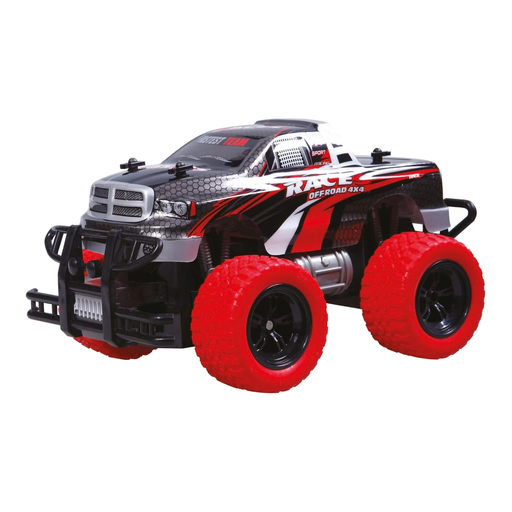
Why This Fits Their Persona: For children aged 5 and over who are looking for an easy-to-use remote-controlled car for indoor and outdoor play. Its compact design makes it convenient to transport and well suited to first driving experiences.
The product specifications state a speed of approximately 12 km/h and a range of up to 30 metres. This makes the model easier to manage in smaller spaces than a considerably faster stunt car.
2.4 GHz remote control, durable plastic construction, vehicle battery and batteries for the remote control, according to the product specifications.
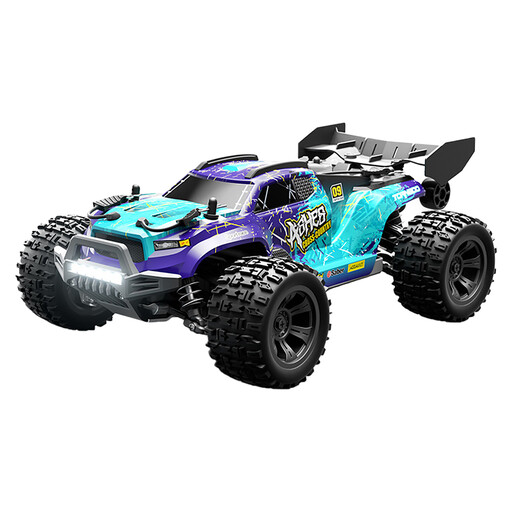
Why This Fits Their Persona: For teenagers and adults looking for a 4WD RC car for grass, gravel, sand or light off-road driving.
The product description lists all-wheel drive, an aluminium chassis, differential, drive shafts, independent shock absorbers and low-wear tires.
7.4 V 1,500 mAh lithium battery, 2.4 GHz multifunction controller and LED headlights; a USB charging cable is specified.
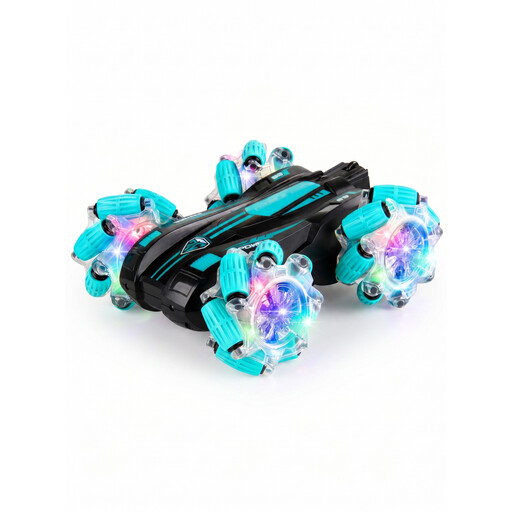
Why This Fits Their Persona: For children and teenagers who specifically want to practise 360-degree stunts, sideways drifting and flips—indoors on suitable floors and outdoors on firm surfaces.
Two-sided driving eliminates the need to manually turn the vehicle upright after a flip. The product description states that it features two speed settings and an adjustable gyroscope.
Mecanum wheels, interchangeable drift and racing tires, plus LED lighting integrated into the wheels.
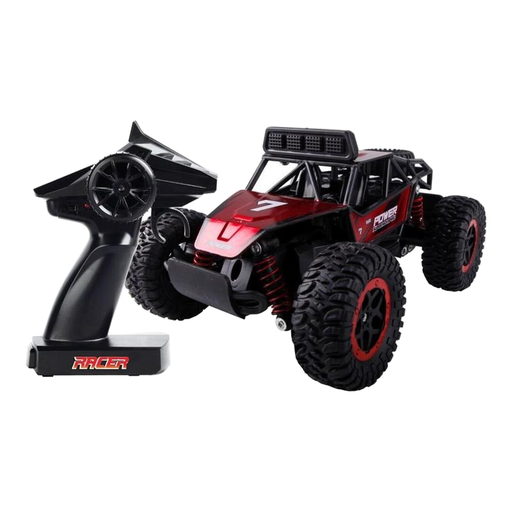
Why This Fits Their Persona: As an RC gift for children aged 5 and over when higher speed and a ready-to-use set are priorities.
The specifications state a top speed of up to 18 km/h, a range of up to 30 metres and a charging time of approximately 180 minutes.
Up to 20 minutes of runtime according to the product specifications, lighting function and included batteries or rechargeable battery.
We have put together a current selection of products that take key criteria for off-road remote-controlled cars into account.
After every drive, remove grass, sand and dust from the tires, wheel suspension and body. Water-capable models should then be dried in accordance with the instructions. Lithium batteries should never be fully discharged or charged with an unsuitable charger.
Ongoing costs primarily include spare batteries, batteries for the remote control, tires and, where necessary, drivetrain components. Before buying, therefore, check whether replacement parts are available and whether the battery can be changed easily.
A model with manageable speed, 2.4 GHz control and straightforward operation is generally suitable for beginners. The manufacturer’s specific age recommendation and safety warnings remain decisive. Direct adult supervision is advisable for younger children.
This depends on battery capacity, driving mode and terrain. Depending on the model, product specifications range from around 20 minutes to longer periods. Frequent drifting and 360-degree stunts can reduce runtime. A spare battery can minimise waiting time while the other battery is charging.
Only if the manufacturer explicitly permits this type of use. Splash resistance does not mean full waterproofing. After driving on wet surfaces, switch the vehicle off, clean it and allow it to dry completely.