
Lieferung heute & morgen

Qualitätsgarantie

Willkommens-Angebote freischalten: KOSTENLOSE Lieferung | Bis zu 80 % RABATT | Kostenlose 30-Tage-JoyPlus-Testphase
App herunterladen
An RC stunt car for children should do more than just drive forwards and backwards. Many models promise 360° spins, LED effects, flips and off-road capability. In practice, though, a few technical details determine whether a remote-control toy car will be used for the long term or prove impractical after a short time.
A 4WD RC car is powered by all four wheels. This can be useful on grass, carpets, gravel or slightly uneven ground. Buyers should also check the tyre tread, ground clearance, wheel size and suspension, though. Small drift models are often better suited to smooth surfaces such as tiles or wooden floors, while a remote-control off-road car needs larger tyres and higher ground clearance.
An RC car with LED lights stands out in low light. But for driving, a reliable radio connection, easy-to-reach controls and a suitable speed are more important. For children aged around 6 and over, a low-speed setting is particularly useful, allowing them to get to grips with steering, stopping distances and corners.
The term rechargeable RC car doesn’t automatically mean long running times. Battery voltage, capacity and charging time all matter, as does the availability of a spare battery. Lithium batteries should be charged according to the manufacturer’s instructions. Keep the vehicle away from heat sources while it’s charging, and switch it off after play.
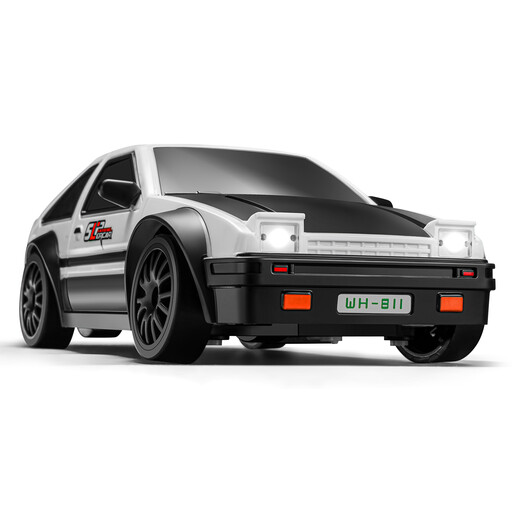
Why it’s a good fit: This compact model combines 4WD, drift capability and two-sided driving. Its two speed settings can make it easier to get started.
The product details list interchangeable drift and racing tyres, as well as an impact-resistant ABS body. This lets you adapt how it handles to smooth floors or simple race tracks.
4WD, LED wheels, two speed settings and 360° stunt features, according to the product description.
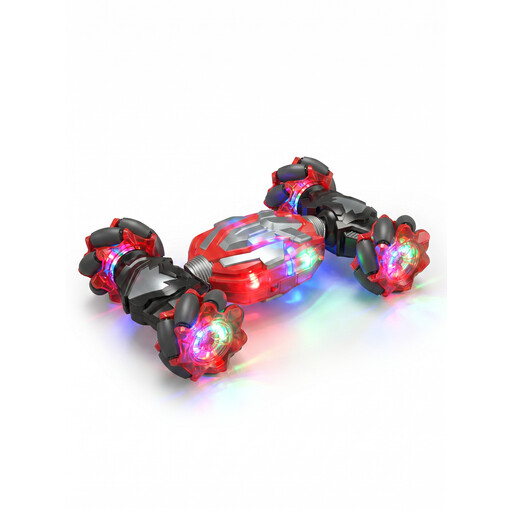
Why it’s a good fit: This model is aimed at children aged around 8 and over, and combines a handheld remote with gesture control. Its deformable body is designed for a range of driving manoeuvres.
The wide and narrow body modes are designed for different surfaces. The product description also mentions two-sided driving and motor overload protection.
Mecanum all-wheel drive, 2.4 GHz control, sideways drifting and two ways to control it, according to the product details.
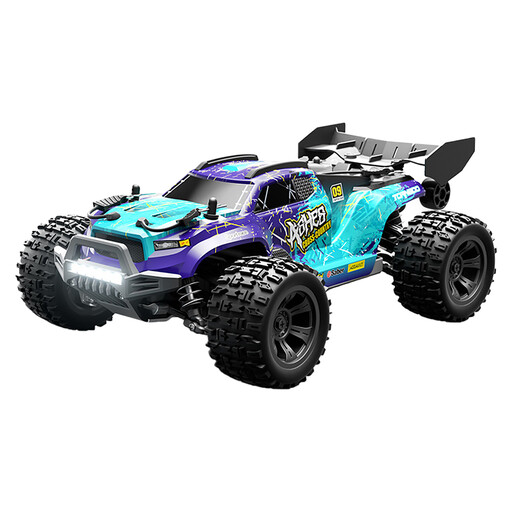
Why it’s a good fit: This remote-control off-road car is designed for changing surfaces such as grass, sand, mud and snow. According to the product description, it’s aimed at teenagers and adults.
Unlike indoor drift models, the description lists a reinforced aluminium chassis, independent shock absorbers and treaded tyres.
7.4 V lithium battery with 1500 mAh capacity, 4WD, LED headlights and a 2.4 GHz remote control, according to the product details.
We’ve put together a complete, regularly updated list of products that meet these strict selection criteria and fully comply with the safety regulations in force in the EU.
Before the first drive, check the battery, connections, tyres and body. An RC car for boys isn’t built differently from a model for other children; what matters is the age recommendation, ease of use and where it will be driven.
For many models, all you need for care is a dry or slightly damp soft cloth. Only use the car in water, sand or mud if it’s explicitly designed for those conditions. According to the product details, the 1:18 off-road model comes with a 7.4 V battery; the remote control also requires three AA batteries. Remember to include these ongoing costs when comparing prices.
An RC stunt car should be driven on flat surfaces, well away from roads, stairs and delicate objects. Pay particular attention to the warnings for models with water or gel ball features. Small parts may present a choking hazard.
Many stunt models are aimed at children aged around 6 and over, while some products are for children aged 8 and over. Always follow the individual manufacturer’s guidance, and consider the speed and whether the child can operate the remote control safely. Direct adult supervision is advisable for younger children.
Running time depends on the battery, driving style, surface and temperature. According to the product details, a 4WD GTR drift model runs for around 20 to 40 minutes per charge. Other vehicles may have different running times. Also check the charging time, whether a USB cable is included and if a spare battery is available.
That depends on the tyres, ground clearance and the manufacturer’s guidance. An RC drift car with smooth drift tyres is better suited to flat surfaces. An off-road model with treaded tyres and shock absorbers is a better fit for grass, gravel or sand. Only use vehicles in wet conditions if they’re explicitly designed for it.