
Lieferung heute & morgen

Qualitätsgarantie

Willkommens-Angebote freischalten: KOSTENLOSE Lieferung | Bis zu 80 % RABATT | Kostenlose 30-Tage-JoyPlus-Testphase
App herunterladen
An RC stunt car for children can do much more than drive in a straight line. Depending on the model, it may spin through 360 degrees, perform flips, drift sideways, light up with LED wheels or tackle off-road terrain. Choosing the right one isn’t always easy for parents, grandparents and other buyers, though. Product descriptions often list plenty of features but offer little practical guidance on age suitability, batteries, surfaces and controls.
A remote-controlled stunt car with several driving modes can quickly become confusing for younger children. Button controls, gesture controls and automatic stunt programmes can be useful, but they don’t replace an appropriate age recommendation. For children aged around 3 and over, simple controls and a manageable speed are usually more suitable than a powerful 4WD RC car designed for teenagers.
Large tyres and four-wheel drive improve performance on grass, carpet, gravel and firm paths. Deep sand, damp soil, water and high steps can still put strain on the motor, gearbox or electronics. Before buying, think about where the vehicle will be used: in a child’s bedroom, on the patio, in the garden or on uneven ground.
A rechargeable RC car is more convenient for everyday use than a model that takes disposable batteries. However, a battery’s capacity, such as 3,7 V and 1.200 mAh, doesn’t tell you on its own how long the car will run for. Driving style, surface, lights and stunt features all affect power consumption. It’s also worth checking what charging accessories are included, whether a spare battery is available, how long charging takes and which batteries the remote control needs.
The manufacturer’s age recommendation is an important factor when choosing a car. Several of the remote-controlled cars featured here are intended for children aged 3 and over, while more powerful models are specifically marketed for children aged 6 or 8 and over. Small accessories, moving parts and batteries should not be handled by children without supervision.
The Crocodile RC Car is specifically described as unsuitable for children under 3 and as requiring direct adult supervision during use. Follow this guidance regardless of your child’s individual stage of development.
A 4WD RC car powers all four wheels and, on some models, can improve traction on grass, gravel or carpet. Mecanum wheels also allow sideways movement and diagonal gliding. For a classic RC drift car, interchangeable drift and racing tyres and a controllable speed are particularly important.
Check the following:
A vehicle described as waterproof shouldn’t automatically be used in deep water or a swimming pool. Always follow the manufacturer’s specific guidance.
A 2,4-GHz remote control can be useful when several vehicles are being used at the same time, as it is designed to provide a stable connection and reduce signal interference. However, this doesn’t mean every model has the same range or response time.
LED wheels, headlights and music can make the car more visible and add to the fun, but they also use extra power. If you’re choosing a children’s car with 360-degree rotation, check whether the spin is started with a button or needs to be controlled manually. Automatic demo modes and two speed settings are often easier for beginners to use.
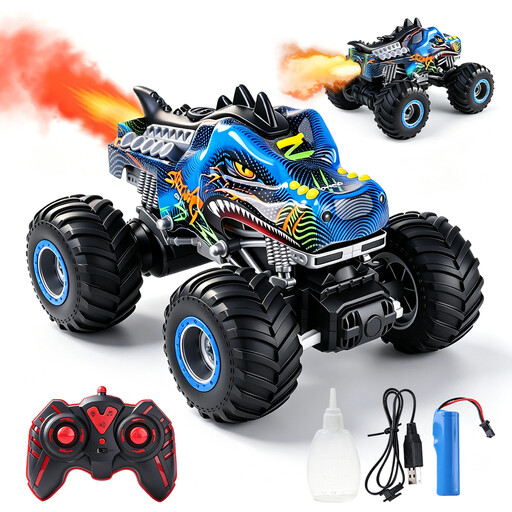
Why it suits this profile: According to the product information, this model is intended for children aged 3 and over. It combines simple remote control with off-road tyres, lights and a spray function.
The age recommendation and the requirement for direct supervision are clearly stated. The built-in 3,7-V battery with 1.200 mAh means you won’t need to keep buying disposable batteries for the car.
2,4-GHz control, 360-degree stunts, deep tyre treads, LED modes and a rechargeable battery.
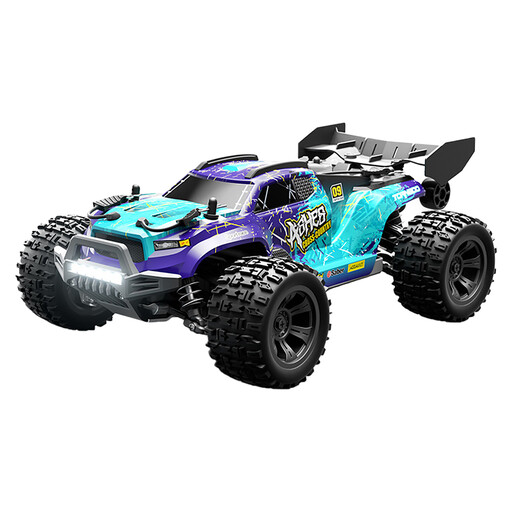
Why it suits this profile: According to its description, this vehicle is aimed at teenagers and adults who value four-wheel drive, a metal chassis and the ability to drive on more challenging surfaces.
The description specifically lists the suspension, shock absorbers, aluminium chassis, metal bearings and tyres. This makes it easier to compare the technical specifications with how you plan to use the car.
4WD drive, a 7,4-V battery with 1.500 mAh, an aluminium chassis and LED headlights; the remote control also requires three AA batteries.
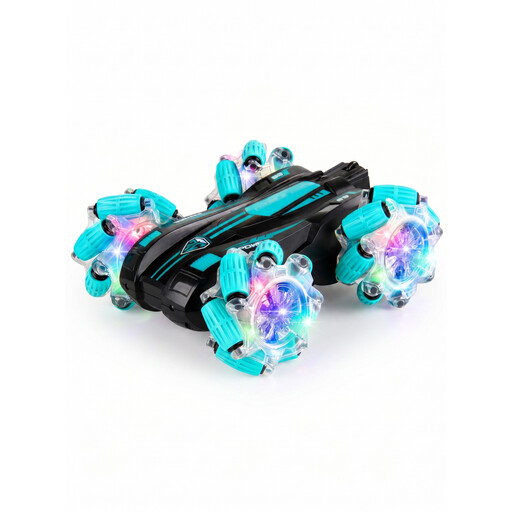
Why it suits this profile: This model is a good choice for anyone looking to combine drifting, flips and 360-degree spins on the spot, and wanting a vehicle for both indoor and outdoor use.
Two speed settings and an adjustable gyroscope can make it easier to get started. Interchangeable drift and racing tyres let you adapt the car to your driving style and the surface.
4WD system, 9-cm LED wheels, drives on both sides, 360-degree rotation and a rechargeable lithium battery.
We’ve put together a complete, regularly updated list of products that meet these strict selection criteria and fully comply with the safety regulations in force in the EU.
It depends on the model. Some remote-controlled cars for children are recommended for ages 3 and over, while models with higher speeds, gesture controls or more complex stunt features are better suited to children aged 6 or 8 and over. Always follow the manufacturer’s guidance and safety warnings.
There’s no single answer. LED lights, music, 360-degree spins, the surface and driving style all affect power consumption. Check the battery specifications in volts and mAh, as well as the charging accessories and availability of replacement batteries.
Models with controllable speeds and a compact design can be used on clear, durable floors. However, hard stunts can damage furniture, skirting boards and delicate surfaces. At home, choose a clear area with plenty of space and agree on a suitable place to drive before you start.