
Lieferung heute & morgen

Qualitätsgarantie

Willkommens-Angebote freischalten: KOSTENLOSE Lieferung | Bis zu 80 % RABATT | Kostenlose 30-Tage-JoyPlus-Testphase
App herunterladen
Remote-controlled toys for children can vary considerably depending on age, terrain and ease of use. A small RC car for the living room has different requirements from an off-road RC buggy for grass and gravel. A remote-controlled helicopter for children or a mini RC drone also needs plenty of space and a safe environment.
Three common pitfalls can lead to poor buying decisions:
For children aged 3 and over, simpler vehicles with basic functions are usually a good option. A 2.4 GHz system can support the simultaneous use of several vehicles, if the relevant product information allows for this. Proportional speed control, on the other hand, is often found on more advanced RC models and allows for finer adjustments.
For children aged 8 and over, a 4WD RC racing car, a remote-controlled drift car or a mini RC drone may be appealing. These models often offer several driving or flight modes, but need more careful handling. Aircraft should be used for the first time in a clear, open space. An RC aeroplane for children needs considerably more room outdoors than a small helicopter designed for indoor use.
The drive system is a key factor in determining where a vehicle can be used:
An RC vehicle with LED lights may be easier to see in a dimly lit room. However, lights are no substitute for a safe environment and should not be taken to mean that the vehicle is suitable for use at night.
A rechargeable RC toy reduces the need for disposable batteries. Before buying, parents should check whether the package includes a USB charging cable, one or two batteries and a removable battery compartment. Having two batteries can be useful, as one can be ready to use while the other is charging. Actual run time depends on the model and how it is used.
Lithium batteries require particular care: use only the supplied charging equipment, never leave a battery charging unattended, and stop using any battery that is damaged or swollen. Store batteries in a dry place, out of the reach of young children.
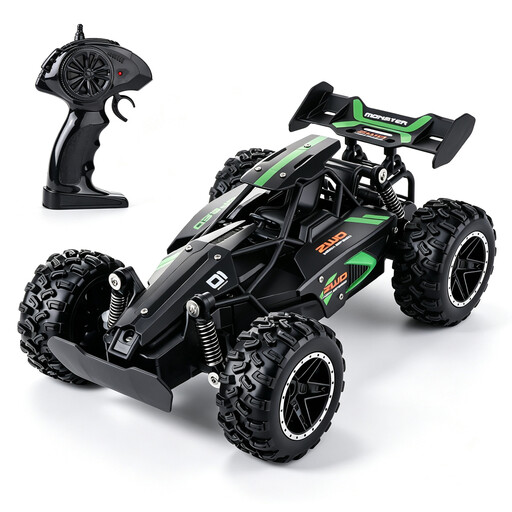
Why it suits this profile: According to the product information, this model is suitable for children aged 3 and over. It combines a 2.4 GHz remote control with two USB-rechargeable batteries, making it a good choice for first driving attempts under close supervision.
The product information specifies the range, number of batteries and suitability for grass, gravel, earth and paved surfaces. This makes it easier to judge where it can be used than a speed claim alone would.
Up to 15 km/h according to the product description, two batteries and a shock-absorbing structure; the supplier also describes it as water-resistant.
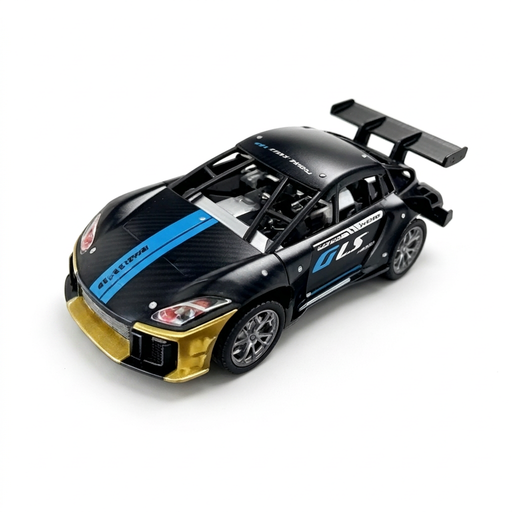
Why it suits this profile: This model combines a metal alloy body with a design made for drifting. It is intended for children aged 3 and over, as well as RC fans who want to practise controlled turns on flat surfaces.
The package contents include one battery and a reinforced body. The tyres’ low friction is specifically intended for smooth floors, not every type of terrain.
Battery included according to the product description; 2.4 GHz control and a reinforced body are designed to support its intended use for racing.
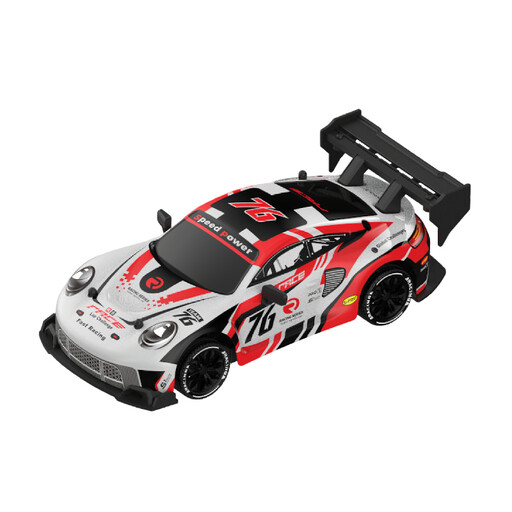
Why it suits this profile: Four-wheel drive, two sets of tyres and LED lights offer different ways to drive, making this a good option for children aged 8 and over and regular use on flat indoor or outdoor surfaces.
The recommended surfaces and the option to switch between drift and racing tyres are clearly specified. This helps avoid confusing a drift model with a rugged off-road toy.
Four-wheel drive, two sets of tyres and a USB-rechargeable lithium battery; stated run time per charge: 20 to 40 minutes.
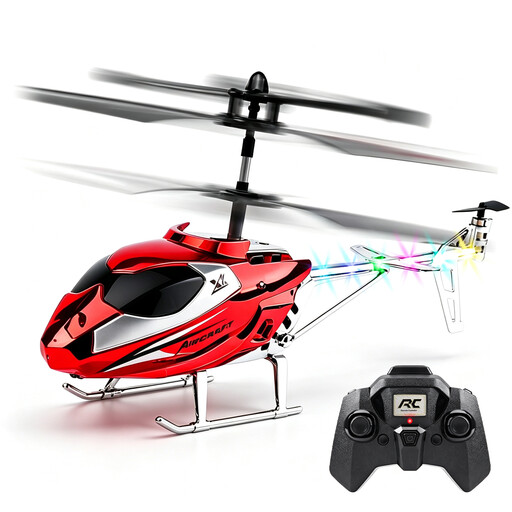
Why it suits this profile: According to the product description, altitude hold, one-button take-off and one-button landing are designed to make it easy to get started. Two speed settings let you adjust it for indoor use or open outdoor spaces.
Rather than relying on a general claim that it is suitable for beginners, the product information details the controls, including altitude hold, trim adjustment and two speed settings.
Coaxial rotor system, flexible rotor blades, LED lights and a 3.7-V 220-mAh lithium battery, according to the supplier.
For children and teenagers interested in aviation, an RC aeroplane for children with a foam fuselage, gyro stabilisation, three speed settings and two batteries may be worth considering. According to the product information, it also features LED lights and a 360-degree flip function. For filming or photography, the YLRC YL156 mini RC drone may appeal, with its 720p dual camera, optical positioning and screen remote control. It is listed as suitable from age 8; the remote control also requires three AA batteries.
A beginner-friendly RC toy should ideally have clear instructions, easy-to-reach controls and a limited top speed. For drones and helicopters, safe distances, unobstructed rotors and adult supervision are all part of proper use. Always follow each product’s warnings and specific age recommendation.
We’ve put together a complete, regularly updated list of products that meet these strict selection criteria and fully comply with the safety regulations in force in the EU.
Run time depends on the battery, motor, terrain and driving style. The drift models mentioned above are listed as running for 20 to 40 minutes per charge. A second battery can reduce the time you spend waiting for the first one to charge. Treat the manufacturer’s figure as a guide rather than a guaranteed duration.
A simple RC car with fewer features may suit younger children. For aircraft, altitude hold, one-button take-off and one-button landing can make it easier to get started. Age recommendation, available space and the ability to use the device under supervision remain important.
In addition to the purchase price, you may need to factor in electricity, replacement batteries, USB charging cables and, where necessary, batteries for the remote control. For lithium batteries, parents should also check that suitable replacements are available and follow safe charging practices. This makes it easier to plan ongoing costs and avoid unsuitable purchases.