
Lieferung heute & morgen

Qualitätsgarantie

Willkommens-Angebote freischalten: KOSTENLOSE Lieferung | Bis zu 80 % RABATT | Kostenlose 30-Tage-JoyPlus-Testphase
App herunterladen
A reactive glaze ceramic dinnerware set combines handcrafted-looking finishes with the practicality of stoneware. During firing, the glaze reacts differently to changes in temperature and materials, creating colour gradients, speckles or subtle irregularities. These variations are what give each piece its own distinctive look.
But design isn’t the only thing to consider when buying. If you’re looking for a stoneware dinnerware set, a plate and bowl set or individual ceramic bowls, check the product details carefully. Otherwise, you could end up paying for a beautiful finish that doesn’t suit your household, dishwasher or available storage space.
Reactive glaze is known for its visible variations. The colour, pattern and rim can differ from one piece to another. This isn’t a flaw, but it may be an issue if you’re expecting a perfectly uniform table setting. The colour of a later batch may also differ if you buy extra pieces at a later date.
The term dishwasher-safe tableware refers to whether an item can be used in a dishwasher; it doesn’t automatically mean it will last indefinitely. Frequent changes in temperature, harsh detergents, abrasive sponges and contact with metal cutlery can all wear down the surface over time. Even a product described as microwave-safe shouldn’t go straight from the fridge into intense heat.
A dinnerware set for 6 people doesn’t always include cups. Some sets contain plates and bowls only, while others also include mugs. A 400 ml bowl may be suitable for yoghurt and desserts, for example, while around 680 to 900 ml is more practical for pasta or large salads. Before buying, consider the number of pieces, dimensions and capacity together.
Stoneware is denser and heavier than traditional earthenware. Several of the product descriptions provided specify high-fired stoneware and reactive glazes. This can make them suitable for everyday use, but it doesn’t replace the care instructions for the specific product.
Look out for the following details:
For information about food safety, refer to the product description and labelling for the specific item. Claims about health or therapeutic benefits aren’t appropriate for tableware.
For everyday convenience, microwave-safe tableware and dishwasher-safe pieces are useful. Check whether these features apply to every item in the set. Mugs with metallic details or certain decorations may not be suitable for microwave use.
Even if a product is described as dishwasher-safe, it’s a good idea to:
For a family dinnerware set, plate diameter and bowl capacity are key. For example, the Richmount Starlight set includes six dinner plates measuring 26 cm, six salad or starter plates measuring 20 cm, and six bowls with a capacity of 680 ml. Another set in the Tempus range includes six plates measuring 26.7 cm, six smaller plates measuring 20.5 cm and bowls with a capacity of 590 ml.
Measure your cupboard before buying. Stackable plates and bowls can save space, but pieces with textured surfaces need to be put away carefully.
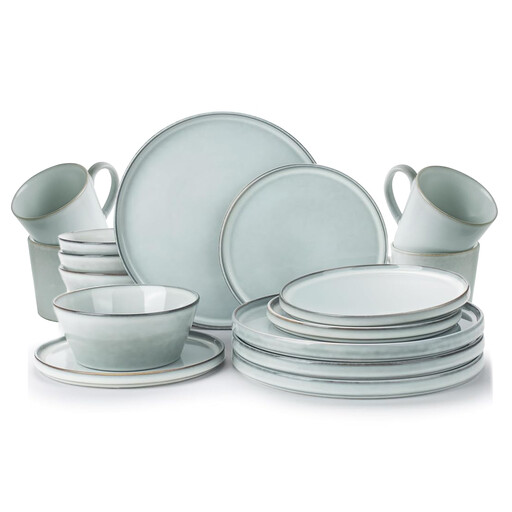
Why this product suits this type of buyer: This set combines plates, bowls and mugs for four people, making it a good fit for smaller households looking for a coordinated tableware set-up.
The stated number of pieces and the list of items make it clear that this isn’t just a plate and bowl set without mugs.
Stoneware with a double reactive glaze, raised rims, and stated suitability for the dishwasher and microwave.
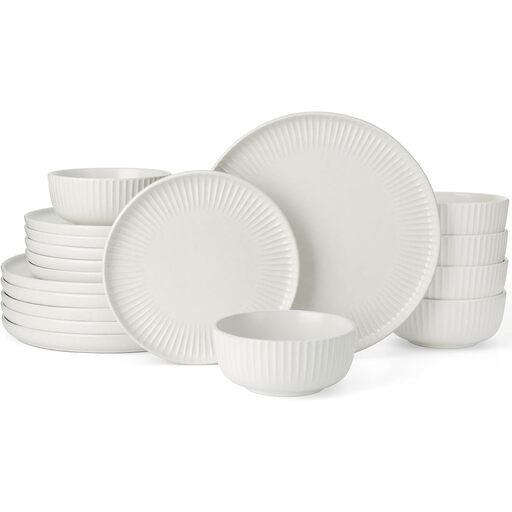
Why this product suits this type of buyer: With 18 pieces, a ribbed texture and a matt white finish, this set is ideal for households looking for dinnerware for 6 people that works for everyday meals and special occasions.
The specific dimensions, piece count and stackable design help you avoid buying the wrong set because of unclear product details or insufficient storage space.
Six dinner plates, six smaller plates and six bowls with a capacity of 680 ml; according to the product details, suitable for the dishwasher and microwave.
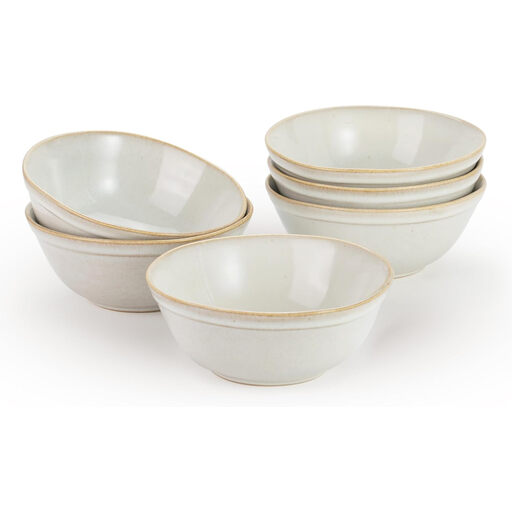
Why this product suits this type of buyer: Six matching bowls with a capacity of around 600 ml are ideal for families, cafés, holiday lets or households that regularly need extra tableware.
The clear piece count and stated capacity help ensure you don’t mistake a single decorative bowl for a complete ceramic bowl set.
Six bowls with a capacity of around 600 ml, an irregular shape and reactive glaze; according to the product details, suitable for the microwave and dishwasher.
We’ve put together a complete, regularly updated list of products that meet these strict selection criteria and fully comply with the safety regulations in force in the EU.
Reactive glazes can be glossy, matt or textured. Always follow the care instructions provided by the manufacturer of the specific product. When scratch-resistant tableware is listed as a feature, it generally means it offers greater resistance to normal use, not that it’s unbreakable.
Don’t use abrasive sponges, and avoid direct contact with naked flames or hob rings. Damaged pieces with chips should no longer be used for food. If you’re buying a dinnerware set as a gift, secure packaging, a complete piece count and a check after unpacking are also important.
Reactive glaze changes in appearance during firing. This creates colour gradients and variations between individual pieces. If you’re looking for handmade tableware with a distinctive look, this is a feature you can seek out.
It depends on the specific product. According to the product details, many of the sets and mugs mentioned are suitable for the dishwasher. Before buying, check whether this applies equally to the plates, bowls and mugs, and look for any additional care instructions.
Around 400 ml is often enough for yoghurt, cereal and desserts. For soups, rice, salads or pasta, around 590 to 900 ml is more practical, depending on the portion size. Diameter, rim height and the space available in your kitchen cupboard also matter.