
Lieferung heute & morgen

Qualitätsgarantie

Willkommens-Angebote freischalten: KOSTENLOSE Lieferung | Bis zu 80 % RABATT | Kostenlose 30-Tage-JoyPlus-Testphase
App herunterladen
Straining to read compact print on packaging, medication leaflets or printed office documents often calls for a targeted magnification boost. When off-the-shelf reading glasses at lower strengths no longer bring clarity, stepping up to a dedicated 3.0 dioptre lens or evaluating nearby magnification ratings provides the crisp sharpness needed for close-range tasks. Choosing the proper strength ensures you can focus comfortably without leaning excessively forward or holding pages at unnatural angles.
Selecting the ideal pair involves more than simply picking a power rating. The structural design of the frame, the natural working distance from your eyes to the page, and how safely the spectacles travel in a work bag or coat pocket all dictate your daily reading comfort. This guide clarifies the practical trade-offs between frame architectures, focal limits and lens care so you can match the correct magnification to your everyday reading habits.
Many buyers assume that +3.0 dioptre lenses will function as an all-round desk companion for computer screens. In optical terms, a 3.0 dioptre rating pulls the sharp focal point close to the face, typically between 30 and 35 centimetres. Expecting these lenses to keep computer monitors clear at arm's length leads to eye strain, neck stiffness and poor posture. Lenses of this strength are tailored for close handheld reading, not intermediate displays.
Rimless reading glasses offer a lightweight feel and an open field of vision, yet the exposed lens edges demand careful handling. Stashing rimless frames loosely in a rucksack, coat pocket or glove compartment without a protective case exposes the bare perimeter to chipping and puts undue torque on the mounting screws. Buyers seeking portable convenience must pair frameless aesthetics with disciplined storage habits.
Relying strictly on a +3.0 pair for standard laptop browsing often causes visual fatigue because the magnification is too intense for viewing at 50 to 60 centimetres. Many individuals benefit from keeping distinct strengths on hand, using a moderate +2.0 pair for screens and saving a +3.0 or +3.5 pair for intricate paperwork, craft hobbies or tiny serial numbers.
The optical strength in dioptres directly dictates how close an object must sit to your eyes to appear sharp and legible.
The structural design of the frame determines peripheral visibility, nasal bridge comfort and physical robustness.
High-dioptre lenses feature steeper curves that are more susceptible to surface abrasion if left exposed on flat surfaces.
Explore our top recommendations across practical dioptre strengths and frame builds to find the exact optical match for your reading routine.
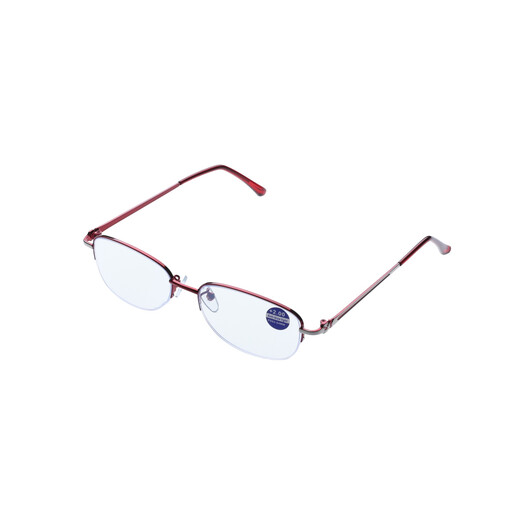
Why This Fits Their Persona: Delivering 3.0 dioptres of magnification, this semi-rimless pair produces crisp clarity for printed paperwork, letters and desktop reference materials. The classic red brow frame maintains reliable structural rigidity while keeping the downward viewing angle free of thick borders.
It avoids the vulnerability of completely exposed lenses by housing the top perimeter in a durable half-frame, which withstands frequent handling during long study sessions.
Comes complete with a dedicated protective case, ensuring the 300-degree lenses remain shielded from scuffs when moving between your desk and living room.
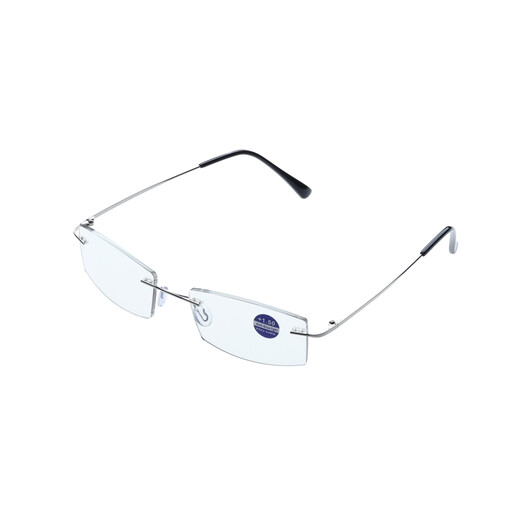
Why This Fits Their Persona: Designed with an elevated 3.5 dioptre rating, this silver unisex pair brings exceptionally tiny text into sharp focus at close range. It provides the stronger magnification required for deciphering intricate serial numbers, technical schematics and dense medicine leaflets.
The rimless architecture prevents bulky visual obstruction, offering an open sightline that eliminates heavy frame borders when focusing intensely on miniature details.
Delivers maximum close-up magnification in a lightweight, minimalist silver profile that sits comfortably on the face without visual distraction.
Why This Fits Their Persona: Featuring a balanced 2.0 dioptre strength, this rimless pair offers comfortable magnification for relaxed reading at slightly longer viewing distances. The clean silver finish complements any home or workspace setup effortlessly.
By avoiding high-power focal constriction, it prevents eye fatigue during reading tasks where materials sit slightly further away, such as reading tablets or desktop papers.
Features an understated, completely frameless aesthetic that pairs moderate visual correction with an airy, barely-there feel.
If you need different lens ratings, fold-flat travel frames or alternative colourways, browse our wider collection of unisex reading eyewear to find your perfect optical fit.
A 3.0 dioptre lens is optical equipment designed for close-range tasks, focusing sharply at approximately 30 to 35 centimetres. This distance is well suited for handheld paperback books, smartphone messages and fine print on medicine packaging. It is generally too strong for reading desktop computer monitors situated 50 to 70 centimetres away.
Rimless frames offer an exceptionally lightweight feel and eliminate distracting frame edges from your field of vision, but their exposed lens perimeters require gentle handling. Semi-rimless frames incorporate a protective upper brow bar that enhances structural rigidity and lens protection, making them slightly more resilient for active daily use while keeping the lower sightline open.
Always store reading glasses inside a protective case or fitted sleeve whenever they are not in use, rather than dropping them loosely into pockets or bags. Avoid resting the glasses face-down on hard surfaces, and clean the lenses using a clean microfibre cloth rather than clothing fabric to prevent fine micro-scratches over time.