
Lieferung heute & morgen

Qualitätsgarantie

Willkommens-Angebote freischalten: KOSTENLOSE Lieferung | Bis zu 80 % RABATT | Kostenlose 30-Tage-JoyPlus-Testphase
App herunterladen
When reading the fine print becomes an increasing challenge, reading glasses are often the most straightforward solution. However, the market for ready-made reading glasses is vast, and the selection can be overwhelming. Many models overpromise and underdeliver, leading to disappointment. Before you make a decision, it's important to know the common pitfalls to avoid a poor investment.
A frequent problem is unstable frames, with hinges that give way after a short time or materials that become brittle. Another nuisance is low-quality lenses that distort your field of vision and can lead to discomfort or headaches with prolonged use. Equally crucial is wearing comfort: glasses that are too heavy or fit poorly quickly become a burden in daily life instead of a help.
This guide will help you navigate these issues and find a functional, durable reading aid that meets your needs at the office and at home.
To find the right reading glasses for women and men, you should focus on three fundamental criteria. These objective features are more decisive than any marketing claims.
The most important characteristic of reading glasses is their strength, measured in diopters (dpt). This determines how much the lenses magnify what you see. Ready-made reading glasses are typically available in 0.25 dpt increments, with common strengths being +1.5, +2.0, +2.5, or +3.0.
Your age can provide a rough guide to the strength you might need:
These are only guidelines. For a precise determination of your prescription reading glasses, consulting an ophthalmologist or optician is recommended, especially if you are between two strengths or need a reading aid for the first time.
The frame type affects not only the look but also the functionality and longevity of the glasses. There are three main types:
The frame material is crucial for weight, flexibility, and durability. Lightweight plastics like polycarbonate or TR90 are flexible and shatter-resistant, while metal frames (e.g., stainless steel or titanium) are often perceived as particularly durable and high-quality. Pay attention to the quality finish of the hinges and nose pads, as these components significantly contribute to wearing comfort and the lifespan of the glasses.
Based on the criteria mentioned, we have compiled a few models for different use cases.
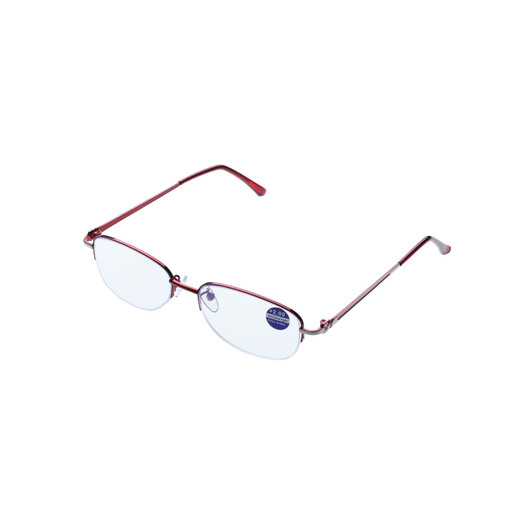
Why it's a great fit: Ideal for users who need functional glasses for the office and home. The half-rim design allows for an easy transition between reading documents and looking at a screen or across the room without having to take the glasses off.
The sturdy construction with a metal frame minimises the risk of breakage at the hinges or frame, a common issue with cheaper plastic models.
The classic design is equally suitable for women and men and blends discreetly into a professional environment.
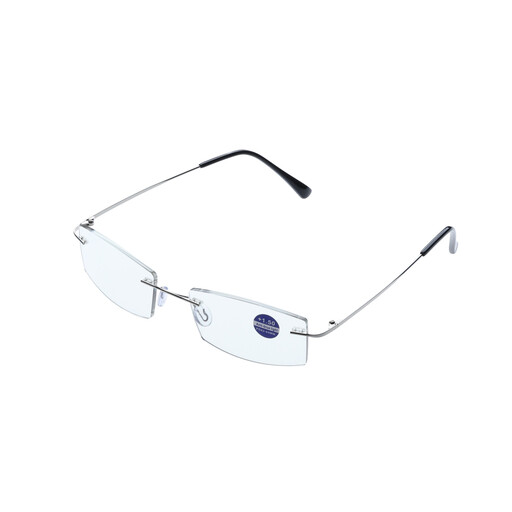
Why it's a great fit: Perfect for users seeking the most discreet and lightweight vision aid possible. The rimless design doesn't obstruct the field of view and is barely noticeable, enhancing comfort during long reading sessions.
Unlike heavy glasses that can cause pressure marks, the lightweight construction ensures a comfortable fit, even after hours of use.
The robust mounting of the lenses ensures good durability for everyday use, despite the delicate design.
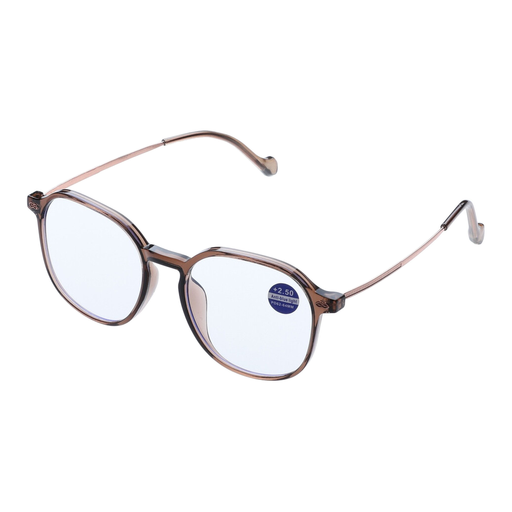
Why it's a great fit: At higher diopter values (+3.0 dpt and above), lenses are thicker and heavier. A full-rim frame provides the necessary stability to securely hold the lenses and prevent the frame from warping.
The full frame protects the more vulnerable edges of thicker lenses from chipping and ensures the glasses remain securely positioned on the nose.
Despite its robust construction, the transparent frame has a visually light and modern look. It's a great choice for anyone who wants stability without a bulky appearance.
1. How do I find the right strength for my reading glasses? The required strength depends on the degree of your presbyopia (age-related farsightedness). As a starting point, you can use the age-based guidelines mentioned above. Begin with a lower strength and test if you can comfortably read a newspaper or book from a normal reading distance (approx. 30–40 cm). If you experience headaches or discomfort, the strength may not be right. For a precise measurement, a visit to an optician or ophthalmologist is recommended.
2. Can ready-made reading glasses harm my eyes? When used as intended, ready-made reading glasses with the correct strength will not harm your eyes. They are purely a visual aid for near vision. However, they are not a substitute for custom-fitted glasses from an optician, especially if you have astigmatism or require different strengths for each eye. Do not use reading glasses for driving or as a permanent solution for persistent vision problems.
3. What is the functional difference between half-rim and rimless reading glasses? The main difference lies in handling and the field of view. Half-rim reading glasses are practical if you frequently switch between reading and other activities, as you can easily look over the rim. Rimless reading glasses are lighter and offer a maximum, unobstructed field of view, but they are mechanically more delicate. The choice depends on your personal preferences and usage habits.