
Lieferung heute & morgen

Qualitätsgarantie

Willkommens-Angebote freischalten: KOSTENLOSE Lieferung | Bis zu 80 % RABATT | Kostenlose 30-Tage-JoyPlus-Testphase
App herunterladen
Reading glasses can be a practical visual aid when reading books, documents or digital screens. At first glance, choosing a pair seems simple: determine the strength, select a frame and place your order. In practice, however, unclear dioptre details, unsuitable frame shapes or overlooked safety information often lead to disappointing purchases.
This buying guide explains what adults in Germany should look out for when buying reading glasses and which models suit different everyday situations.
Magnifying reading glasses are not necessarily better simply because they have a higher stated strength. Common options range, for example, from 1.5 dpt through 2.0 dpt, 2.5 dpt and 3.0 dpt up to 3.5 dpt or 4.0 dpt. A higher number magnifies text more strongly, but may be impractical if the reading distance is too great or the strength is not suitable for your eyesight.
The labels “150D”, “200D” and “400D” are used as product strengths for the products featured here. Before buying, check how the relevant retailer assigns these details to the corresponding dioptre category.
Half-frame reading glasses, full-frame reading glasses and rimless reading glasses differ in more than just their appearance:
A classic pair of reading glasses for the office and home should therefore suit your preferred eye movements and how you use them every day.
Reading glasses are not safety glasses and are not intended for driving or operating heavy machinery. You should also check the product details for information about heat, direct sunlight, storage and cleaning.
For the models featured, it is recommended that you clean the lenses with a microfibre cloth and store the glasses in a protected place when not in use. If headaches or eye discomfort occur, stop using the glasses and seek advice from an optician or ophthalmologist if the symptoms persist.
Different strengths may be suitable for reading small print on packaging, in books or in documents, depending on your individual needs. 1.5 dpt reading glasses, or a model with 150D, may appeal to users looking for a relatively low level of additional magnification. Options with 2.0 dpt or 2.5 dpt sit in the mid-range of the selection mentioned above.
3.0 dpt, 3.5 dpt or 4.0 dpt reading glasses are intended for situations where stronger magnification is required. However, their suitability depends on your individual eyesight, reading distance and how well both eyes work together. Ready-made reading glasses are not a substitute for individually prescribed visual aids.
If you regularly look at a screen, a clock or other people while reading, you may prefer the flexibility of half-frame reading glasses. For longer, concentrated reading sessions, full-frame reading glasses with fully enclosed lenses may be a good option.
Classic-style unisex reading glasses offer a discreet choice for the office and home. Colours such as transparent tea brown or silver are easy to combine in a professional setting, while a red frame creates a more noticeable accent.
Before buying, check the following information:
Some products are listed as including one pair with a protective case. Always check the specific product page for the exact contents.
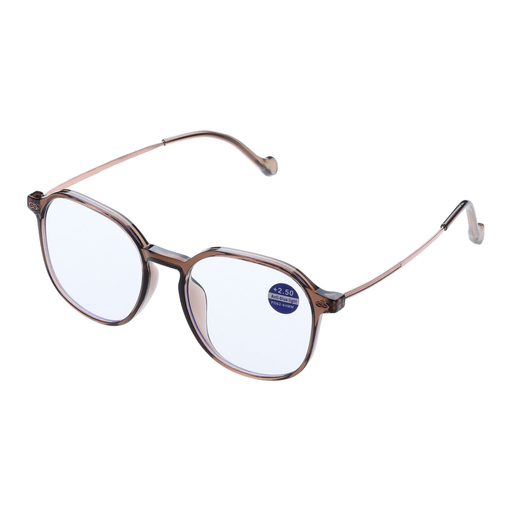
Why this product suits this profile: The 150D version offers a relatively low level of magnification. Its transparent tea-brown colour and full-frame design make it a classic choice for reading in the office or at home.
The strength is clearly stated as 150D. This makes it easier to choose more deliberately rather than deciding solely on the frame colour.
Full-frame construction, classic colouring and clearly stated 150D product strength.
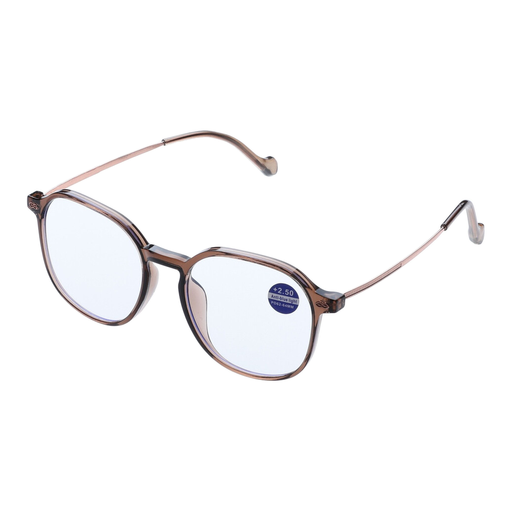
Why this product suits this profile: This model is designed for users looking for higher stated magnification for very small print and detailed documents, while preferring a fully enclosed frame.
The higher strength is explicitly stated as 400D. The product description also highlights the fully enclosed frame design and its suitability for reading.
400D designation, full-frame design and transparent tea-brown colouring.
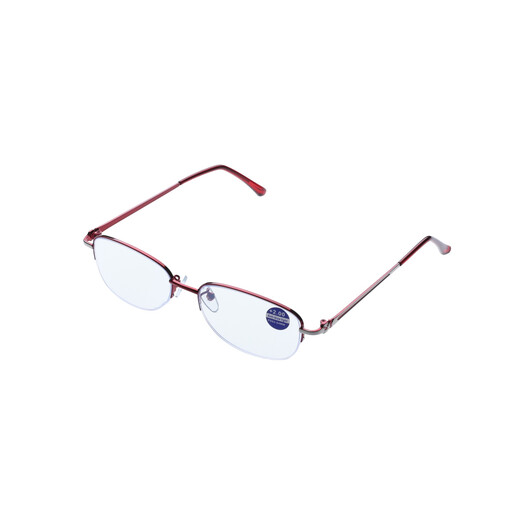
Why this product suits this profile: The half-frame design supports switching between reading and looking at your surroundings. The 300D version is specified for books, documents and digital screens.
The frame style is clearly described as a half-frame model. This allows you to check before buying whether the design suits frequent changes of focus.
Half-frame design, 300D designation, classic unisex style and protective case according to the product description.
We have put together a complete, regularly updated list of products that fully meet these strict selection criteria and the safety regulations applicable in the EU.
A suitable pair of reading glasses should sit with the lenses centred in front of your eyes. The arms should not press uncomfortably or slip down. A clean microfibre cloth is suitable for care, along with an appropriate glasses-cleaning solution if recommended by the retailer. Dry paper towels or rough fabrics can cause scratches.
Keep your glasses in a case wherever possible and avoid prolonged exposure to high temperatures or direct sunlight. They are not intended for driving, working with machinery or protecting your eyes.
This depends on your eyesight, reading distance and the size of the text. Models with 150D, 200D or 250D are often considered lower to medium-strength options, while 300D to 400D indicate stronger product magnification. If you are unsure or experience discomfort, it is advisable to have your eyesight checked individually by a specialist optician.
Their lifespan depends on the frame construction, daily use, cleaning and storage. Glasses can last longer when protected from scratches, heat and unnecessary strain. Damaged or distorted models should no longer be used.
They may be suitable for reading text on a screen, provided the strength, distance and fit are right. However, ordinary reading glasses are not automatically suitable for every screen distance. Your individual eyesight should be taken into account when working at a screen for extended periods.