
Lieferung heute & morgen

Qualitätsgarantie

Willkommens-Angebote freischalten: KOSTENLOSE Lieferung | Bis zu 80 % RABATT | Kostenlose 30-Tage-JoyPlus-Testphase
App herunterladen
A pair of reading glasses should make small print in books, documents or on screens easy to read and sit comfortably during daily use. However, when buying, it’s not just about colour and price. Unclear dioptre information, an ill-fitting frame or missing safety instructions can mean the glasses end up hardly being used after a short time.
This buying guide from the Joybuy Product Recommendation Officer will help you avoid typical marketing pitfalls and choose a pair of reading glasses for men and women that suits your personal needs.
Labels like 150D, 200D or 400D can sound technical at first. In the range, these usually correspond roughly to 1.5, 2.0 and 4.0 dioptres respectively. However, a stronger magnification isn’t necessarily better. If you choose a strength that’s too high, you may experience an uncomfortable image or unusual strain when reading.
The right reading glasses depend on factors including reading distance, font size and your individual vision needs. Models with 1.5 dioptres are often a good starting point for mild support. 2.0 or 2.5 dioptres can work for smaller print. 3.0, 3.5 or 4.0 dioptres should be chosen carefully, especially if you need to look at very small details.
A very thin or rimless design can look lightweight, while a full-rim frame can offer extra stability for daily use. What really matters isn’t just the look, but also the fit, weight, temple comfort and the intended purpose.
For switching between reading and looking into the distance, a half-frame pair can be practical. A full-rim reading pair surrounds the lenses completely and offers a clearly defined frame construction. A rimless reading pair reduces visible frame elements, but you should carefully check its construction and how it will hold up in daily life.
Reading glasses are a visual aid for close-up work and are not a substitute for protective or safety eyewear. The product information for several models explicitly states that they must not be used for driving, operating heavy machinery or as safety glasses. If you experience headaches, persistent eye strain or blurred vision, stop using them and consider seeking advice from an optician or eye doctor.
Start by looking at the print you read regularly:
The information on the product should be checked against your existing visual aid or a personal recommendation. Ready-made reading glasses cannot replace individually fitted glasses if you need different values for each eye, have astigmatism or require other vision corrections.
For the office and at home, three situations often come into play: reading at a desk, looking at a screen and occasionally glancing up around the room.
Also make sure you have the right width, straight temples and a secure fit without pressure on your temples or nose bridge. A case and a microfibre cloth will help prevent scratches and dirt in everyday use.
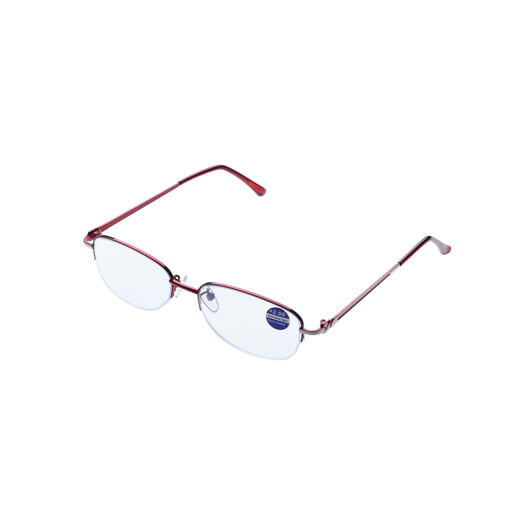
Why this product fits the profile: The half-frame pair labelled 150D is ideal for adults looking for a moderate magnification for books, documents or occasional reading at home.
The product name clearly states the strength. This makes it easier to match your choice to your actual needs, rather than deciding based on the frame alone.
Half-frame design for switching between near and distance vision; classic red colour suitable for men and women.
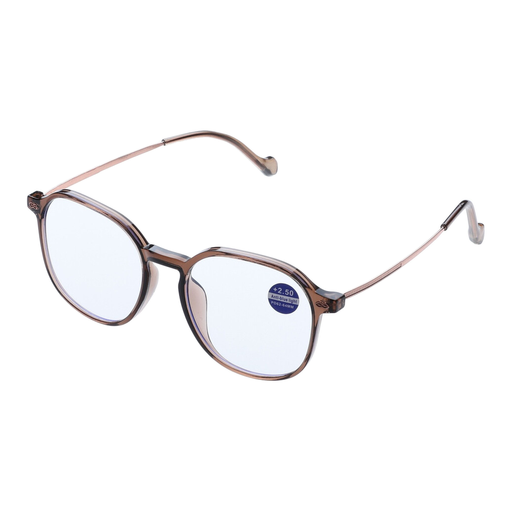
Why this product fits the profile: The full-rim reading glasses are aimed at people who prefer a clearly enclosed frame construction and a higher 400D rating for very small print.
The strength and frame type are visible in the product name. This helps avoid assuming that a high magnification is universally suitable.
Full-rim design; transparent tea colour; according to the product description, intended for small print and detailed documents.
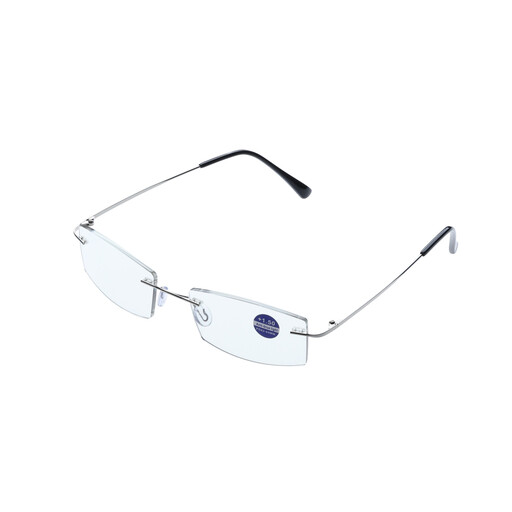
Why this product fits the profile: The rimless reading glasses are suitable for users who want an understated look and a construction with few visible frame elements for the office and home.
The 150D strength is clearly stated. The mention of the rimless design also makes it clear that careful handling and secure storage are important.
Rimless construction; silver finish; according to the product description, intended for books, documents and digital screens.
We’ve put together a full, regularly updated list of products that fully meet these strict selection criteria and the safety regulations in force in the EU.
To keep a lightweight pair of reading glasses or a robust pair of reading glasses usable for as long as possible, a few simple care steps make sense:
A classic pair of reading glasses can be a practical addition for close-up work. For prolonged screen use, also make sure you have suitable lighting, enough distance and take regular breaks.
This can’t be determined by age alone. What matters includes reading distance, font size and the values for both eyes. A ready-made pair of reading glasses can be suitable for simple, uniform needs. If you have symptoms or different vision in each eye, an individual fitting is advisable.
Test the glasses at the distance you normally read at. The print should appear clear, without you having to move your head forward noticeably or strain your eyes. Headaches, dizziness or persistent discomfort mean you should stop using that strength and have your vision needs checked.
The lifespan depends on the material, daily wear and tear, care and storage. A sturdy frame, careful cleaning and a case can help extend their use. Without information from the specific manufacturer, it’s not possible to give a general lifespan. If there are scratches, cracks or deformed temples, the glasses should be replaced.