
Lieferung heute & morgen

Qualitätsgarantie

Willkommens-Angebote freischalten: KOSTENLOSE Lieferung | Bis zu 80 % RABATT | Kostenlose 30-Tage-JoyPlus-Testphase
App herunterladen
The right reading glasses should make text easier to see, feel comfortable and work reliably in everyday life. However, many shoppers focus first on colour or price and overlook important details such as lens strength, frame shape and intended use. As a result, a pair that works well for books might feel uncomfortable at a screen, or stop being used regularly after a short time.
This buying guide explains what adults in Germany should consider when choosing reading glasses for the office, working from home or reading at home. Our selection includes full-rim, half-rim and rimless styles in a range of strengths.
On the models featured here, 150D, 200D, 250D, 300D, 350D and 400D indicate different magnification levels. As a rough guide, these correspond to around 1.5 to 4.0 dioptres. However, stronger reading glasses aren’t necessarily right for every task. They may help with very small print, but could feel unsuitable for larger text or long periods of screen use.
If you experience headaches, eye discomfort or persistent strain, stop using the glasses and consider seeking advice from an optometrist or ophthalmologist.
Shop-bought reading glasses usually have the same strength in both lenses. They don’t normally account for different prescriptions for your right and left eyes, astigmatism or your precise pupillary distance. That’s why they’re not the same as prescription reading glasses made to your individual requirements.
According to the product details, the selected products are reading glasses or visual aids, not prescription glasses. They must not be used for driving, as safety glasses or when operating heavy machinery.
A bold frame isn’t automatically more comfortable. When choosing, consider:
Check the strength before you buy and think about what you’ll mainly use the glasses for. A low to medium strength may be enough for larger text, books or everyday documents. Higher strengths, such as 3.5 or 4.0 dioptres, may suit very small print, but don’t choose them simply because you think “stronger is better”.
The figures in the product names are model values. They’re no substitute for having your eyesight assessed individually.
For reading glasses for men and women, neutral colours and classic shapes are versatile. Transparent tea tones and silver have a subtle look for the office. A red frame adds a more distinctive splash of colour, while keeping to a classic design in the models featured here.
Check that the arms are straight, the glasses sit securely on your nose and the lenses are wide enough. The arms shouldn’t pinch. A case is handy, as lenses can scratch more easily when carried in a bag or left in a drawer.
For short spells of reading at home, lightweight rimless or half-rim glasses may be enough. For regular use at work, a sturdy full-rim frame or a half-rim style is a sensible choice. If you switch between a book, keyboard and screen, you may find the way half-rim glasses guide your vision particularly practical. For longer periods of screen use, good lighting, a suitable viewing distance and regular breaks are also important.
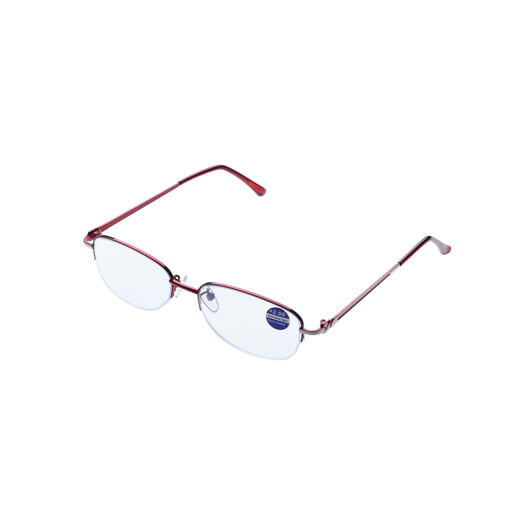
Why this product suits this profile: The 150D version is designed for those looking for lower magnification for books, documents or occasional reading. Its half-rim design makes it easier to switch between close-up reading and looking up.
The lower model strength reduces the risk of choosing unnecessarily high magnification too soon. The frame shape is clearly designed for close-up reading.
Half-rim design; classic red frame; according to the product details, intended for books, documents and digital screens.
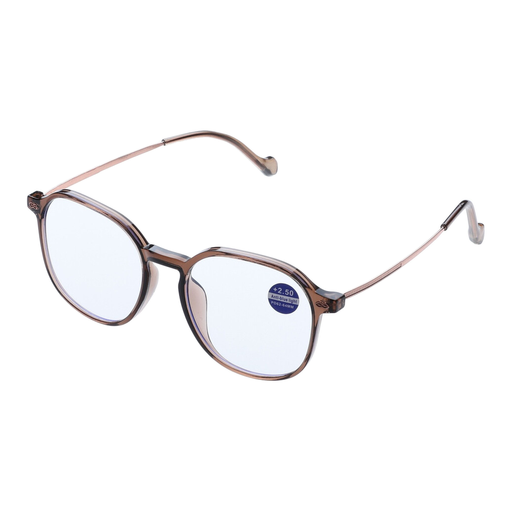
Why this product suits this profile: These full-rim reading glasses are for those who prefer a higher model strength and a fully framed design for regular reading.
The strength is clearly stated in the product name. The full-rim design makes the frame construction clear, rather than relying on a vague promise of durability.
400D model; full-rim frame; transparent tea colour; supplied with a protective case according to the product description.
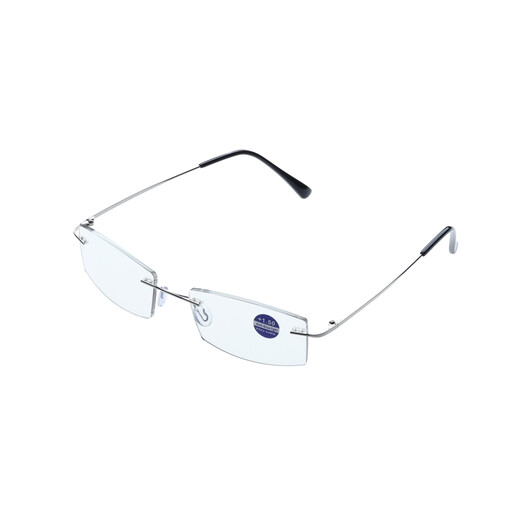
Why this product suits this profile: These rimless reading glasses may appeal if you want an understated look combined with a medium to higher model strength for regular reading.
The specific 350D rating makes it easier to compare with other models. The pared-back frame design also highlights the importance of careful handling and storage.
Rimless design; silver finish; 350D model; available with a protective case according to the product details.
We’ve put together a complete, regularly updated list of products that meet these strict selection criteria and the safety regulations applicable in the EU.
For the office or working from home, half-rim reading glasses can be practical if you often switch between documents, your keyboard and your monitor. However, the right model strength, a comfortable fit and your individual viewing distance are what matter most. Reading glasses aren’t automatically designed specifically for screen use.
How long they last depends on the materials, how often you use them and how you store them. Clean the lenses with a suitable microfibre cloth and keep the glasses in a case whenever possible. If the arms become loose, the lenses get scratched or your vision changes, replace the reading glasses or have your prescription checked by a professional.
The price depends on factors such as frame shape, material, brand and features. Don’t compare only the dioptre rating: check what’s included, whether there’s a case, the returns policy and whether the product is clearly labelled as a visual aid. For more specific vision needs, you may require glasses made to your individual prescription by an optician.