
Lieferung heute & morgen

Qualitätsgarantie

Willkommens-Angebote freischalten: KOSTENLOSE Lieferung | Bis zu 80 % RABATT | Kostenlose 30-Tage-JoyPlus-Testphase
App herunterladen
Reading glasses should magnify small print on paper and screens without becoming an unnecessary inconvenience in everyday life. However, unclear dioptre specifications, unsuitable frame shapes and exaggerated marketing claims can quickly lead to the wrong purchase. This is particularly worth considering when choosing affordable ready-made reading glasses, so it pays to look closely at the key product details.
Ready-made reading glasses are available in different strengths, such as 1.5-dioptre reading glasses, 2.0-dioptre reading glasses or 2.5-dioptre reading glasses. Higher strengths such as 3.0, 3.5 or 4.0 dioptres are intended for shorter reading distances and very small print, but they are not automatically more comfortable for everyone.
Excessive magnification can make the reading distance impractically short. If you experience headaches, eye discomfort or persistent strain while wearing the glasses, take them off and seek advice from an ophthalmologist or optician if the symptoms continue.
Full-frame glasses completely surround the lenses and can therefore provide a stable construction for everyday use. Half-frame glasses typically sit in the lower part of your field of vision. This makes it easier to switch between reading and looking into the distance, for example at a desk.
Frameless reading glasses have a discreet appearance and, by design, may have less frame material. Buyers should therefore pay particular attention to how the lenses are attached, what is included in the package and how carefully the glasses need to be stored. The frame shape is not simply a matter of style; it also depends on how you intend to use the glasses.
Terms such as ‘classic style’, ‘simple and durable’ or ‘for the office and home’ describe the intended positioning of a product, but they do not replace specific details. Before buying, check the following in particular:
The models presented are reading glasses for women and men and are not described as individually made visual aids or safety glasses.
The strength should match your existing near vision and the typical distance from your eyes to a book, document or screen. If you are looking for 1.5-dioptre reading glasses, product descriptions often use the specification 150D. Similarly, 200D, 250D, 300D, 350D and 400D usually correspond to 2.0, 2.5, 3.0, 3.5 and 4.0 dioptres.
This allocation should always be checked against the specific product page. Ready-made reading glasses do not have individually corrected values for each eye and generally do not account for different prescriptions between the eyes or astigmatism.
For books and longer documents, full-frame glasses can provide a fully enclosed lens shape. Half-frame glasses are practical if you regularly want to look over the top of your glasses while reading. Frameless reading glasses may be less noticeable visually, but they require careful handling of the case and arms.
Reading glasses of this kind are intended solely as visual aids for reading. They must not be used while driving, operating machinery or as safety glasses. Care includes using a soft microfibre cloth and storing the glasses in a protective place. Extreme heat and prolonged direct sunlight should be avoided.
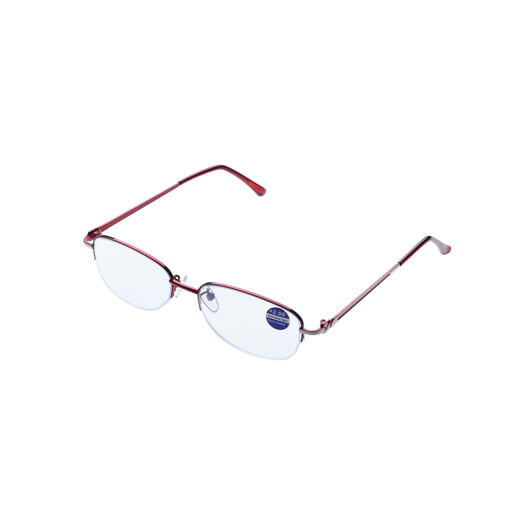
Why this product suits the profile: The half-frame glasses with 150D strength are suitable for users looking for moderate magnification for books, notes or occasional screen work, while still wanting an unobstructed view when looking up.
The clearly stated strength and half-frame design make it easier to choose glasses for occasional use, without suggesting an individually tailored prescription.
Half-frame design, 150D strength and red frame; according to the product details, intended for use in the office and at home.
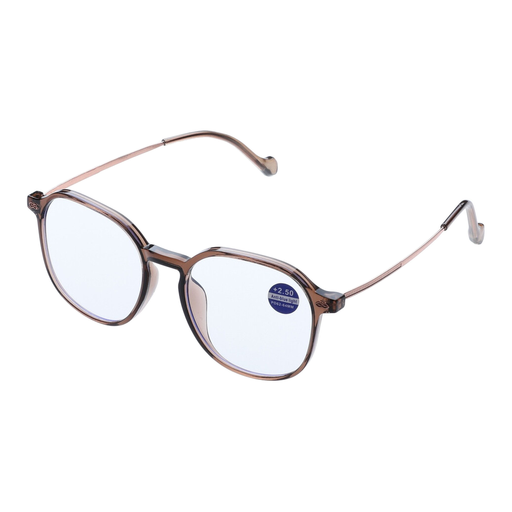
Why this product suits the profile: The full-frame glasses feature a fully enclosed lens shape and a medium strength for regular reading of paperwork, books and digital content.
The product name clearly states the frame shape and strength. This makes it easier to choose glasses that match your reading distance and desired level of stability.
Full-frame construction, 300D or 3.0 dioptres according to the product details, and a transparent tea colour.
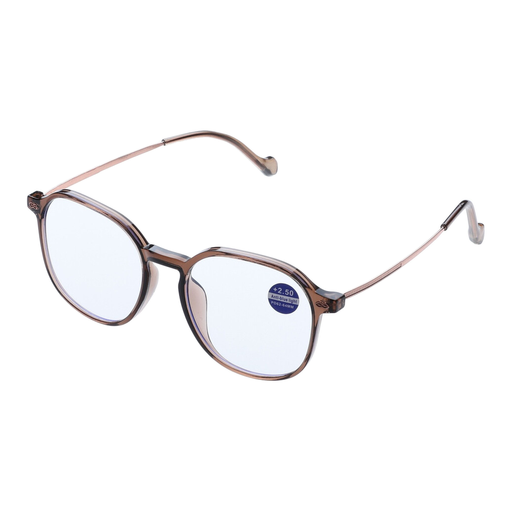
Why this product suits the profile: The higher strength is intended for people viewing very small print at short reading distances. The full-frame design can help keep the glasses securely in place.
The stated 400D strength prevents the high magnification from being confused with a medium strength. However, you should still assess beforehand whether it is genuinely suitable for your intended use.
Full-frame design, 400D or 4.0 dioptres according to the product details, and a protective case as described.
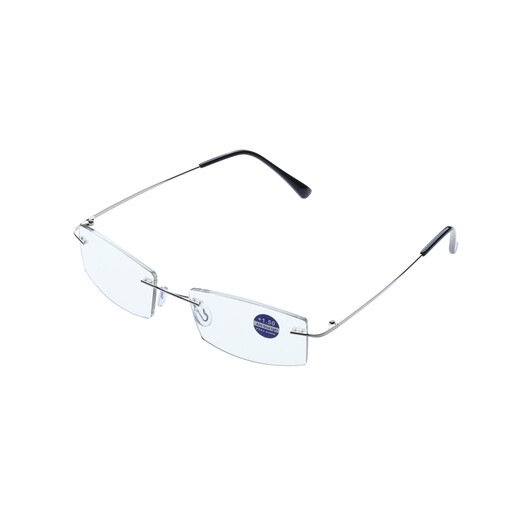
Why this product suits the profile: The frameless design with 200D strength is aimed at users who prefer discreet glasses with moderate magnification when reading at work.
The specific 200D specification distinguishes this model from stronger options. Because of its frameless construction, storing it in a case is particularly advisable.
Frameless construction, silver finish and 200D or 2.0 dioptres in the product name.
We have put together a complete, regularly updated list of products that fully meet these strict selection criteria and the safety regulations applicable in the EU.
That depends on your individual reading distance and the strength you have used previously. Moderate options such as 1.5 or 2.0 dioptres are often used for standard-sized text, while 3.0 to 4.0 dioptres may require a significantly shorter distance. Ready-made reading glasses are not a substitute for an individual eye test.
Their lifespan depends on the material, daily use and how they are stored. The arms and lenses should be checked regularly to ensure they are secure and free from scratches. A case, a microfibre cloth and avoiding extreme heat can help extend their useful life in everyday use. Without specific information from the manufacturer, it is not possible to give a reliable general lifespan.
Yes, provided the strength and distance from the screen are suitable for one another. Half-frame glasses can be practical when you need to change your focus regularly. It is important not to use reading glasses as safety glasses and not to wear them while driving or operating machinery. If discomfort occurs repeatedly, seek professional advice.