
Lieferung heute & morgen

Qualitätsgarantie

Willkommens-Angebote freischalten: KOSTENLOSE Lieferung | Bis zu 80 % RABATT | Kostenlose 30-Tage-JoyPlus-Testphase
App herunterladen
Reading glasses are designed to magnify text, books and documents at a comfortable distance. Even so, choosing the right pair often leads to disappointing purchases: the strength may not suit your actual viewing distance, the frame can become uncomfortable after a short time, or a delicate design may be chosen for everyday transport even though it is less suitable for this purpose.
This buying guide explains which details matter before purchasing reading glasses and which models suit different everyday situations. The selection is aimed at adults looking for straightforward visual assistance for the office and home.
Standard reading glasses are available in different magnification strengths. Ratings such as 1.5 dioptres, 2.5 dioptres or 3.0 dioptres provide guidance for close-up vision. They do not replace an individual eyesight assessment.
A strength that is too low can make letters difficult to read without straining. A strength that is too high may feel uncomfortable during prolonged use. The distance from the reading material also matters: a book is usually held closer than a screen on a desk.
Red reading glasses or silver reading glasses may suit your personal style. However, other criteria are more important for everyday practicality:
Colour and design are useful selection criteria, but they should not take priority over fit and the required strength.
Frameless reading glasses have a discreet appearance and can feel lightweight. Half-frame reading glasses make it easier to look over the lower part of the glasses when switching between reading and looking at the keyboard, around the room or at a screen. Full-frame reading glasses fully surround the lenses and provide a clearly defined frame structure.
None of these styles is automatically right for everyone. If you frequently remove, carry or use your glasses at work, pay particular attention to a sturdy construction and safe storage.
First, consider which strength is suitable for your typical use. Product specifications may include:
In the product names in this range, these values are sometimes shown as 150D, 250D or 300D. Check the product description against the strength you want before ordering. If you experience headaches, eye strain or persistently blurred vision, stop using the glasses and consider seeking an assessment from an ophthalmologist or optometrist.
The frame shape affects how quickly you can switch between reading and looking into the distance:
Classic models and unisex reading glasses are available for a coordinated appearance. The term “unisex” describes the design for women and men; it does not indicate an individually suitable prescription strength.
Check the product information for details of the frame, lenses and items included. Several of the models mentioned here come with a case. A microfibre cloth is suitable for cleaning. Do not expose the glasses to high heat or direct sunlight for extended periods.
Reading glasses are not safety glasses and are not intended for driving or operating heavy machinery. Children should not be allowed unsupervised access.
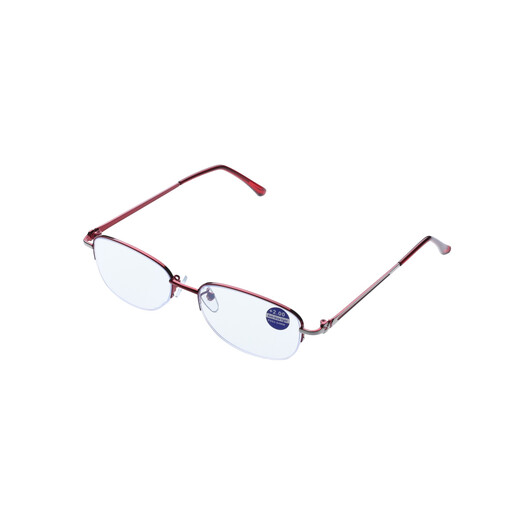
Why this product suits this profile: The combination of 250D lenses, a red frame and a half-frame design is ideal for shoppers looking for classic, eye-catching reading glasses for the office and home.
The clearly stated 250D strength makes it easier to check suitability for your preferred close-up distance, while the half-frame design supports switching between reading and looking up.
Half-frame design, red colour and unisex styling.
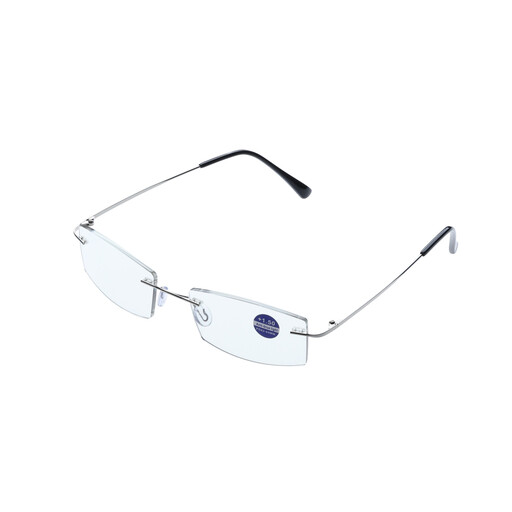
Why this product suits this profile: The silver, frameless design is intended for users who prefer a discreet look and a lower 150D magnification strength.
The product description specifies a discreet, frameless construction and a defined strength rather than making vague claims about magnification.
Frameless design, silver finish and case included.
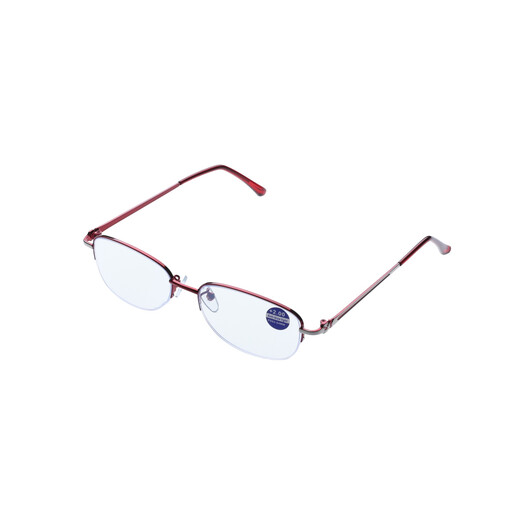
Why this product suits this profile: The 300D version is aimed at users who need a stronger reading strength and regularly switch between close-up reading and looking around them.
The half-frame construction is designed for occasionally looking up, while the specific 300D rating makes it easier to check the strength before buying.
300D strength, red frame and half-frame design for the office and home.
If you prefer a full surrounding frame, you can choose the White Label Full Frame Reading Glasses 350D in a transparent tea colour: White Label Full Frame Reading Glasses 350D. A silver frameless version with 250D is also available: Frameless Reading Glasses 250D.
A lower-strength half-frame option is available as the Half Frame Reading Glasses 150D in Red. If you are looking for a frameless version with 350D, take a look at the Frameless Reading Glasses 350D in Silver.
We have put together a complete, regularly updated list of products that fully meet these strict selection criteria and the safety regulations applicable in the EU.
It depends on the distance. A monitor often requires a different strength from a book held close to you. Compare the available dioptre strength with your typical working distance. If you work at a screen regularly, individual advice may be helpful.
Their lifespan depends on the frame construction, care, transport and daily use. A case and microfibre cloth help prevent scratches and deformation. Avoid extreme heat, prolonged direct sunlight and putting the glasses down carelessly.
No. The models listed are intended as reading aids and are not suitable for driving, use as safety glasses or operating heavy machinery. If you are unsure about the required strength or how to use the glasses, please consult an ophthalmologist or optometrist.