
Lieferung heute & morgen

Qualitätsgarantie

Willkommens-Angebote freischalten: KOSTENLOSE Lieferung | Bis zu 80 % RABATT | Kostenlose 30-Tage-JoyPlus-Testphase
App herunterladen
Reading glasses are designed to make books, documents, smartphones and screens easy to use at a typical reading distance. When shopping online, the choice may initially seem straightforward: select the strength, colour and frame, place your order and you’re done. In practice, however, choosing the wrong dioptre strength, an unsuitable frame or unclear product information can quickly lead to a disappointing purchase.
This buying guide explains which details are important before purchasing reading glasses with dioptres and which models are suitable for different everyday situations.
A blanket recommendation based on age is unreliable. What matters is the distance at which you read and which strength actually feels comfortable. A strength that is too low can make reading unnecessarily tiring, while one that is too high can also make the glasses difficult to use.
Ready-made reading glasses are often available in strengths such as +1.5, +2.0, +2.5, +3.0, +3.5 or +4.0 dioptres. In the product descriptions in this range, these strengths sometimes appear as 150D, 200D, 250D, 300D, 350D and 400D. Check the designation against the strength you need before placing your order.
Colour and style are personal preferences. For example, red reading glasses can create a striking accent, while a silver or transparent tea-coloured frame has a more understated look. For everyday use, however, fit, lens position, arm comfort and weight are more important.
A frame that slips when you look down is just as impractical in the office as arms that are too short. When shopping online, you should therefore consider the product images, measurements and information about the frame shape.
Ready-made reading glasses are designed as visual aids for similar requirements in both eyes. They are not a replacement for individually made spectacles. Information about individual cylinder values, different strengths for each eye or precise adjustment of the interpupillary distance is generally not provided for these models.
The product information also states that the glasses must not be used as safety glasses or while driving. If you experience headaches, eye strain or persistent discomfort, stop using them and seek advice from an optician or ophthalmologist.
Reading glasses with 1.5 dioptres are often chosen for lower magnification requirements. Reading glasses with 2.0 dioptres or 2.5 dioptres may be suitable for smaller print or slightly greater magnification. Models with 3.0, 3.5 or 4.0 dioptres are designated for very small print, but should not be selected solely on the basis of a product description.
It is useful to compare them with a pair of glasses that you already find comfortable to use. If you do not yet know which strength is right for you, you can consider several options and check the retailer’s stated returns and product conditions. For extended screen use, the actual distance from the monitor is also important; classic reading glasses are not automatically optimised for every screen distance.
According to the product description, half-rim reading glasses keep the lower part of the lenses in your field of vision and make it easier to switch between reading and occasional distance viewing. This can be practical in the office or at home when you frequently alternate between documents and your surroundings.
Full-rim reading glasses completely surround the lenses. This can provide more stable positioning and gives the frame a clearly defined structure. Rimless reading glasses, by contrast, use a minimal frame and have a discreet appearance. Before buying, check whether the delicate construction is suitable for your intended everyday use.
Depending on the model, the product information lists metal or plastic components, magnifying lenses and, in some cases, a protective case. A case is useful for preventing scratches when carrying the glasses in a bag or storing them in a desk drawer. A microfibre cloth is suitable for cleaning; aggressive cleaning products and high temperatures should be avoided.
Reading glasses should be kept out of the hands of small children. They must not be used as safety glasses, while driving or when operating heavy machinery. These instructions apply regardless of whether you are looking for reading glasses for women and men, lightweight reading glasses or a classic model.
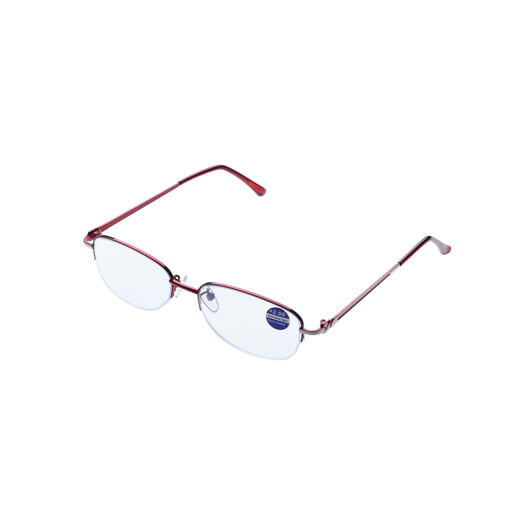
Why this product suits this profile: These red half-rim reading glasses are marked as a 150D model and are suitable for shoppers looking for a simple visual aid for the office and home, with a striking colour.
The strength and frame type are clearly shown in the product name. This makes it easier to compare the choice with your personal requirements.
Half-rim design, red frame and 150D designation; according to the product description, intended for use in the office and at home.
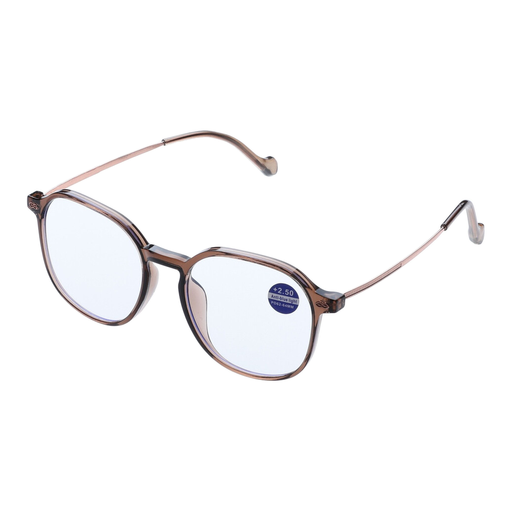
Why this product suits this profile: This full-rim model is marked as 400D and is aimed at users who read very small print and prefer a fully framed, transparent tea-coloured design.
The high 400D designation is clearly stated and should not be mistaken for a universally suitable strength. Check your personal requirements before buying.
Full-rim construction, 400D designation and case according to the product description.
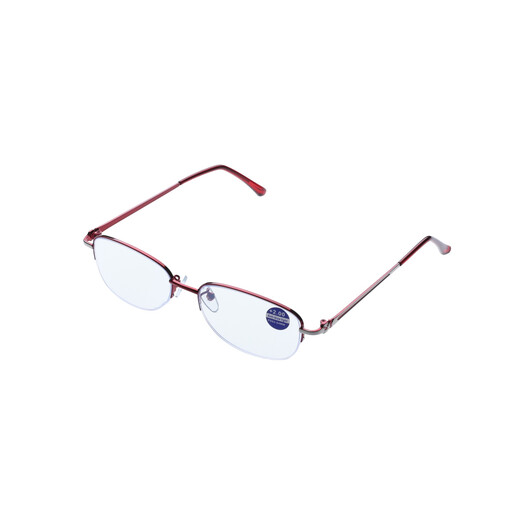
Why this product suits this profile: The half-rim design is appealing to users who regularly switch between documents, screens and their surroundings while reading. This model is listed with 300D lenses and a red frame.
The half-rim design is not promoted as a protective feature. The safety information clearly distinguishes this visual aid from safety or driving glasses.
300D designation, half-rim design, case and cleaning instructions according to the product description.
For your desk, silver rimless reading glasses with 150D, 200D or 250D can be a discreet option. If you prefer a visible frame, you can find full-rim models with 150D, 250D or 300D lenses in transparent tea. Classic reading glasses for women and men should primarily be chosen based on strength, fit and intended use, not just the colour description.
Before placing your order, we recommend this quick checklist:
We have put together a complete, regularly updated list of products that fully meet these strict selection criteria and the safety regulations applicable in the EU.
That depends on your usual viewing distance and the level of magnification you need. Models with 1.5 to 2.5 dioptres are often considered suitable for normal reading text at a relatively short distance. The important thing is that you can read the text without squinting or adopting an uncomfortable posture.
Their lifespan depends on the material, how they are used and how they are stored. Scratches, bent arms and frequently placing the glasses lens-down can shorten their useful life. A protective case, a microfibre cloth and avoiding heat all help you handle them with care. Do not continue using the glasses if the lenses are damaged.
Ready-made reading glasses are intended for the specified near-vision range. Whether they are suitable for extended use depends on the strength, fit and your personal visual requirements. They must not be used while driving, when working with machinery or as safety glasses. If you experience recurring eye strain, it is advisable to seek an individual assessment.