
Lieferung heute & morgen

Qualitätsgarantie

Willkommens-Angebote freischalten: KOSTENLOSE Lieferung | Bis zu 80 % RABATT | Kostenlose 30-Tage-JoyPlus-Testphase
App herunterladen
Reading glasses are designed to magnify small print, support you while reading books and be easy to use at home or in the office. However, unclear dioptre specifications, an unsuitable frame style or exaggerated advertising claims often lead to disappointing purchases. Before buying, it is therefore worth making a practical comparison of a few key features.
On the models presented here, designations such as “150D”, “300D” or “400D” refer to the magnification strength. In everyday UK usage, these are usually expressed as 1.5 dioptres, 3.0 dioptres or 4.0 dioptres. A higher number is not automatically more suitable. If the strength is too high, reading can become uncomfortable, and the text may be harder to focus on despite the magnification.
Ready-made reading glasses also generally have the same strength on both sides. If there is a significant difference between the prescription strengths of your eyes or you experience ongoing discomfort, you should seek individual advice from a qualified optician.
Rimless reading glasses, half-frame reading glasses and full-frame reading glasses differ in more than just their appearance:
Classic reading glasses with a transparent or silver-coloured frame go well with a range of clothing styles. However, the colour alone says nothing about stability or magnification performance.
Reading glasses are not safety glasses and are not individually made prescription glasses. The models mentioned are not intended for driving or operating heavy machinery. Extreme heat, prolonged exposure to direct sunlight and unprotected storage can affect the lenses or frame.
Before buying, check the details of the contents, warnings and the responsible person in the EU. For several of the offers mentioned, Jingdong Retail Germany GmbH, based in Buseck, is listed as the responsible person in the EU.
The following strengths can serve as a general guide:
The product selection includes, for example, 150D, 200D, 250D, 300D, 350D and 400D. Here, 150D corresponds to the usual designation of 1.5 dioptres, 300D to approximately 3.0 dioptres and 400D to approximately 4.0 dioptres. Before placing an order, choose the strength that allows you to read smaller text without having to squint.
For reading glasses for the office and home, it is important to consider whether they will mainly be worn during longer reading sessions or frequently put on and taken off. A full-frame design can provide an enclosed construction that stays securely in position. Half-frame reading glasses can be useful if you regularly switch between close-up tasks and looking around the room. Lightweight rimless reading glasses may appeal to users who prefer a frame that is as unobtrusive as possible.
Before buying, check the following:
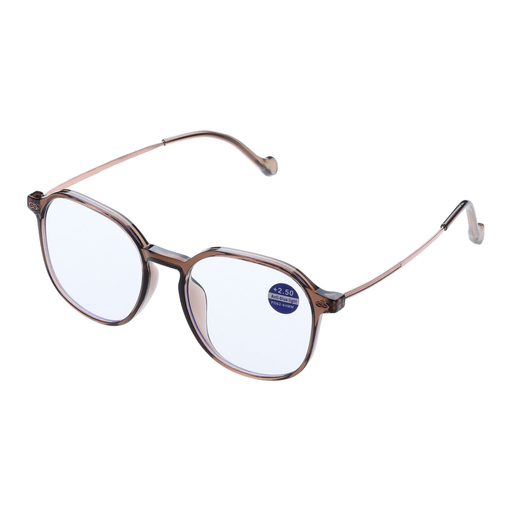
Why this product suits this profile: The 150D version is designed for slight magnification and is suitable for straightforward reading tasks involving books, documents or screens. The transparent tea colour has a discreet appearance and is suitable for both women and men.
The specific 150D specification makes it easier to choose than vague claims about magnification. The full-frame design also makes the frame style clear before purchase.
150D magnification, full-frame design and transparent tea colour; according to the product details, 1 pair.
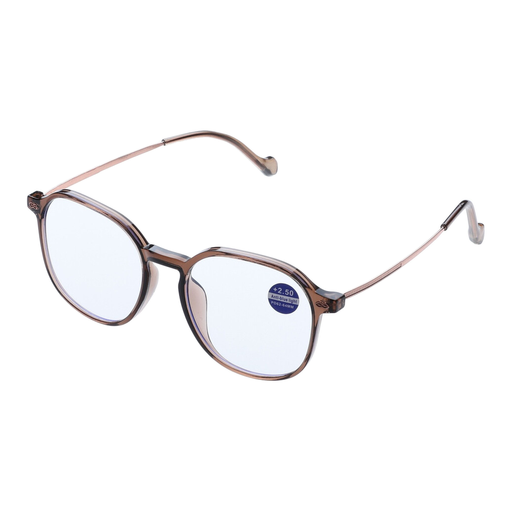
Why this product suits this profile: The 400D version is aimed at users who read very small print and need high magnification. An enclosed full-frame design and the stated protective case are well suited to careful everyday use.
The high strength is clearly stated. The product information also specifies the usage limitations, identifying the glasses as a reading aid and excluding use as safety glasses or while driving.
400D magnification, full-frame design, transparent tea colour and protective case according to the product details.
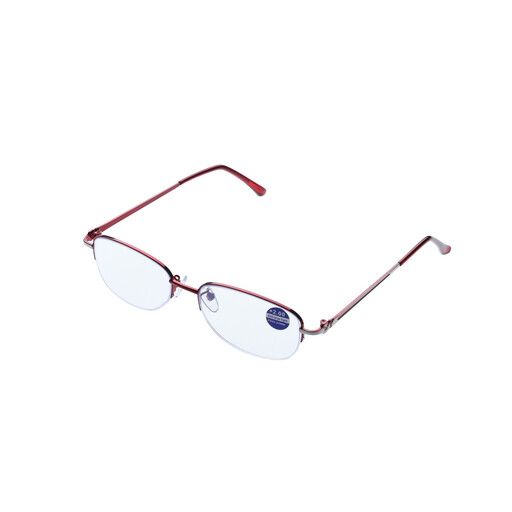
Why this product suits this profile: The 350D strength is intended for smaller print. The half-frame design can be suitable for situations where you regularly shift your gaze from reading material to your surroundings, such as at a desk or around the home.
The frame is clearly identified as a half-frame model. This allows you to check in advance whether the open design suits the way you shift your gaze and your intended use.
350D magnification, half-frame design and red colour option; according to the product details, designed for both women and men.
We have put together a complete, regularly updated list of products that fully meet these strict selection criteria and the safety regulations applicable in the EU.
This depends on the reading distance, font size and your individual eyesight. 1.5 dioptres or 150D provide lighter magnification. 3.0 or 4.0 dioptres may be suitable for very small print, but should not be chosen based solely on the idea that “stronger is better”. If headaches or eye strain persist, it is advisable to consult an optician.
Their lifespan depends on the frame, daily use and care. A case, a microfibre cloth and avoiding heat can help extend their usable life. If the arms become bent, the lenses are scratched or the alignment is no longer suitable, the glasses should be replaced. Refer to the guarantee and durability information on the product label.
Suitable reading glasses can be used for short or medium-length screen tasks, provided that the distance and strength are appropriate. The screen should be adequately lit and positioned at a suitable distance. Reading glasses are not a substitute for occupational glasses with individually determined specifications. If you experience discomfort, stop using them and seek professional advice.