
Lieferung heute & morgen

Qualitätsgarantie

Willkommens-Angebote freischalten: KOSTENLOSE Lieferung | Bis zu 80 % RABATT | Kostenlose 30-Tage-JoyPlus-Testphase
App herunterladen
Reading glasses should make small print, books, documents and screens easier to see, whether you’re at home or in the office. But the stated strength isn’t the only thing to consider when buying a pair. The wrong magnification, a flimsy frame or no protection for the lenses could mean you hardly use your glasses day to day.
Product names in shops can seem clearer than they really are. Details such as 150D reading glasses, 200D reading glasses or 400D reading glasses should always be considered alongside how your vision feels, your usual reading distance and the product description.
Higher magnification can be useful for very small print, but it won’t suit every everyday situation. If you want to read longer passages on a screen with 400D reading glasses, you may need to sit at a different distance than you would with a lower strength. Higher magnification can also take some getting used to.
The ‘D’ marking in the supplied product names is a product specification. It shouldn’t automatically be treated as equivalent to a prescribed or individually measured vision correction. If you experience persistent discomfort, headaches or eye strain, it’s sensible to seek advice from an optician or doctor.
Rimless reading glasses have a subtle look and can feel light thanks to their minimal frame. At the same time, the lenses aren’t fully enclosed. If you carry your glasses in a bag or put them on and take them off frequently, store them carefully and handle them with care.
Full-frame reading glasses fully enclose the lenses. This can be a practical advantage if you use your glasses regularly or take them with you when you’re out and about. Semi-rimless reading glasses sit between the two styles, offering a visible frame with an open section at the top or bottom of the lens, depending on the design.
Terms such as ‘classic’, ‘lightweight’ or ‘durable’ are only useful when backed up by features you can check. Look for:
Reading glasses are a visual aid, not safety glasses, sunglasses or prescription glasses for driving.
Choose according to how you’ll typically use your glasses. The supplied product details describe 150D reading glasses as offering gentle magnification for books, documents and screens. Options with 200D, 250D or 300D may suit people who need greater magnification. According to the product descriptions, 350D reading glasses and 400D reading glasses are intended for very small print or particularly detailed text.
To help you narrow down your options:
These details aren’t a substitute for an individual eyesight test. If your eyes have different prescriptions or you have ongoing vision problems, personalised advice is a better option.
For the office and home, a subtle rimless style can complement a simple look. Full-frame glasses fully enclose the lenses and often have a more defined appearance. Semi-rimless glasses are an option if you’d rather avoid a bolder frame but still prefer a visible frame structure.
Fit matters too: the lenses should sit centred in front of your eyes, the arms shouldn’t press uncomfortably and the glasses shouldn’t keep slipping when you read normally.
Dust and fingerprints can make it harder to see clearly, whatever the frame style. For everyday care:
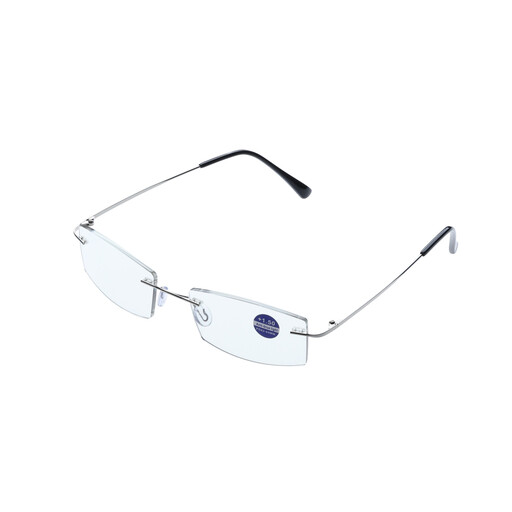
Why this product suits this profile: These rimless glasses, listed as 150D, are suitable for adults looking for a subtle pair of reading glasses for books, documents and screens in everyday life.
The specific strength and rimless design are clearly stated. This makes it easier to narrow down your options, rather than relying on general marketing claims alone.
Rimless design, silver finish, 150D option and protective case according to the product description.
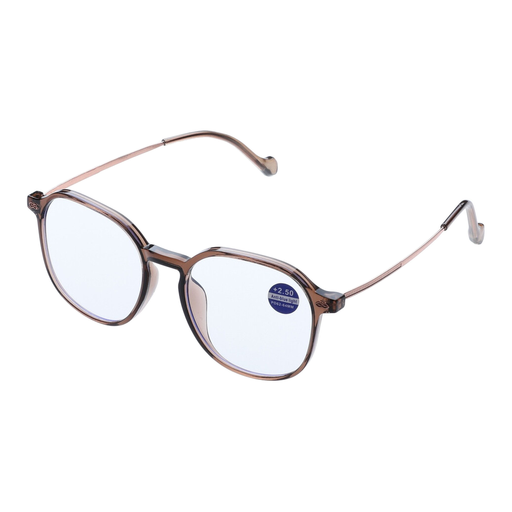
Why this product suits this profile: These full-frame glasses are designed for people who prefer lenses fully enclosed by the frame for regular reading at home or at work.
The frame style is listed as Full Frame, so you can see before buying that the lenses are fully enclosed by the frame.
Full frame, 300D specification, transparent tea colour and a classic unisex design.
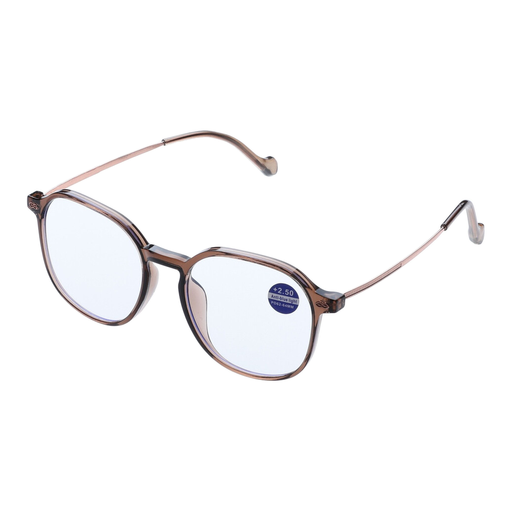
Why this product suits this profile: The 400D option is intended for adults who need a higher product strength for very small print and detailed documents.
The higher strength isn’t presented as a one-size-fits-all solution. It’s intended for a specific use: reading very small print.
Full frame, 400D specification, stable positioning according to the product description and a protective case included.
Lower or medium options such as 150D, 200D, 250D or 300D are often worth considering for standard printed text. The key factors are the print size, reading distance and how your vision feels. A higher rating won’t necessarily be more comfortable.
Their lifespan depends on the frame construction, how much you use them, and how you clean and store them. A protective case can help reduce scratches and pressure damage when you’re carrying them. If the arms are loose, the lenses are damaged or there are obvious signs of wear, check the condition of the glasses before using them again.
Some of the supplied models are described as suitable for documents and screens. However, the right distance matters: a screen is usually further away than a book. If you experience eye discomfort, ongoing tiredness or headaches, stop using the glasses and seek professional advice.