
Lieferung heute & morgen

Qualitätsgarantie

Willkommens-Angebote freischalten: KOSTENLOSE Lieferung | Bis zu 80 % RABATT | Kostenlose 30-Tage-JoyPlus-Testphase
App herunterladen
A pair of reading glasses with prescription can be handy when reading books, documents or text on your mobile phone. At first glance, the selection seems straightforward: determine the strength, choose a frame, and place your order. However, mistakes are often made because the information on product pages is presented differently, or the design simply doesn't suit your daily needs.
Reading glasses are often described with values such as +1.5, +2.0, +2.5, +3.0, +3.5 or +4.0. In product names, the same range can also appear as 150D, 200D, 250D, 300D, 350D or 400D. Here, 150D typically corresponds to around +1.5, 200D to around +2.0, and 400D to around +4.0.
Before purchasing, you should cross-check this mapping against the details on the specific product page. A pair of reading glasses is not a substitute for a custom-fitted vision aid. If you are experiencing vision problems for the first time or if they have changed significantly, it is advisable to seek professional advice.
A rimless pair of reading glasses looks light and discreet, but offers less visible frame area than a full-rim pair. A half-rim pair of reading glasses can be practical if you want to occasionally look into the distance over the top of the lenses while reading. A full-rim pair of reading glasses, on the other hand, completely encloses the lenses and often feels more stable in everyday use.
For the office and home, it's not just about looks. Pay attention to:
Terms like “particularly durable”, “suitable for all situations” or “comfortable for everyone” are of limited value without concrete product details. Instead, check whether the seller specifies the strength, design type, colour, what's included, and safety instructions.
A pair of reading glasses is not safety eyewear. They should not be used for driving, operating machinery, or as personal protective equipment. Extreme heat and prolonged direct sunlight can damage the product.
A weaker strength like +1.5 reading glasses is generally suitable for people who only need a slight magnification. Variants such as +2.0 or +2.5 fall in the mid-range. +3.0, +3.5 and +4.0 are intended for significantly smaller print. This classification is a guide and not a personal vision diagnosis.
When buying, you shouldn't choose glasses solely based on the presumed strength. Also important are:
A rimless pair of reading glasses offers a subtle look with little visible frame. A half-rim pair of reading glasses makes it easier to switch between close-up work and looking up. A full-rim pair of reading glasses provides a continuous frame around the lens and is easily recognised as a classic reading glasses style for many everyday situations.
The terms “lightweight” and “robust” should not be considered in isolation. What matters are the specific details of the offer and careful handling: remove your glasses with both hands, clean the lenses with a soft cloth, and store them in a case or a protected compartment when not in use.
The models presented here are described as reading aids, not as prescription glasses with individual fitting. If you experience headaches, eye strain or persistent blurred vision, stop using them and seek advice from an optician or eye doctor. Children should not have unsupervised access to these glasses.
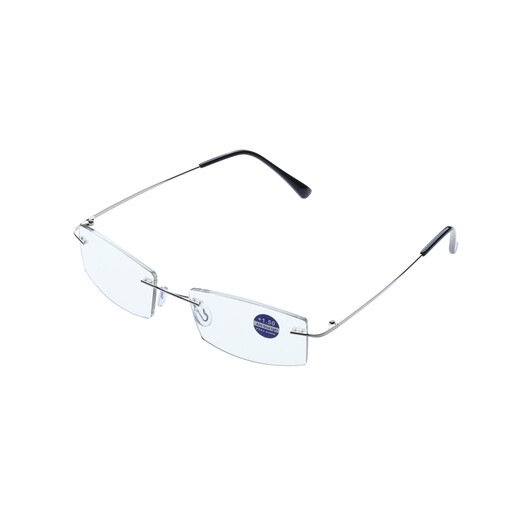
Why this product fits the profile: The 200D version corresponds to the +2.0 guide, and the rimless silver design is intended for discreet use at home or in the workplace.
The strength is clearly stated as 200D in the product name. This allows you to more precisely match your selection with the desired +2.0 range.
Rimless construction and silver unisex design for a subtle, classic style.
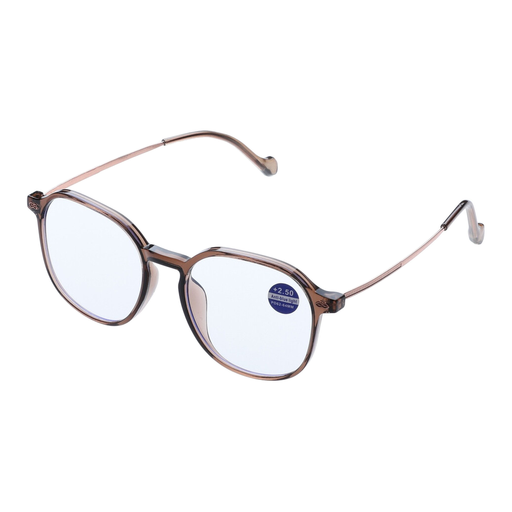
Why this product fits the profile: The full-rim frame and 300D strength are aimed at users who prefer a clearly defined, classic pair of reading glasses for documents and on-screen text.
The design is clearly labelled as a full-rim model. This reduces the risk of accidentally choosing a rimless or half-rim frame for your intended use.
Full-rim design, 300D strength and transparent tea colour in a unisex style.
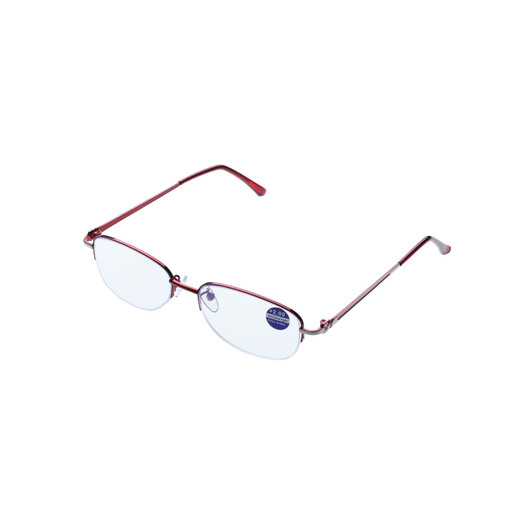
Why this product fits the profile: The half-rim design is ideal for people who regularly look up while reading, for example between documents, a screen and their surroundings.
The half-rim style is explicitly named and not just inferred from a product photo. The 200D specification also makes it easier to verify the strength.
Half-rim design, 200D strength and red frame for office and home use.
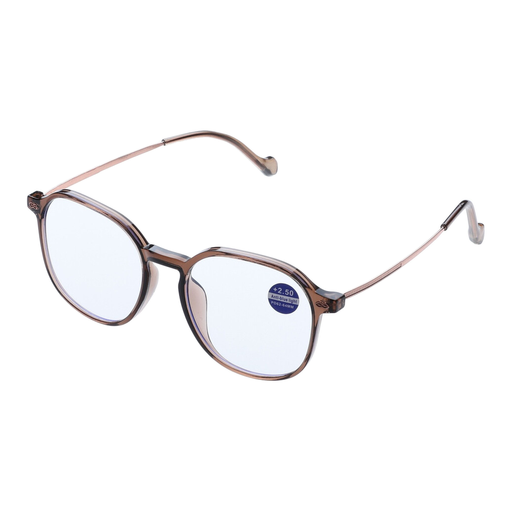
Why this product fits the profile: The 400D version corresponds to the +4.0 guide and is intended for very small print or detailed text, provided this strength suits your individual needs.
The strength and full-rim design are stated directly in the product name. This makes it easy to check whether both the desired magnification and preferred frame type are present.
400D strength, full frame and classic transparent tea colour for men and women.
To keep a lightweight pair of reading glasses usable for as long as possible, a few simple measures help:
The lifespan depends on the material, workmanship, daily wear and care. Without specific manufacturer information, it is not possible to give a reliable general durability period.
That depends on the distance to the screen and the magnification you need. A pair of reading glasses is fundamentally designed for close-up work. If you frequently switch between the screen, keyboard and your surroundings, you may find a half-rim pair of reading glasses practical. If blurriness or discomfort persists, you should have your eyesight professionally checked.
In these product descriptions, 200D is used as a guide for approximately +2.0. Accordingly, 150D, 250D, 300D and 400D roughly correspond to +1.5, +2.5, +3.0 and +4.0. The details on the specific product page remain definitive.
Store them in a protected place, clean the lenses with a soft cloth, and avoid extreme heat as well as prolonged direct sunlight. Do not use them for driving or as safety eyewear.