
Lieferung heute & morgen

Qualitätsgarantie

Willkommens-Angebote freischalten: KOSTENLOSE Lieferung | Bis zu 80 % RABATT | Kostenlose 30-Tage-JoyPlus-Testphase
App herunterladen
If you frequently read small print, switch between the office and home, or want to access information hands-free while out and about, there are now many different eyewear models to choose from. Reading glasses and smart glasses serve very different purposes, however. A classic pair of reading glasses magnifies text, while a display pair of glasses can show digital hints, translations or notifications.
Your choice should therefore not be based solely on colour or modern design. What really matters is the lens strength, frame construction, intended use, power supply and how your personal data is handled.
Specifications such as reading glasses 250 dioptres, reading glasses 350 dioptres or reading glasses 400 dioptres in a product context usually correspond to a magnification of around +2.50, +3.50 and +4.00 dioptres respectively. The higher the strength, the closer the comfortable reading zone generally is to your eye. For longer texts at a desk, glasses that are too strong can therefore be impractical.
A pair of reading glasses is also not a substitute for individually prescribed corrective lenses. If you experience headaches, eye discomfort or persistent visual uncertainty, you should have your eyes checked by an optician or ophthalmologist.
A full-rim reading glass completely surrounds the lenses and can therefore offer a closed, robust construction. A half-rim reading glass looks lighter and leaves the lower area more open. A rimless reading glass reduces visible frame elements, but may require more careful handling with daily use.
More important than the pure aesthetics are an even fit, suitable temple length and the most central position possible of the lenses in front of your eyes. Colours such as reading glasses transparent tea brown, a red reading glass or a silver reading glass influence the style, not the optical effect.
A smart glass, display glass or smart glass with translation can show digital content. However, it does not automatically replace a pair of reading glasses or an individually prescribed visual aid. Before buying, you should check:
For short texts, labels or invoices, a lower strength may be sufficient than for very small print. A 250D reading glass is suitable as a possible entry-level strength, while 350D and 400D are intended for users with a higher magnification requirement. The specifications on the product page should be compared with your personal needs.
Full-rim, half-rim and rimless models differ in terms of protection, weight and visible frame area. A plastic frame can be a straightforward everyday solution. Metal or light-alloy constructions are often used in smart glasses, where the electronics, battery and display need to be integrated as compactly as possible.
With a teleprompter glass, a clearly readable display, voice control and suitable app support are important. For travellers, translation functions and smart glasses with navigation are of interest. If you consciously want to avoid taking pictures, you should look for an AI glass without a camera and read the manufacturer's information on data processing.
The Even G2 models are offered according to product information without a camera, with a micro-LED display and a weight of 36 g. Also mentioned are up to two days of regular use and up to two weeks with the charging case. These values depend on the usage profile and the activated functions.
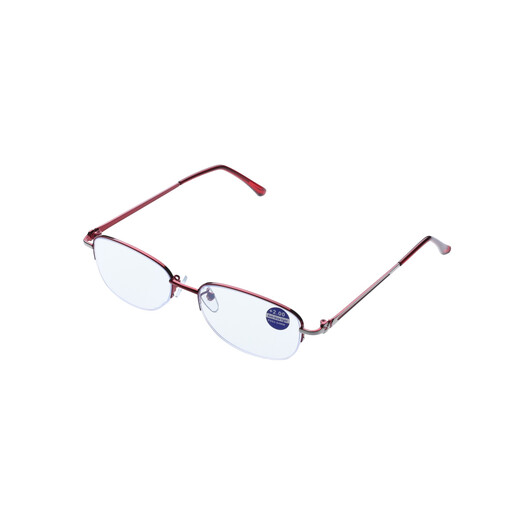
Why this product suits the profile: The 250D strength and half-rim design make it a straightforward option for short reading sessions in the office, at home or on the go. The red frame adds a visible splash of colour.
The clearly stated strength makes selection easier. However, you should still check before buying whether your personal reading distance matches it.
250D magnification, half-rim construction and unisex design according to the product description.
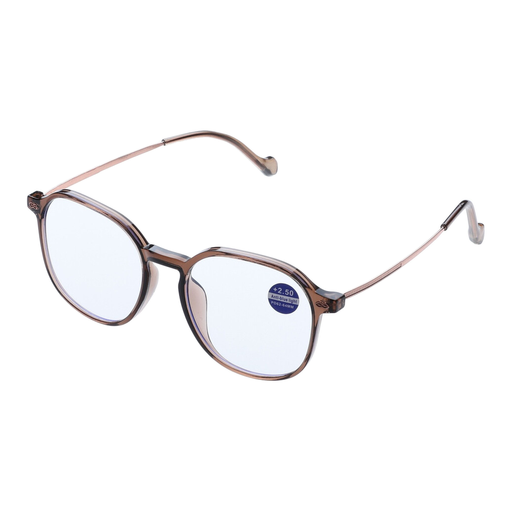
Why this product suits the profile: The closed frame is of interest to users who prefer a stable construction for regular reading in a study or office.
The 400D strength is not presented as a general everyday recommendation. It should only be chosen if you genuinely need strong magnification.
Full-rim design, transparent tea brown frame, 400D specification and protective case according to the product description.
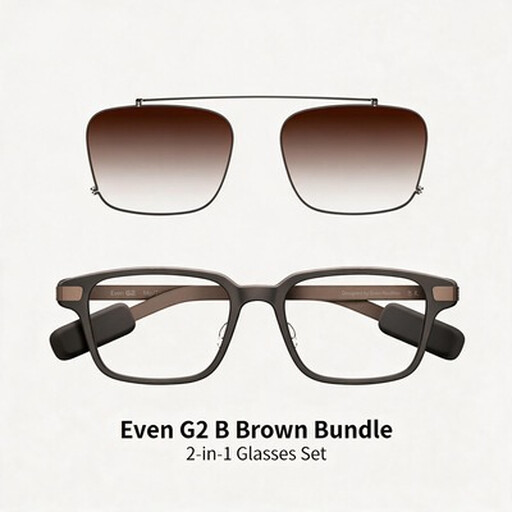
Why this product suits the profile: The camera-free display glass is aimed at presenters, travellers and professionals who want to use translation, navigation, notifications or a teleprompter hands-free.
The product information explicitly states a construction without a camera. Additionally, you should check the charging case, app connectivity and the actual range of functions before buying.
36 g weight according to product information, micro-LED display, translation in more than 35 languages, navigation, teleprompter and clip-on sun lens.
We have put together a complete, regularly updated list of products that fully meet these strict selection criteria and the safety regulations in force in the EU.
For longer texts at a desk, the correct strength is crucial. A 250D reading glass may be suitable for some users as a lower magnification. 350D or 400D are stronger and should not be chosen solely because of the higher number. The frame shape and fit are also important.
The lifespan depends on the frame material, daily use, cleaning and storage. A full-rim reading glass can be stably positioned thanks to its closed frame. With rimless models, you should be particularly careful when opening and closing them.
In addition to the purchase price, charging accessories, app services, smartphone connectivity or internet-based functions may be relevant. Before buying, you should check which features work locally and whether additional services are required for AI, translation or navigation.