
Lieferung heute & morgen

Qualitätsgarantie

Willkommens-Angebote freischalten: KOSTENLOSE Lieferung | Bis zu 80 % RABATT | Kostenlose 30-Tage-JoyPlus-Testphase
App herunterladen
Reading glasses for books, documents or screens should primarily suit your individual vision needs and the intended viewing distance. Many poor purchases are not down to the price, but to unsuitable magnification, an impractical frame or unrealistic expectations of a basic pair of ready-made reading glasses.
The Joybuy Product Recommendation Officer selection therefore focuses on clear, useful details: magnification strength, frame shape, intended use and safety information.
Labels such as +2.00, +2.50, +3.00, +3.50 or +4.00 describe the strength of the converging lenses. Product details may also show the same grading as 200D, 250D, 300D, 350D or 400D. Reading glasses from 1.50 to 4.00 therefore cover different strengths for different near-viewing distances.
A higher number is not automatically more suitable. If the lenses are too strong, your usual reading distance may become impractical. If the strength is too low, small print may remain blurred. If you already know your required strength, use it as a guide. If you are experiencing symptoms for the first time or they have changed significantly, it is advisable to have your eyes checked by an ophthalmologist or at an optician’s.
Rimless reading glasses have a discreet appearance, while red reading glasses or a transparent tea-coloured tint make a more visible style statement. For everyday use, however, fit, stability and ease of handling are what matter most.
Half-frame reading glasses sit in the lower part of your field of vision when reading. This makes it easier to look over the top of the frames and switch your focus to the distance. Full-frame reading glasses fully surround the lenses and can provide a clearly defined, enclosed frame construction for frequent use.
Ready-made reading glasses are designed as simple aids for near vision. They do not replace individually prescribed glasses and are not intended for driving, operating machinery or use as protective eyewear. If you experience headaches, eye strain or persistently blurred vision, stop using them and seek professional advice.
The strength should suit the size of the text, viewing distance and your visual habits. The following labels can provide a rough guide:
This classification is a practical guide, not an individual eyesight assessment. The most suitable strength depends, among other things, on the distance between you and the book, tablet or document.
For the office and home, half-frame glasses are practical when you frequently switch between text and a screen or conversation partner. A full-frame design may be suitable if you want the glasses to sit securely on your face while reading and the lenses to be fully enclosed. Rimless reading glasses are worth considering if you prefer a subtle look.
Also look out for:
Product details should clearly state whether the frame is made of metal, plastic or a combination of materials. The models featured here are described as having simple, practical frames; individual product descriptions also mention a protective case. The case is particularly useful when moving your reading glasses between your workspace, living room and bag.
Safety information is also important: the models are not protective eyewear, are not intended for driving and should not be exposed to extreme heat or direct sunlight for extended periods.
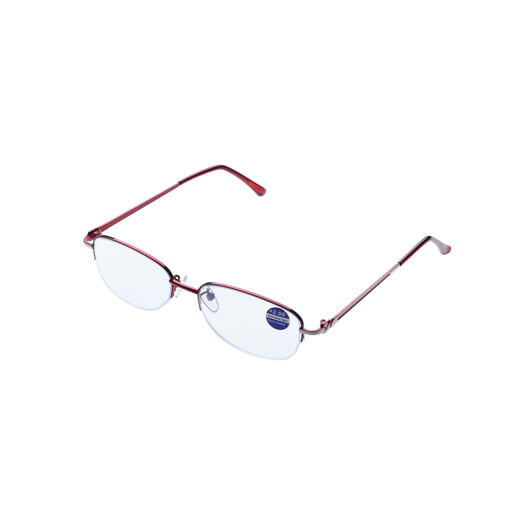
Why this product suits the profile: The 150D strength is a good starting point if you need lower magnification for larger print or a slightly longer reading distance. The red frame provides a distinctive colour option.
The specific 150D rating helps prevent a purchase based purely on appearance. The half-frame design makes it easier to switch between near and distance vision.
150D strength; half-frame reading glasses; red frame; described as a unisex model.
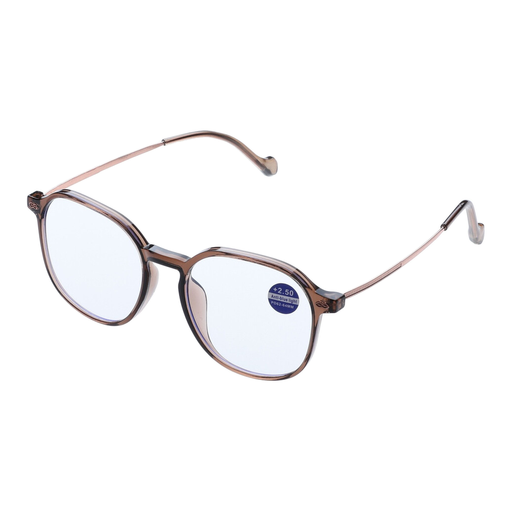
Why this product suits the profile: These full-frame reading glasses combine an enclosed frame shape with medium-to-high 350D magnification. The transparent tea tint is subtle enough for use at home or in the office.
The strength and frame type are clearly stated. This allows you to choose based on the intended reading distance rather than marketing terms alone.
350D strength; full-frame construction; transparent tea colour; unisex design.
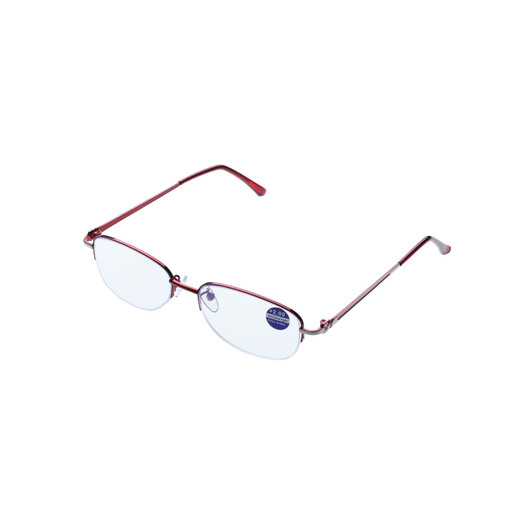
Why this product suits the profile: The 200D or +2.00 strength is suitable for frequent reading tasks involving books, documents and digital screens. The half-frame design supports occasional glances upwards.
The stated use for the office and home suits changing near-viewing distances. The included protective case helps keep the glasses safely stored.
200D strength; half-frame construction; red frame; protective case according to the product description.
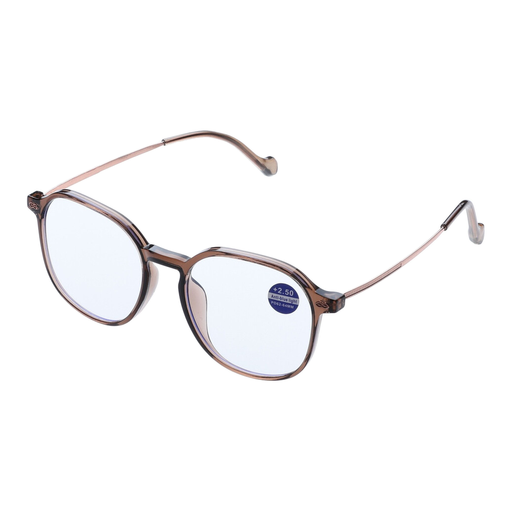
Why this product suits the profile: The 400D strength is intended for very small print and shorter reading distances. The full frame completely surrounds the lenses and is designed for regular use.
The high magnification is clearly stated as 400D. This helps prevent choosing a stronger lens simply because you assume it will provide better vision.
400D strength; full-frame design; transparent tea colour; suitable for small print according to the product description.
We have put together a complete, regularly updated list of products that fully meet these strict selection criteria and the safety regulations applicable in the EU.
A screen is often viewed from a slightly greater distance than a book. Half-frame reading glasses can be practical if you regularly switch between documents, your keyboard and your surroundings. The key point is that the chosen strength suits your personal viewing distance. Ready-made reading glasses should not be regarded as a substitute for individually prescribed glasses for screen work.
Their lifespan depends on the frame material, daily use and how they are stored. Scratches, bent temples and loose hinges can affect usability. A case, a microfibre cloth and storage away from direct heat can extend their practical service life. Damaged or distorted glasses should not be used if they sit unevenly or alter your vision.
The price depends mainly on the frame shape, material, strength and what is included. Models from 150D to 400D are available in different designs. When comparing products, buyers should consider not only the individual price, but also the required strength, frame construction, protective case and return conditions.