
Lieferung heute & morgen

Qualitätsgarantie

Willkommens-Angebote freischalten: KOSTENLOSE Lieferung | Bis zu 80 % RABATT | Kostenlose 30-Tage-JoyPlus-Testphase
App herunterladen
When the letters on a menu or in the newspaper start to blur, ready-made readers for men and women are often the first and most straightforward solution. They are readily available and don't require an appointment with an optician. However, when purchasing such a simple reading aid, there are several pitfalls that can lead to glasses that are more of a hindrance than a help, or that become unusable after a short time.
Many buyers focus solely on design and price, overlooking crucial quality features. Two of the most common problems are:
This guide shows you which objective criteria to look for to buy a functional and durable reading aid that genuinely makes your daily life easier.
To avoid a bad purchase, you should focus on three fundamental parameters. These determine the functionality and lifespan of your reading glasses far more than fashion aspects.
The most important feature of prescription reading glasses is the correct diopter number. This value indicates how strongly the lens refracts light to compensate for your age-related farsightedness (presbyopia). Common values are +1.5 reading glasses, 2.0 diopter reading glasses, or for a higher need, 3.5 reading glasses. The wrong strength can lead to discomfort and headaches. Age can serve as a rough guide, but it does not replace a professional eye exam, which is advisable to rule out other vision problems.
The choice of frame has a direct impact on stability and comfort.
The longevity of reading glasses depends heavily on the materials used. Frames made of metal alloys or high-quality plastic are generally more resilient than simple injection-moulded models. Pay attention to solidly crafted hinges, as these are a typical weak point. This is particularly relevant if you are looking for reading glasses for computer work, which are put on and taken off daily.
Based on the criteria mentioned, we have compiled a few models for various user profiles.
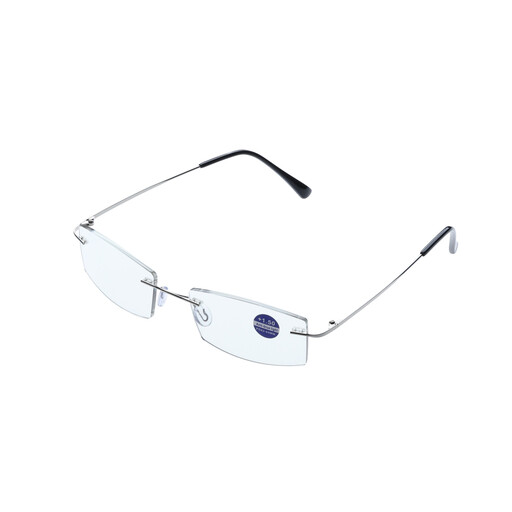
Why this model is a good fit: Ideal for those who need a lightweight, inconspicuous reading aid for short tasks like reading labels, menus, or messages on a smartphone.
Despite the lightweight, rimless design, this model features a stable lens mounting that prevents the temples from loosening with normal use.
Minimalist design with a very low weight for high wearing comfort, without dominating the face.
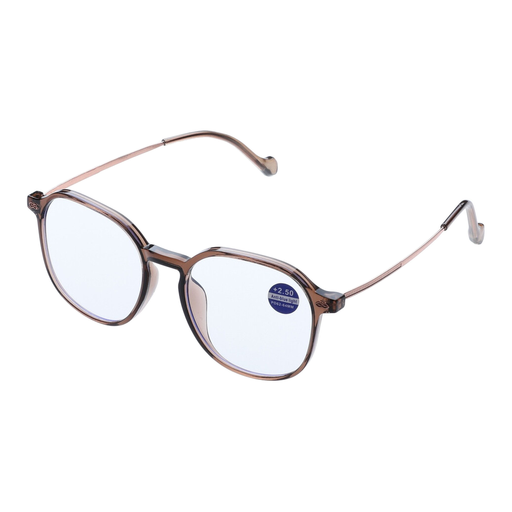
Why this model is a good fit: Designed for users who read documents or work on a screen for hours. The full-rim frame provides the necessary stability for continuous use.
The robust full-rim construction protects the lenses and prevents the frame from warping, a common problem with frequent on-and-off use.
High stability and durability. The classic design blends unobtrusively into a professional environment.
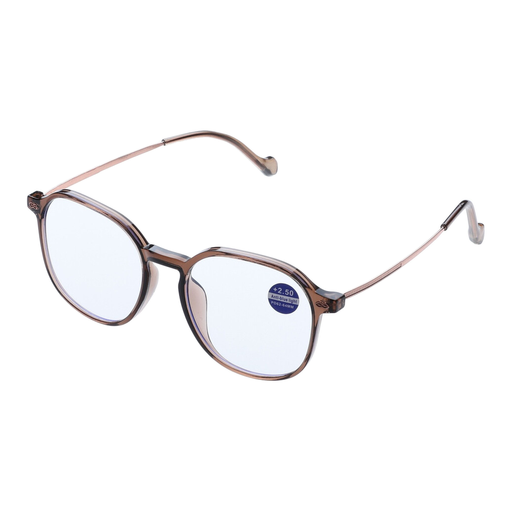
Why this model is a good fit: For individuals who require a high strength for very small print, fine crafts, or detailed hobby work.
The sturdy full-rim frame ensures a secure fit for the stronger lenses and minimises the risk of optical distortion at the edges.
Provides strong magnification for fine details, combined with a durable and stable construction.
We have compiled a complete, up-to-date list of products that meet these strict selection criteria and applicable safety regulations.
An exact determination of the required diopter number can only be made by an ophthalmologist or optician. However, age can be used as a general, non-binding guideline:
These values are only estimates. If you are unsure or are between two strengths, it is often advisable to start with the lower value.
Yes, ready-made readers can be used for computer work. However, note that the distance to the screen (approx. 50–70 cm) is usually greater than the reading distance for a book (approx. 30–40 cm). For this reason, some people may need a slightly lower strength for computer work than for reading printed text. If you spend a lot of time in front of a screen, glasses specifically designed for that purpose may be beneficial.
The lifespan primarily depends on three factors: the quality of the materials (frame and lenses), the stability of the construction (especially the hinges), and how you care for them. Glasses that are stored in a case and regularly cleaned with a microfibre cloth will last significantly longer. Models with a solid full-rim frame tend to be more durable than very delicate, rimless designs.