
Lieferung heute & morgen

Qualitätsgarantie

Willkommens-Angebote freischalten: KOSTENLOSE Lieferung | Bis zu 80 % RABATT | Kostenlose 30-Tage-JoyPlus-Testphase
App herunterladen
Ready-made stews are practical when there is little time after work, when you need an uncomplicated meal during your studies or when you want an option that can be stored while camping. A tinned stew can usually be heated up easily and requires neither extensive preparation nor many additional ingredients.
Even so, it is worth taking a close look at the product information. Larger packs are not automatically cheaper, “homemade taste” is not a clearly defined product characteristic and a short preparation time says little about portion size or nutritional values. That is why the Joybuy Product Recommendation Officer selection focuses on clear, easy-to-understand criteria.
An 800-g pack may initially appear to be a meal for several people. Depending on the recipe and appetite, however, it may amount to one large portion or two smaller portions. For people living alone, 300- or 400-g packs are often easier to plan for, while families and shoppers buying for their cupboards may benefit from larger tins or multipacks.
Terms such as “hearty”, “traditional” or “rich” do not describe flavour objectively. More informative details include the percentages of the main ingredients, the ingredients list and allergen information. For example, Erasco Hubertus Pea Stew contains 42% peas. Erasco Potato Stew with Sausages contains 47% potatoes and 5.8% sausage slices.
A tinned meal may contain wheat, celery, mustard, milk, egg, soya or sulphites, or may carry a warning about traces of these ingredients. Anyone who needs to take intolerances into account should compare the information on the product page with the packaging. Once opened, leftovers should be transferred to a non-metallic container and stored in the fridge. The recommended time for consumption varies from product to product.
When assessing hearty stews, three details are particularly useful:
A lentil stew, for example, may be available with or without sausage. Sonnen Bassermann states that its 6-pack contains 30% lentils, 4.5% potatoes and 4% sausages. By contrast, the vegetarian “Jeden Tag Brown Lentils with Soup Vegetables” contains lentils, potatoes, carrots and leeks, but no meat ingredient according to the product description.
Comparing products per 100 g prevents different pack sizes from leading to misleading conclusions. The key details include:
These values are not a health assessment. They are simply intended to support an objective comparison between products.
“Simply heat up” does not mean that every type of packaging can go straight into the microwave. Food from tins must be transferred to a microwave-safe container. For bowls or plastic packaging, follow the instructions concerning film, bain-marie heating, power settings and grill functions.
For storing products, a cool, dry place, an undamaged seal and the best-before date are also essential. A tin with a bulging lid, a leak or severe damage should not be used.

Why this product suits the profile: The 800-g pack is suitable for one large portion or for sharing. The recipe lists 40% peas and 6% bacon, making it a classic meat-based pea soup.
The specific pea and bacon percentages are stated. Allergens such as wheat are also clearly listed.
800 g contents, 84 kcal and 1.0 g salt per 100 g according to the product information; suitable for keeping in the cupboard and preparing quick meals.
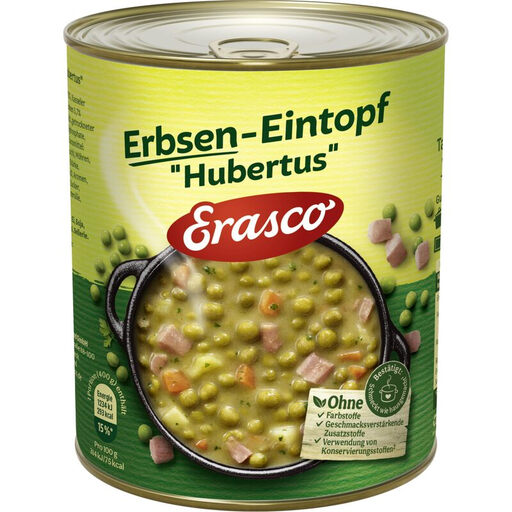
Why this product suits the profile: The product description states that it contains 42% peas, smoked pork pieces and bacon. The tin is well suited to straightforward cupboard storage.
The main ingredient is listed with its percentage. Celery and possible traces of other allergens are also included in the product information.
800 g net quantity, 88 kcal and 5.7 g protein per 100 g according to the product information; ready in just a few minutes.
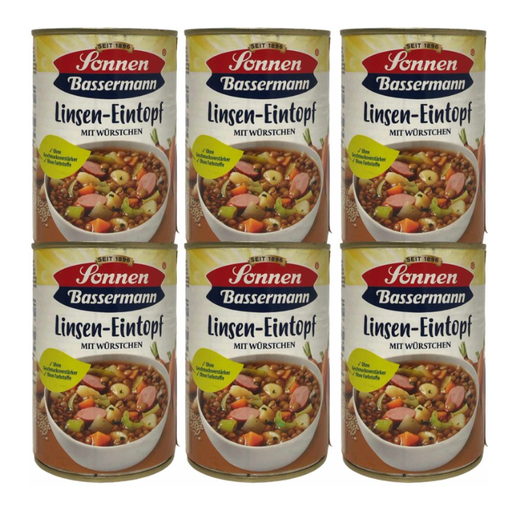
Why this product suits the profile: The 6-pack of 400-g portions is designed for regular use, family households or planned cupboard storage.
The individual portions help reduce leftovers once opened. Ingredients, allergens and the recommended fridge storage after opening are stated.
Six units, 30% lentils and 105 kcal per 100 g according to the product information; practical for lunches and stocking up.
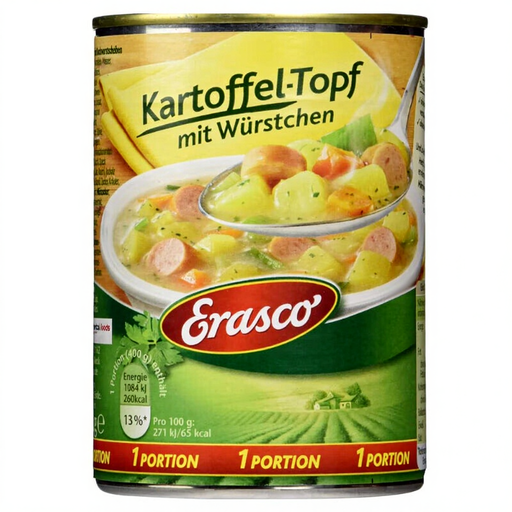
Why this product suits the profile: The 400-g tin is designed for one warm meal. Potatoes, carrots, leeks and slices of Bockwurst sausage make up a clearly recognisable recipe.
The portion size is clear before purchase. The instructions specify transferring the contents to a suitable container for microwave preparation.
400 g contents, 61 kcal per 100 g and preparation in around four to five minutes according to the product description.
We have put together a complete, regularly updated list of products that fully meet these strict selection criteria and the safety regulations applicable in the EU.
This depends on the quantity, container and appliance. On the hob, many 400-g products require around four to seven minutes over a medium heat. In the microwave, the instructions are often around four to six minutes at 600 watts. The contents should be stirred regularly and heated thoroughly according to the packaging instructions.
Once opened, the stew should be transferred to a non-metallic, sealable container and refrigerated. Depending on the product, the recommended period is usually between 24 hours and two or three days. The information on the relevant label always takes precedence.
Unopened tins and bowls that can be stored at room temperature are generally practical for the cupboard, camping trips or particularly busy working days. Before buying, check the best-before date, condition of the packaging, portion size and preparation required. Alongside lentil stew, pea stew, bean stew and potato stew, tinned goulash and international ready meals are also worth considering.