
Lieferung heute & morgen

Qualitätsgarantie

Willkommens-Angebote freischalten: KOSTENLOSE Lieferung | Bis zu 80 % RABATT | Kostenlose 30-Tage-JoyPlus-Testphase
App herunterladen
If you want to buy ready meals online, you’ll find a wide range to choose from: from tinned dishes and ready-made soups to Asian and Indian ready meals, vegetable side dishes and kimchi. However, product names alone reveal little about whether an item suits your everyday routine. The key factors are the ingredients, portion size, storage requirements and actual preparation time.
A low individual price may initially seem attractive. However, with small bowls or individual pouches, the price per 100 grams can be considerably higher than that of a multipack or an 850-ml tin. So don’t just compare the pack price. Also check:
A six-pack of lentil stew may be more economical for regular users, while a 280-g portion is easier to budget for a single quick meal.
Some products can be eaten straight after opening, while others need to be heated thoroughly. Frozen prepared vegetables such as the Iglo Wok Mix require around 3 minutes in a frying pan over a high heat, followed by 6 to 7 minutes over a medium heat. According to the product information, preparation in the microwave takes around 14 minutes at 600 watts.
So read the preparation instructions carefully. With ready-made soups, tinned dishes and stews, it is also important to check whether the contents can be heated directly in the container or need to be transferred to a saucepan or microwave-safe bowl.
“Vegetarian” or “vegan” claims should be checked against the ingredients list and product information. Descriptions such as “Asian” or “Indian” also give no indication of allergens. Common allergen warnings include soya, gluten, mustard, celery, milk, nuts, sesame, fish and crustaceans.
For example, Migachan Multi-Purpose Kimchi contains fish and crustaceans in the form of anchovies and fermented prawns. ASHOKA Aloo Matar is described as vegan, but according to the ingredients list it contains cashew nuts. If you have allergies, always rely on the labelling on the packaging you receive.
Unopened tins, jars and long-life pouches can generally be stored in the cupboard, provided the manufacturer’s instructions allow this. Check the following:
Requirements change after opening. Jeden Tag Linsen mit Suppengemüse, for example, should be transferred to a non-metallic container, refrigerated and consumed within two days. Other products may need to be consumed within two to three days or immediately. The specific label is always decisive.
The order of the ingredients shows which components are present in the greatest quantities. In Jeden Tag Erbsen mit Möhren, the ingredients list starts with vegetables, water, sugar and salt. According to the product information, it contains no allergens and can be served warm as a side dish or cold after draining.
For lentil stew, it is worth checking the proportion of lentils. For vegetable dishes, look at the vegetable content, and for Indian ready meals, check the rice, pulses, potatoes or vegetables. Nutritional values per 100 grams make comparisons easier, while the values per pack provide a more realistic picture of the complete meal.
Single portions of 280 to 300 grams are suitable for lunch breaks, students or smaller households. Jars and tins containing 400 grams or 720 to 850 millilitres are more suitable for families, side dishes or several meals. Frozen products require permanent space in the freezer and an uninterrupted cold chain.
For a quick meal, you can combine a ready meal with rice, bread, pasta or additional prepared vegetables. Pickled vegetables and kimchi are often used as side dishes or toppings, while lentil stew is intended to be enjoyed as a complete meal in its own right.
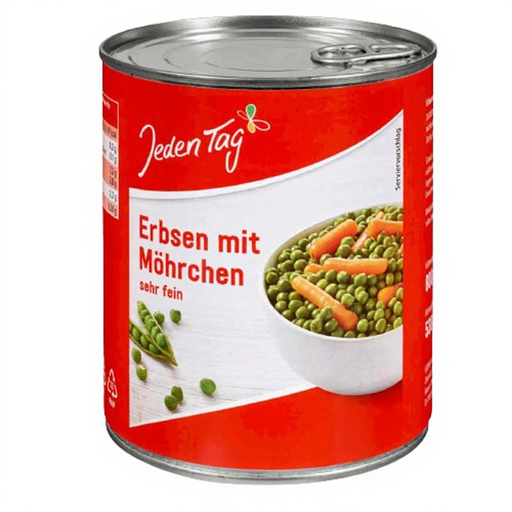
Why this product suits this profile: The 400-g tin is designed as a simple everyday vegetable side dish and can be served warm or drained as a cold side dish.
The product information clearly states the quantity, ingredients, allergens and storage instructions after opening. This makes it easier to plan how to use it as a side dish.
Vegetarian, with no declared allergens according to the product information, and 49 kcal per 100 g.
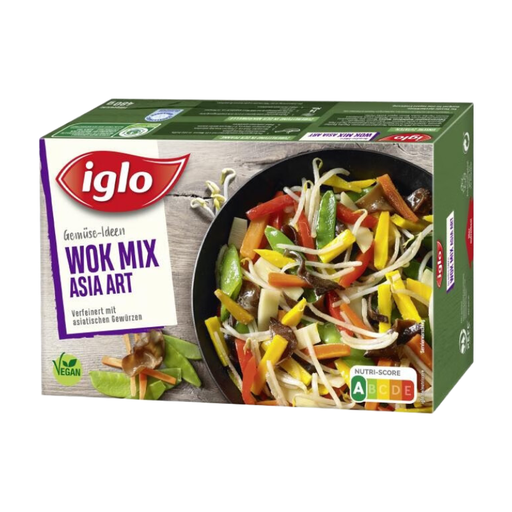
Why this product suits this profile: This frozen mix combines several types of vegetables and is designed for preparation in a frying pan or microwave when you want to create a more structured meal at home.
The instructions distinguish between frying-pan and microwave preparation, and highlight the need for frozen storage as well as the warning not to refreeze.
86% vegetable content according to the ingredients information; labelled as vegetarian and vegan, but contains gluten and soya.
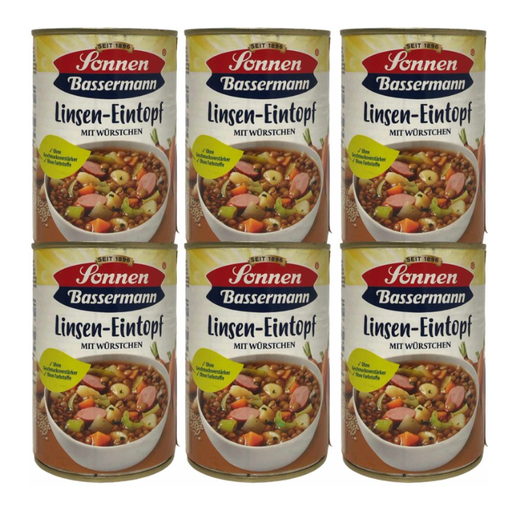
Why this product suits this profile: The six-pack is aimed at households that like to stock up on long-life meals and regularly plan lentil stew as a hot main meal.
Several 400-g tins make it easier to calculate the price per portion. The ingredients and allergen information includes mustard and possible traces of gluten, milk, egg, celery and soya.
Can be stored at room temperature when unopened; 30% lentils according to the product description.
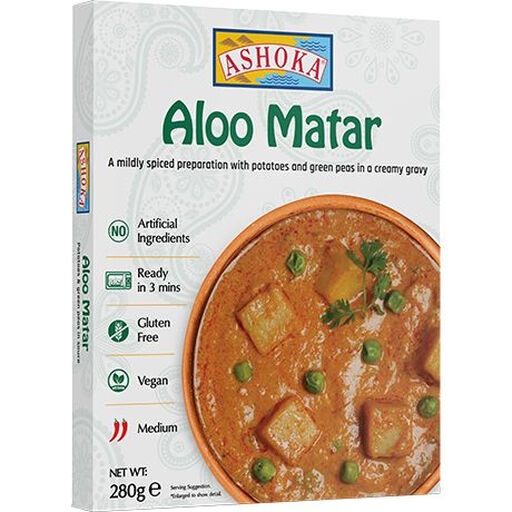
Why this product suits this profile: This Indian ready meal combines potatoes and peas in a spiced sauce, and is designed as a single portion for a quick meal.
The product information states the portion size, ingredients, preparation method and the presence of cashew nuts as an allergen. This allows you to assess the choice independently of the product marketing.
Labelled as vegan and gluten-free; 280-g portion containing 21% potatoes and 18% peas according to the ingredients list.
We’ve put together a complete, regularly updated list of products that fully meet these strict selection criteria and the safety regulations applicable in the EU.
Products clearly labelled “Ready to eat” can be served straight away. Other dishes need to be heated in a saucepan, microwave or bain-marie. For your decision, the stated preparation time, the kitchen equipment required and the portion size are more important than the word “quick”.
The best-before date is shown on the relevant packaging. Unopened tins, jars and long-life pouches should be stored in a dry place and in accordance with the manufacturer’s instructions. After opening, the contents usually need to be refrigerated and consumed within a few days. Damaged, swollen or leaking packaging should not be used.
No. Although many products contain plant-based ingredients, they may also contain milk, fish sauce, prawns, egg or other animal-derived ingredients. Check the ingredients list, allergen labelling and stated dietary classification. If in doubt, always rely on the information shown on the original packaging.