
Lieferung heute & morgen

Qualitätsgarantie

Willkommens-Angebote freischalten: KOSTENLOSE Lieferung | Bis zu 80 % RABATT | Kostenlose 30-Tage-JoyPlus-Testphase
App herunterladen
Anyone looking to buy ready meals online is usually seeking a straightforward solution for working days, university, family households or meals on the go. Tinned food, canned goods, microwave meals and long-life foods can differ considerably in portion size, ingredients, preparation time and storage requirements. Attractive packaging alone reveals little about whether a ready meal is right for your everyday routine.
A pack may contain several portions, even if it initially looks like a single meal. For an 800 g product, it is therefore worth checking the recommended serving size. A 300 or 400 g pack may be more practical for one person, while families or shoppers buying for their cupboards may benefit from larger tins.
Instant products such as a 5-minute meal pot only require hot water and a short soaking time. Tinned and chilled ready meals, on the other hand, often need to be heated thoroughly in a saucepan or suitable bowl. Some trays and bowls are also designed to be heated in a bain-marie. Before buying, check that the specific preparation method suits the equipment you have available.
Gluten, milk, egg, soya, celery, mustard and nuts are found in many ready meals. The information on a product page may also differ from the current packaging. The ingredients list, allergen labelling and warnings on the product delivered to you should therefore always be treated as authoritative. Damaged, swollen or leaking tins and pouches should not be used.
The ingredients list is arranged by proportion. When comparing German ready meals such as stews, soups, ravioli or cabbage dishes, you can see whether vegetables, pulses, meat or pasta make up the main ingredient. Examples from the selection include:
You should also consider salt, fat, protein and energy per 100 g and, where stated, per portion. The values can only be compared meaningfully when the same reference quantity is used.
An unopened tin can usually be stored at room temperature and is suitable for keeping in your cupboard. However, it must not be placed in the microwave. The contents need to be transferred to a microwave-safe container. For bowls and pouches, follow the manufacturer’s instructions: some packs must be removed completely from the carton, while others need to be pierced or opened before heating.
For camping and festivals, weight, pack shape and the equipment required are also important. A tin often requires a saucepan or heat source. An instant meal pot, by contrast, only needs hot water. A ready meal in a pouch can save space, but after opening it should also be refrigerated and consumed within the stated period.
“Long-life” does not mean that a product can be stored indefinitely. The best-before date on the packaging remains decisive. For stored supplies, rotation is recommended: use older products first and place newly purchased packs at the back. Once opened, the contents of tins should be transferred to a non-metallic container and stored in the fridge. Several of the products mentioned recommend consumption within two to three days.
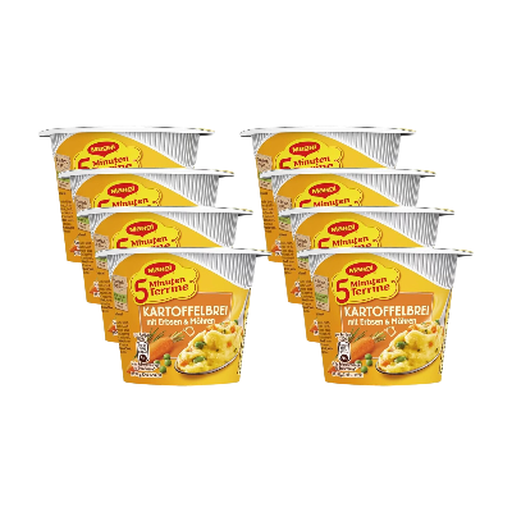
Why this product suits this profile: The individual pots can be prepared with hot water in around five minutes, making them suitable for the office, a study break or a light snack.
The pack contains eight clearly separated 43 g portions. This makes it easier to plan the amount needed than with a large opened tin.
Store dry at room temperature; prepare using hot water only.
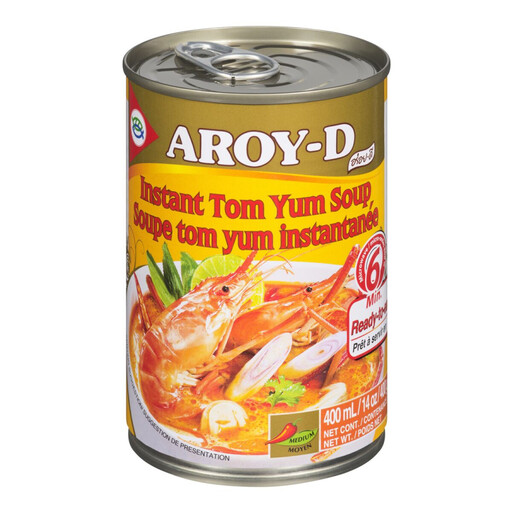
Why this product suits this profile: According to the product information, this Thai soup base contains lemongrass, galangal, kaffir lime leaves and straw mushrooms. It can be enhanced with prawns, chicken or mushrooms.
The product description specifically highlights soya and possible traces of peanuts and sesame. This allows you to check the allergens carefully before buying.
400 ml tin; prepare in a saucepan or suitable bowl in the microwave.
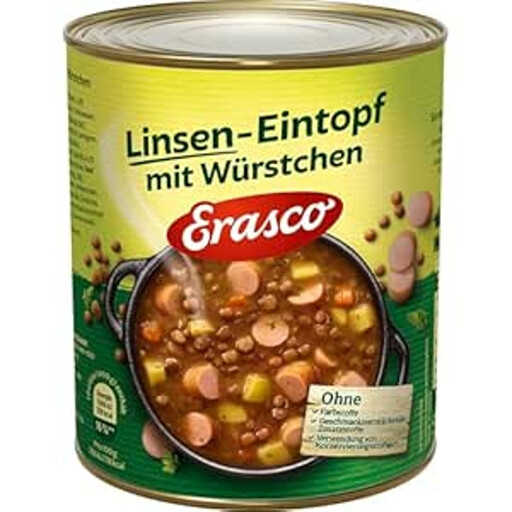
Why this product suits this profile: The 800 g pack is designed for several portions and, according to the product information, can be heated in a saucepan or microwave. This makes it suitable for families, stocking up and camping with cooking facilities.
The pack size makes it clear that this is a multi-portion meal. The ingredients and allergen information includes mustard, celery, wheat, milk, egg and soya, among others.
800 g contents; store unopened in a dry place at room temperature.
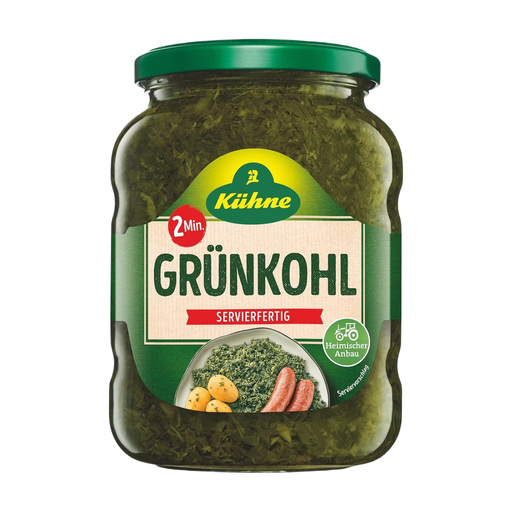
Why this product suits this profile: This pre-cooked kale dish is intended as a side or standalone meal and can be served with potatoes or Kasseler.
The stated kale content of 80% makes it easier to assess compared with dishes in which the named ingredient is present only in a small quantity.
720 ml jar; according to the product information, contains mustard seed and celery as allergens.
We have put together a complete, regularly updated list of products that fully meet these strict selection criteria and the safety regulations applicable in the EU.
For people who work and students, short preparation times and individual portions are often more important than a large pack size. Families are more likely to choose 720 or 800 g tins that can be divided between several plates. For camping and festivals, long-life foods that are easy to heat are a practical choice. If you prefer Asian or Indian ready meals, you should also check the spice level, side dishes and allergens. Tom Yum Soup, for example, is a soup base, while Paneer Makhani or Bombay Pav Bhaji are typically served with rice, bread or flatbread.
This depends on the type of product, packaging and best-before date. Tinned foods, dry meal pots and sealed pouches can often be stored for extended periods when kept correctly. The information on the packaging is decisive. Heat, direct sunlight and moisture should be avoided.
Many tinned foods and ready meals are suitable for camping if a saucepan, bain-marie or microwave is available. For basic conditions, products that only require hot water are particularly convenient. Before packing, check the weight, pack size, opening method and preparation time required.
Do not store the contents in the opened tin. Instead, transfer them to a suitable container, cover and refrigerate. Follow the consumption period stated on the label and heat the dish thoroughly before eating. If the packaging is damaged or swollen, the product should be disposed of.