
Lieferung heute & morgen

Qualitätsgarantie

Willkommens-Angebote freischalten: KOSTENLOSE Lieferung | Bis zu 80 % RABATT | Kostenlose 30-Tage-JoyPlus-Testphase
App herunterladen
Choosing the right car seat is one of the most critical decisions for your child's safety in the car. However, the market is overwhelming and full of marketing promises that often create more confusion than clarity. As a Joybuy Product Recommendation Officer, I'm here to help you separate fact from fiction and make an informed decision. We'll highlight the most common pitfalls and show you what really matters.
Before we dive into the important features, let's debunk two widespread marketing traps that can lead to unsuitable and potentially unsafe purchases.
To make a safe choice, you should focus on objective, measurable parameters. Three criteria are non-negotiable.
The i-Size car seat standard (UN R129) is the current European safety benchmark. Unlike the older ECE R44 regulation, which is based on weight classes, i-Size classifies seats according to the child's height. This allows for a more precise fit. Key advantages of the i-Size standard include:
A rear-facing seat is a car seat installed facing the rear of the vehicle. In a frontal collision—the most common and dangerous type of accident—the impact forces are distributed across the child's entire back, neck, and head into the seat shell. The neck muscles of babies and toddlers are not yet fully developed, which is why this mode of transport is proven to significantly reduce the risk of injury to the sensitive neck area. Even though the legal requirement ends at 15 months, it is recommended to keep children rear-facing for as long as possible, ideally until the age of four.
Instead of making a blanket recommendation, we have selected models tailored to the specific needs and life stages of families.
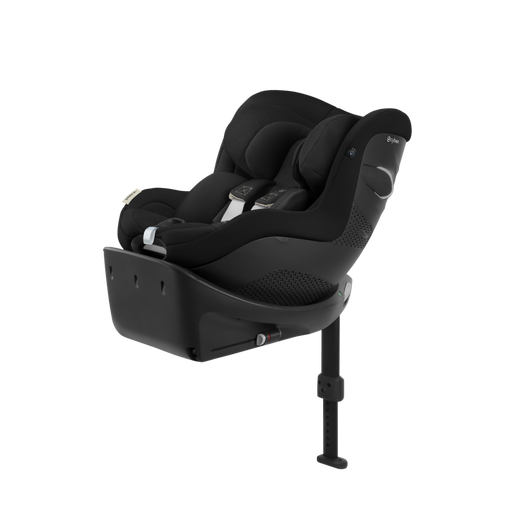
Why it's a great fit: Ideal for parents seeking a solution from birth (with newborn inlay) to around 4 years of age that combines the latest safety standards with maximum user convenience. The seat is designed as a rear-facing seat and meets the strict i-Size standard.
This seat is a specialist for the 0-4 age group, not a compromise. It combines the 360-degree rotation feature with core safety features like linear side-impact protection, rather than sacrificing one for the other.
Meets UN R129/03 (i-Size). All-round air ventilation for a better climate. Simple ISOFIX installation with visual indicators.
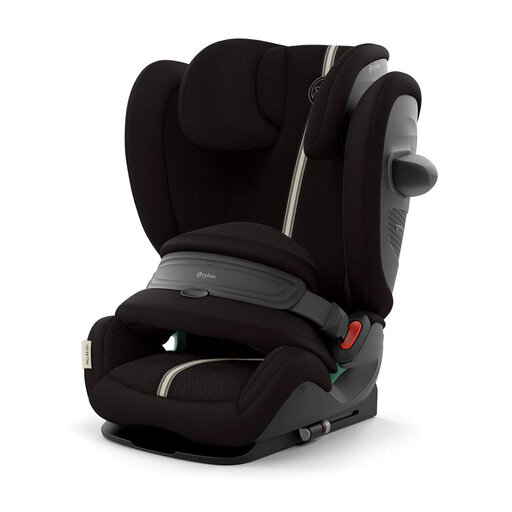
Why it's a great fit: A 2-in-1 seat that accompanies the child from toddlerhood (approx. 15 months) until the car seat requirement ends at 12 years. It's a smart solution for parents looking for a long-term investment.
This all-in-one car seat avoids the compromise trap by using two different restraint systems: first, an impact shield for toddlers, and later, the vehicle's 3-point belt for older children. Each system is optimised for the respective developmental stage.
Long-term usability (approx. 15 months to 12 years). According to the manufacturer Cybex, the impact shield reduces stress on the neck in a frontal collision. Easy conversion for older children.
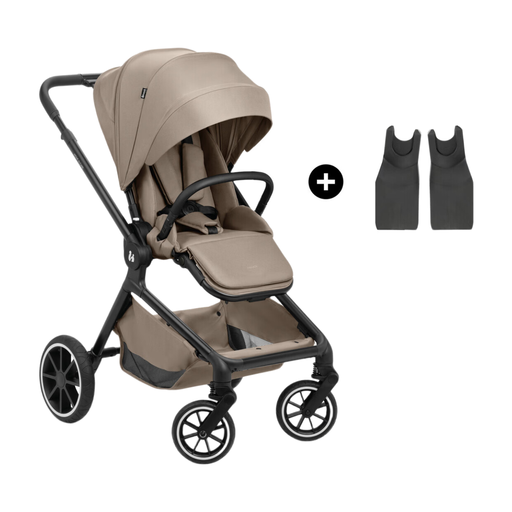
Why it's a great fit: For parents who need a flexible mobility solution from birth. This set is the foundation for a travel system. The stroller can be combined with a separate infant car seat, which makes daily life with short trips between the car and the pavement incredibly easy.
Instead of a bulky combination stroller, this system offers modular flexibility. You can choose a lightweight, safe infant car seat (e.g., the compatible hauck Drive N Care) for the car and click it directly onto the stroller frame for short errands.
Includes adapters for infant car seats. Folds compactly for easy transport. Puncture-proof tires and suspension for various surfaces.
We have compiled a complete, up-to-date list of products that fully meet these strict selection criteria and UK/EU safety regulations.
The i-Size standard (UN R129) mandates rear-facing travel until at least 15 months of age and a height of 76 cm. However, safety organisations like the ADAC recommend keeping children in a rear-facing seat for as long as possible, ideally up to four years old, as this provides significantly better protection for the cervical spine in a frontal collision.
The main difference is in the classification: i-Size (UN R129) is based on the child's height, whereas ECE R44/04 is based on weight groups. Additionally, i-Size makes a passed side-impact test mandatory and requires rear-facing travel until at least 15 months. i-Size seats are primarily designed for use with ISOFIX to minimise installation errors.