
Lieferung heute & morgen

Qualitätsgarantie

Willkommens-Angebote freischalten: KOSTENLOSE Lieferung | Bis zu 80 % RABATT | Kostenlose 30-Tage-JoyPlus-Testphase
App herunterladen
A dark wardrobe in the morning, an unlit kitchen countertop at night—many areas in the home could benefit from an additional light source. A rechargeable cabinet light with a motion sensor promises an effortless, cord-free solution. However, not every model lives up to its claims. Before making a purchase, it's crucial to understand the common weaknesses that often only become apparent after a few weeks of use.
This guide will help you understand the key technical features and avoid the three most common buying traps, ensuring you find a functional and long-lasting lighting solution.
The market is flooded with battery-powered LED strips, but many products have flaws that severely limit their everyday usefulness. Pay close attention to these three points:
No-drill cabinet lighting is convenient, but only if it stays in place. Weak adhesive strips or inadequate magnets can cause the light to fall down after a short time, especially in kitchens where steam and temperature fluctuations compromise adhesion.To avoid these issues, you should check three core technical parameters before buying. These are the primary determinants of your new light's functionality and durability.
Battery capacity, measured in milliampere-hours (mAh), is a direct indicator of runtime. While a small light for a drawer might be fine with 800 mAh, an under-cabinet light with a motion sensor for the kitchen should have at least 1,100 mAh or more to avoid constant recharging. A rechargeable light strip with a modern USB port is standard today. Pay attention to the exact specifications to set realistic expectations for its operational life.
Most lights use a Passive Infrared sensor (PIR sensor), which reacts to body heat in motion. Key factors here are the detection range (typically 2-5 meters) and the auto-off timer (often 20-30 seconds after the last movement). Higher-quality models also offer various modes:
A kitchen light with a sensor like this adapts flexibly to your needs and optimises battery consumption.
The simplest and most flexible installation method is a magnetic cabinet lamp. These typically come with a self-adhesive metal strip that you attach to the desired location. The light itself then adheres magnetically to this strip. The advantage: you can easily detach the battery-powered LED strip for charging without removing the mount. The light's material, often a combination of aluminium and ABS plastic, also indicates its overall quality and durability.
Based on the criteria above, we have identified some products suited for specific needs and room sizes.

Why This Fits Their Persona: The compact 20 cm size and 2-pack make this set ideal for cost-effectively outfitting multiple small areas like drawers, spice racks, or shoe cabinets.
With a specified battery capacity of 800 mAh per light, it avoids the pitfall of short runtimes for its size. The PIR sensor, with a 3-5 meter range, ensures reliable activation.
Three adjustable color temperatures (cool, neutral, and warm white); ultra-thin design for discreet integration.
Why This Fits Their Persona: At 30 cm in length, this light provides good illumination for most standard kitchen overhead cabinets or typical `USB wardrobe lighting`. The 2-pack is practical for creating uniform lighting.
The higher battery capacity of 1100 mAh per light directly addresses the problem of frequent recharging. The adhesive strip mounting is designed for smooth surfaces, avoiding the issue of unstable mounts.
Larger battery capacity for longer runtimes; three color temperatures to adapt to the environment.
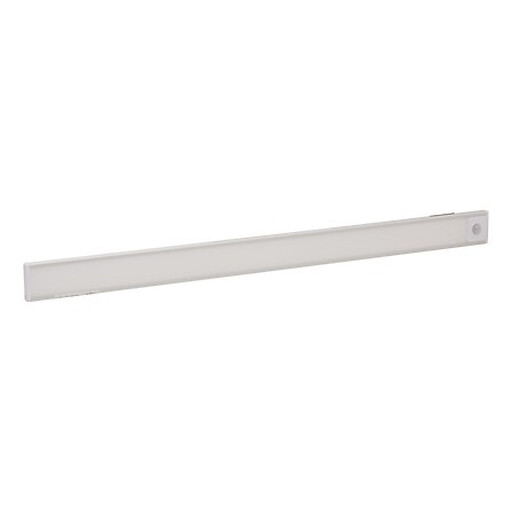
Why This Fits Their Persona: The substantial 60 cm length is ideal for continuous illumination of kitchen countertops, long wardrobes, or workbenches where seamless brightness is required.
With a 2200 mAh capacity, the battery offers a significantly longer runtime, making it suitable for high-traffic areas. The combined magnetic and adhesive mount ensures a stable installation.
Very large 2200 mAh battery capacity; 60 cm length for wide and even light distribution.
We have compiled a list of products that meet these selection criteria and are suitable for use in residential spaces.
The runtime heavily depends on the battery capacity (in mAh) and frequency of use. Models with 1000–1500 mAh can last for several weeks to months with average use (a few activations per day). Lights in high-traffic areas, like a kitchen cabinet, may need to be charged more often.
Yes, many modern models offer adjustable color temperatures. Three settings are common: Warm White (approx. 3000K) for a cozy atmosphere, Neutral White (approx. 4500K) for balanced lighting, and Cool White (approx. 6500K) for clear, bright illumination of work areas.
That depends on the model. Basic PIR sensors react to any movement. However, many more advanced lights include an additional dusk sensor. This ensures the light only turns on automatically in darkness, which conserves the battery. Check the product description for modes like "Night-Only Sensor" or "AUTO Mode".