
Lieferung heute & morgen

Qualitätsgarantie

Willkommens-Angebote freischalten: KOSTENLOSE Lieferung | Bis zu 80 % RABATT | Kostenlose 30-Tage-JoyPlus-Testphase
App herunterladen
A reliable light source is essential for any outdoor activity after sunset. Whether you're camping, hiking, or preparing for an emergency at home, the right lighting ensures safety and comfort. The market offers a wide variety of models, from compact headlamps to bright tent lanterns. This guide is designed to help you understand the technical features and make an informed decision on the right rechargeable camping lamp for you.
As your Joybuy Product Recommendation Officer, I've compiled the key criteria to consider when selecting a portable, rechargeable lamp.
The right lamp for you depends on your specific needs. Three main factors are crucial: brightness, battery life, and durability.
A lamp's brightness is measured in lumens (lm). A higher lumen count means more light. For general tasks inside a tent or at a campsite table, a tent lantern with 100 to 300 lumens is often sufficient. For navigating a dark trail, a bright, waterproof flashlight with 500 lumens or more is a smart choice.
Look for various light modes. Dimmable settings help extend battery life, while a red light mode preserves night vision and attracts fewer insects. An SOS or strobe mode can be useful in emergency situations.
The battery's capacity, measured in milliampere-hours (mAh), determines its potential runtime. A higher mAh rating generally means a longer life. Manufacturer claims about runtime often refer to the lowest brightness setting.
A modern outdoor lamp with a USB port, preferably USB-C, offers maximum flexibility. It can be easily charged via a power bank, a solar charger, or in your car. This frees you from reliance on disposable batteries and wall outlets.
Outdoor gear must withstand the elements. The IP rating indicates how well a device is protected against the ingress of foreign objects (first digit) and water (second digit).
Here is a selection of three different types of lamps, each designed for various applications.
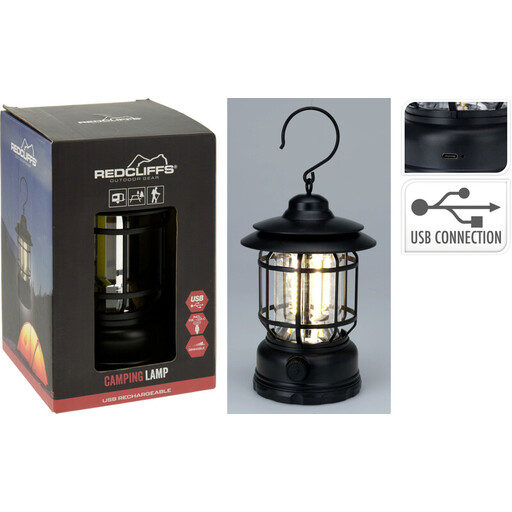
Why It Stands Out The Redcliffs Camping Lamp features a classic lantern design and is engineered to provide wide, even illumination. Its three COB panels radiate light in all directions, making it ideal for centrally lighting a tent or a campsite table.
Advantages
Who Is It For? This model is a great choice for campers and families looking for a stationary light source for their base camp. It's perfect as a tent lantern or for illuminating an outdoor dining area.
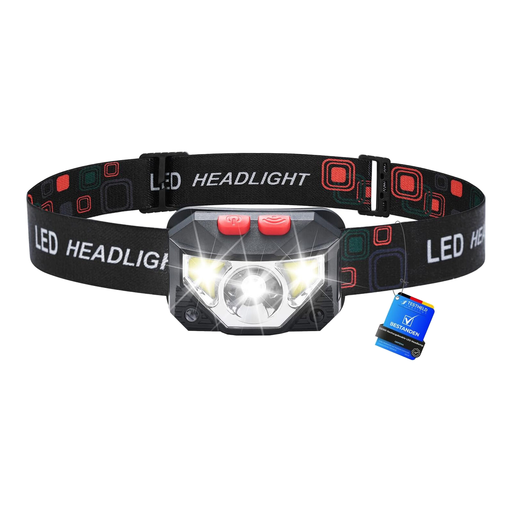
Why It Stands Out This rechargeable LED headlamp from Grifema stands out for its versatility and thoughtful features. With eight different light modes, including a sensor for touchless control, it flexibly adapts to a wide range of situations.
Advantages
Who Is It For? Ideal for active users. Whether as a headlamp for jogging, a hiking lamp, or a practical fishing lamp, its lightweight design and hands-free operation make it a useful companion for anyone on the move after dark.
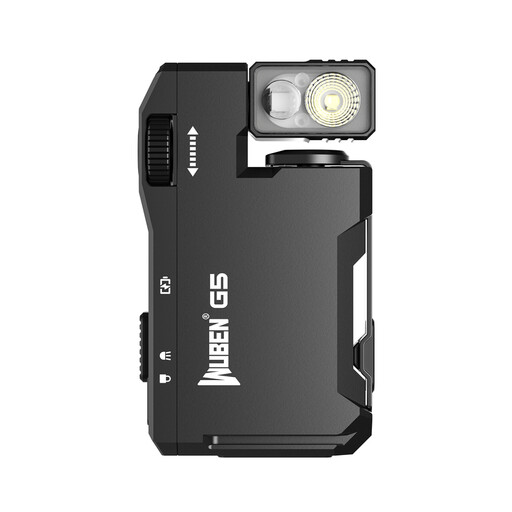
Why It Stands Out The WUBEN G5 is a compact yet extremely powerful flashlight. Its rugged aluminium alloy body and high water resistance rating of IP68 make it a tool for demanding conditions. The high output of 1200 lumens provides impressive range and brightness.
Advantages
Who Is It For? This bright, waterproof flashlight is designed for users who need maximum performance and reliability. It is an excellent choice for challenging hikes, expeditions, or as a powerful emergency lamp for your car or home.
If you haven't found the right model for your specific needs yet, you can explore a wider selection in our comprehensive category. Discover more models and find the perfect lighting solution for your next adventure.
Discover More Rechargeable Camping Lights
Lumens (lm) are the unit of measurement for luminous flux, which is the total amount of visible light emitted by a source. A higher lumen count means a brighter lamp. For reading in a tent, 50–100 lumens are often enough, while 300 lumens or more are useful for illuminating an entire campsite.
The runtime depends on the battery capacity (mAh) and the selected brightness level. A good lamp should last for several hours on a medium setting. Many manufacturers state the maximum runtime, which refers to the lowest brightness level. For longer trips without access to charging, a high-capacity battery or a power bank is recommended.
Both have their advantages. A lantern (like a tent lamp) is ideal for stationary, diffused lighting that creates a pleasant atmosphere for a group. A headlamp is indispensable for tasks where you need both hands free, such as cooking, setting up a tent in the dark, or making nighttime trips. Many experienced campers use a combination of both.