
Lieferung heute & morgen

Qualitätsgarantie

Willkommens-Angebote freischalten: KOSTENLOSE Lieferung | Bis zu 80 % RABATT | Kostenlose 30-Tage-JoyPlus-Testphase
App herunterladen
A reliable light source is essential for camping, relaxing on the patio, or during a power outage. However, the market for rechargeable camping lanterns is flooded with products making grandiose promises. Many buyers only discover after purchase that the advertised brightness lasts just a few minutes or that the lamp doesn't survive the first rain shower.
As your Joybuy Product Recommendation Officer, I'm here to help you separate marketing hype from hard facts. In this guide, I'll show you the three most common pitfalls when buying a rechargeable camping lantern and explain which technical features you should really pay attention to.
Before you make a purchase, you should be aware of these three common problems that often lead to disappointment:
To avoid a bad purchase, focus on these three objective criteria. They determine the real-world usability of your rechargeable outdoor lamp far more than mere marketing buzzwords.
The brightness of an LED camping lamp is measured in lumens (lm). Instead of just looking at the maximum value, you should consider the different brightness levels and their corresponding battery life.
Always check the manufacturer's stated runtime for your preferred brightness level. A long runtime at medium brightness is often more valuable than an extremely bright but short burst of light.
The battery's capacity, measured in milliamp-hours (mAh), indicates how much energy it can store. A higher mAh number generally means a longer runtime. Modern lamps often offer additional features like a power bank function to charge your smartphone.
Look for a USB-C charging lamp. This modern standard not only allows for faster charging but is also compatible with most current smartphones and laptops, reducing the number of cables you need to carry.
The IP (Ingress Protection) rating is an international standard that indicates how well a device is protected against the ingress of foreign objects (first digit) and water (second digit). For a portable camping lamp, the second digit is particularly relevant.
A lamp with at least an IPX4 rating is recommended for general outdoor use. Anyone who camps in all weather conditions should consider a model with an IPX6 rating or higher.
Here are some models that represent a considered choice for specific user groups, based on their technical specifications and design.
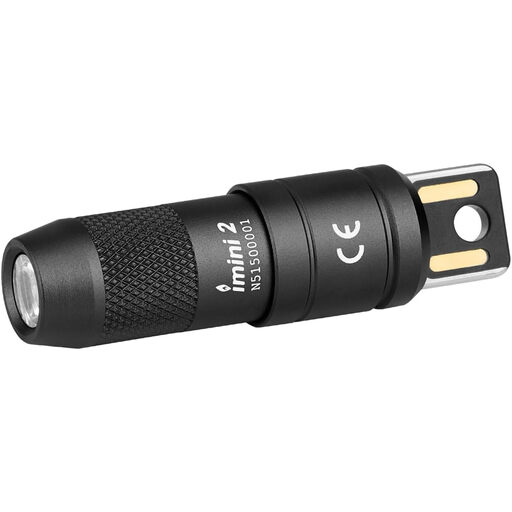
Why This Fits Their Persona: Ideal for anyone looking for an extremely compact and instantly ready light source. Weighing just 19.5 grams and featuring a keyring attachment, it's perfect for daily use, as a backup light in a backpack, or for quick tasks inside the tent.
This lamp avoids the lumen hype. It offers a realistic 50 lumens for close-range tasks and bypasses the problem of outdated charging cables with its integrated USB plug.
The magnetic activation is intuitive and fast. The IPX6 certification provides reliable protection against heavy rain, which is not a given in this size class.

Why This Fits Their Persona: This lamp combines a homey design with practical outdoor functionality. It's excellent as an atmospheric camping table lamp, a night light in a child's room, or as flexible lighting for the patio.
The focus is on a long, practical battery life (up to 80 hours according to the manufacturer) rather than maximum brightness. The IP44 rating is clearly declared as splash-proof, which is honest and sufficient for its intended use.
The 4-level touch-dimming function is very convenient. The large 4000 mAh battery ensures endurance, and the 360° light distribution creates a pleasant, glare-free illumination.
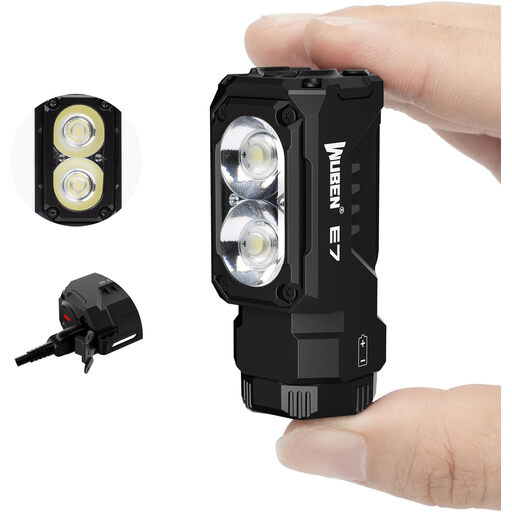
Why This Fits Their Persona: For users who need maximum performance and reliability for trekking, night hiking, or working outdoors. Its high brightness and extremely robust construction make it a dependable tool in demanding situations.
The high lumen rating is backed by an equally high IP68 certification, allowing for use in extreme conditions (even underwater). The modern USB-C port ensures fast and straightforward charging.
Offers a very high light output of up to 1800 lumens. The magnetic tail cap allows for hands-free work, and the lamp can also be used as a headlamp with the appropriate accessories.
We have compiled a complete, up-to-date list of products that fully meet these strict selection criteria and safety standards.
For most applications in and around the tent, 100 to 300 lumens are sufficient. A dimmable tent light is particularly practical, as you can adjust the brightness to the situation and significantly extend the battery life. More than 500 lumens are only necessary if you need to illuminate larger areas at night.
The IP rating indicates the degree of protection against foreign objects and water. The second digit is crucial for outdoor lamps: IPX4 means protection against splashing water, IPX6 means protection against powerful water jets (rain), and IPX7/IPX8 means protection against submersion. For normal camping use, IPX4 is often sufficient; for more demanding trips in all weather, IPX6 or higher is recommended.
To extend the life of the lithium-ion battery, you should avoid deep discharges. Charge the lamp before the battery is completely empty. When not in use for an extended period, store the rechargeable camping lantern in a cool, dry place with a charge level of about 50–70%. Avoid leaving the lamp permanently connected to the charger after it is fully charged.