
Lieferung heute & morgen

Qualitätsgarantie

Willkommens-Angebote freischalten: KOSTENLOSE Lieferung | Bis zu 80 % RABATT | Kostenlose 30-Tage-JoyPlus-Testphase
App herunterladen
A reliable light source is essential for camping, hiking, or during a power outage. A rechargeable camping lantern with a built-in battery promises both convenience and sustainability. However, the market is flooded with models whose marketing claims often shine brighter than their LEDs. Before you make a decision, it's crucial to understand the most common pitfalls that can lead to buyer's remorse.
As your Joybuy Product Recommendation Officer, I'm here to help you objectively evaluate technical specs and find a lantern that truly meets your needs.
Many products advertise impressive numbers, but the reality is often quite different. Pay attention to these three points to avoid disappointment:
outdoor lantern offers multiple, stable brightness levels instead of a short-lived turbo mode.To make the right choice, focus on verifiable technical features that determine practical usability.
The required brightness depends on the intended use. A tent light rarely needs more than 100–200 lumens for pleasant, diffused illumination. A hiking lamp or LED flashlight for navigating in the dark benefits from 300 lumens or more. What's crucial is not the maximum brightness, but the usable brightness. A good lantern is dimmable and offers multiple modes (e.g., warm light, bright work light, red night light) to optimise battery life and provide the right camping light for any situation.
Battery capacity is measured in milliampere-hours (mAh). A higher value generally means a longer runtime. Always compare this value in relation to the brightness. A lantern with 4000 mAh can run for many hours on a low setting. Look for a USB-C port, which allows you to charge the lantern with the same cable as your smartphone or tablet—whether from a power bank, in the car, or with a wall adapter.
The IP rating indicates how well a device is protected against the ingress of solid particles (first digit) and water (second digit). For outdoor use, the following ratings are relevant:
Here are a few models tailored to specific use cases that avoid the pitfalls mentioned above.
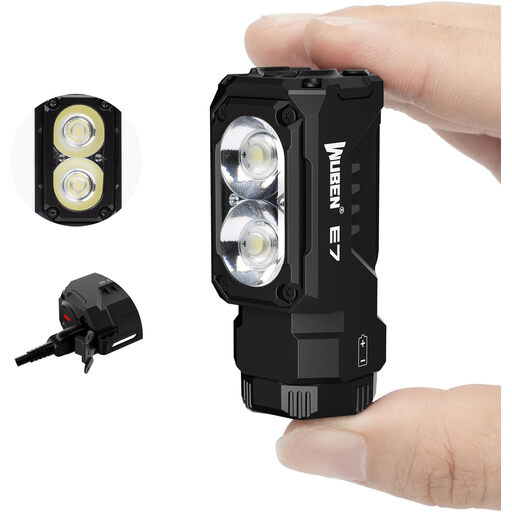
Why This Fits Their Persona: Ideal for demanding treks where high brightness, durability, and flexibility are required. Thanks to its clip and magnetic base, the lamp can be used as a handheld light, work light, or even a USB headlamp (with a compatible headband).
Instead of vague promises, this model offers a verifiable IP68 certification, making it completely dustproof and waterproof. The 1800 lumens is a realistic rating for its turbo mode, while the other 5 modes provide practical brightness levels for extended battery life.
High output of up to 1800 lumens for long-range visibility. Magnetic base for hands-free operation and charging via a modern USB-C port.
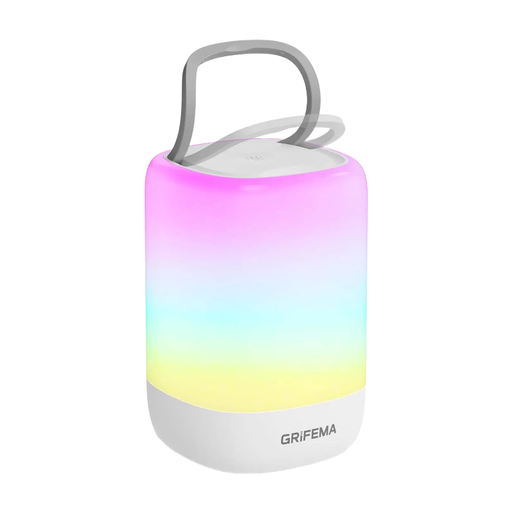
Why This Fits Their Persona: Perfect as an atmospheric tent light, a night light in a child's room, or a table lamp on the patio. The focus is on ambience and ease of use rather than extreme brightness.
This model avoids the "lumen race" and focuses on useful features. It has a modern USB-C port and a 1500 mAh battery, with runtime optimised by its continuous dimming function and timer.
Continuously dimmable via touch control, RGB colour-changing mode for different moods, and a convenient 30-minute timer function.
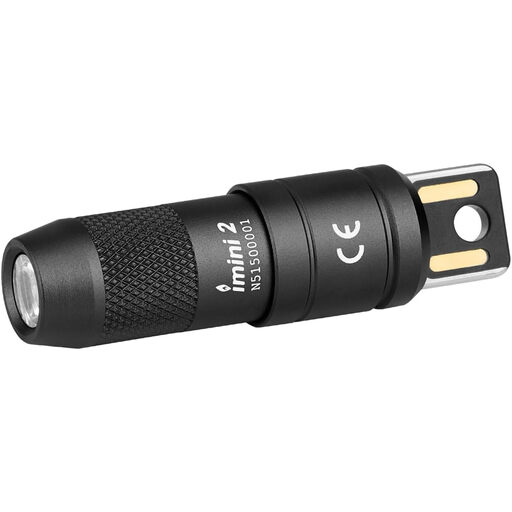
Why This Fits Their Persona: For anyone who wants an ultra-compact emergency light for their keychain or handbag. It's always on hand to find a keyhole, look into dark corners, or provide light during a brief power outage.
This model doesn't make exaggerated performance claims. It delivers exactly what it was designed for: 50 lumens of instant light. The charging process is solved with an integrated USB plug, eliminating the need to carry a separate cable.
Innovative magnetic activation (no switch needed) and cable-free charging via an integrated USB-A plug. Extremely lightweight and compact at 19.5 grams.
We have compiled a complete, up-to-date list of products that fully meet these strict selection criteria and all relevant safety regulations.
The battery life depends on two main factors: the battery capacity (in mAh) and the selected brightness level. A lantern with a high capacity (e.g., 4000 mAh) can run for over 50 hours in a dimmed mode, but possibly only a few hours at maximum brightness. Check the manufacturer's specifications for runtime at different lumen levels to get a realistic estimate.
The IP (Ingress Protection) rating classifies a housing's protection against solid particles and water. The first digit (0-6) represents protection against solids (like dust), while the second (0-9) represents protection against water. A lantern rated IPX4 is protected against splashing water and is sufficient for most camping situations. A lantern rated IP68 is dust-tight and can be continuously submerged, making it a very robust choice for extreme conditions.
Yes, absolutely. A good rechargeable camping lantern makes an excellent emergency light. Look for models with a long standby time, so the battery is still charged even after months in a cupboard. Some lanterns even have a power bank function, allowing you to charge your smartphone in an emergency. A compact LED flashlight or a versatile tent light is a smart addition to any emergency kit.