
Lieferung heute & morgen

Qualitätsgarantie

Willkommens-Angebote freischalten: KOSTENLOSE Lieferung | Bis zu 80 % RABATT | Kostenlose 30-Tage-JoyPlus-Testphase
App herunterladen
A rechargeable clip-on lamp can flexibly illuminate books, desks, shelves or bed frames without having to run a cable to a socket. However, when choosing one, it is not enough to look for “LED” or “wireless”. The clip width, actual battery life, charging connection and ability to direct the beam precisely are all crucial.
Operating time depends not only on capacity in mAh. Light output, brightness level and colour temperature also affect energy consumption. A rechargeable clip-on lamp should therefore ideally state its runtime in different modes. If this information is missing, it is difficult to assess how long the lamp will actually last.
A clip that is too small will not hold securely on a thick tabletop or shelf. A design that is too tight can damage delicate surfaces. Always check the maximum clip width and look for non-slip contact surfaces that are as gentle as possible on the surface.
A dimmable clip-on lamp may offer several brightness levels, but not necessarily an adjustable colour temperature. Warm white light is often suitable for reading in the evening, while neutral white light creates a different effect on a desk. For flexible use, it is helpful to have separate details for brightness, colour temperature and luminous flux in lumens.
A small battery may be sufficient for occasional reading. However, a wireless reading lamp used every day for work or study should offer a clearly stated runtime and a suitable charging connection. USB-C is convenient if you already have a compatible power adapter or cable at home. Also check the stated charging time and only charge the battery using the specified voltage.
One example with clear specifications is the Mini Wozinsky lamp: the manufacturer states that it has a 1,800-mAh lithium-ion battery, USB-C charging, a charging time of around four hours and an operating time of four to 32 hours, depending on the selected mode. These figures are product specifications and may vary depending on usage.
Luminous flux is measured in lumens (lm). A lower value is more suitable as a book light for close-up personal use. A higher luminous flux may be more practical for a desk or larger work surface. Colour temperature is measured in Kelvin (K):
Colour rendering is also relevant. A CRI or Ra value of 80 or above is stated for several of the products mentioned. For craft projects involving colours, compare the manufacturer’s colour-rendering specification directly with your own requirements.
A clip-on reading lamp should be easy to attach securely while also featuring an adjustable lamp head. Flexible goosenecks or swivel joints make positioning easier, but they cannot replace a sturdy clip. Before buying, check:
The lamp should be particularly secure when used by children, on a bed or on movable shelves. Follow the relevant manufacturer’s instructions for installation and use near children.
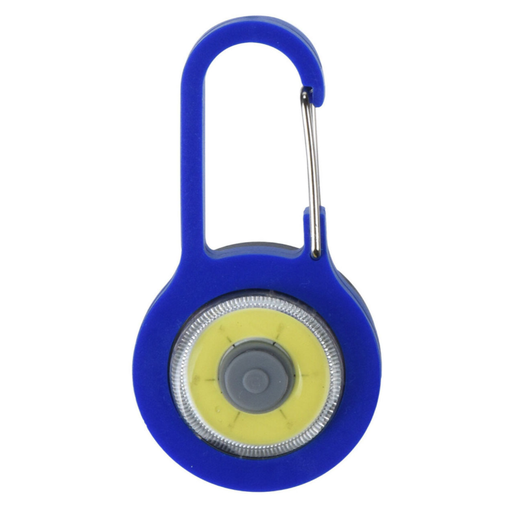
Why this product suits the profile: This compact clip-on lamp is ideal for shoppers looking for a simple attachment solution for occasional reading or small areas. The design is selected at random from four variants.
The clip is an integral part of the design. Nevertheless, check the product details for battery capacity, brightness and clip width before buying.
Compact design and four possible designs; one individual piece is supplied.
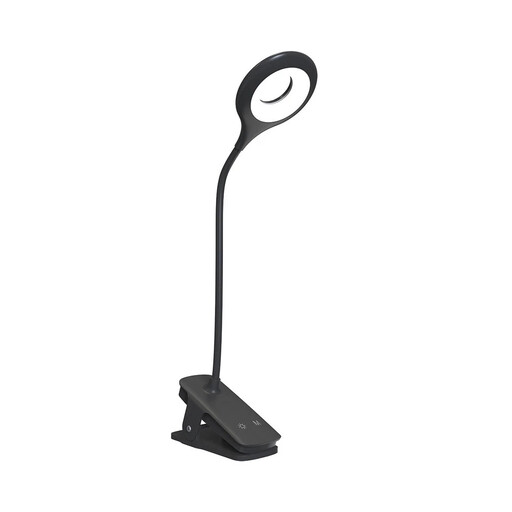
Why this product suits the profile: This model is aimed at users who prefer a USB-C reading lamp with several brightness and colour-temperature settings, as well as a memory function.
The product specifications state five brightness levels, five mixed-light modes, 3,000 to 6,500 K and a runtime of four to 32 hours, depending on the setting.
USB-C connection, 80 lm luminous flux, touch control panel and a memory function for the most recently selected settings.

Why this product suits the profile: This book light is designed for mobile reading, such as in bed or while travelling, and can be used clipped on or freestanding.
Two brightness levels and the adjustable lamp head make light adjustment clear, rather than relying solely on a general dimming function.
16 lm, warm white light at 3,000 K, 350° rotation, 45° tilt and, according to the product specifications, up to eight hours of operating time.

Why this product suits the profile: This flexible desk lamp offers a higher stated luminous flux and an adjustable silicone arm for worktops, craft tables or work surfaces.
The specifications state the luminous flux, power consumption, three brightness levels, battery capacity and different runtimes depending on the mode.
160 lm, 2.5 W, 1,200-mAh battery, 4,000 K and a flexible lamp arm with clip attachment.
For reading in bed, a compact, warm white bedside reading lamp with a lower luminous flux is often sufficient. If you frequently move between a book, shelf and desk, a swivelling lamp head and sturdy clip are useful. For a home office or craft work, several brightness levels, a neutral colour temperature and higher luminous flux are more practical.
You should also measure the dimensions of the intended location before buying. A clip of up to 74 mm may be suitable for a shelf, provided the specific model explicitly supports this clip width. When travelling, low weight, compact dimensions and an integrated battery are more important. A portable LED lamp with a freestanding function may offer greater flexibility here than a lamp designed solely for attachment to a table.
We have put together a complete, regularly updated list of products that fully meet these strict selection criteria and the safety regulations applicable in the EU.
Attach the clip to a suitable, sufficiently strong edge and tighten it only enough for the lamp to sit securely. For delicate surfaces, use protective pads and avoid overtightening the clip. After installation, check that the lamp arm does not slowly drop down by itself.
This depends on the battery capacity, luminous flux and brightness level. Product specifications may state runtimes of up to eight hours for a small book light, or four to 32 hours for a lamp with several modes. These figures refer to the respective manufacturer’s specifications and will not be identical at every setting.
There is no direct electricity consumption at the place of use while the lamp is running on battery power. However, energy is required when charging it. The main factors affecting running costs are power consumption in watts, charging frequency and usage time. A lower wattage can reduce energy consumption per hour of operation, but by itself it says nothing about light distribution or personal lighting comfort.