
Lieferung heute & morgen

Qualitätsgarantie

Willkommens-Angebote freischalten: KOSTENLOSE Lieferung | Bis zu 80 % RABATT | Kostenlose 30-Tage-JoyPlus-Testphase
App herunterladen
A reliable light source is indispensable in many situations, whether you're dealing with a power outage, hiking at dusk, or making repairs in the basement. However, the market for LED flashlights is vast, and the technical specifications can be overwhelming. This guide will help you understand the key features and make an informed decision. We will introduce a selection of models with different characteristics to make your search for the right flashlight easier.
To make the right choice, it's helpful to understand a few technical basics. The following three criteria are crucial for most use cases.
The brightness of a flashlight is measured in lumens (lm). A higher lumen value means a greater light output. An extremely bright flashlight with over 1000 lumens is ideal for illuminating large outdoor areas or for search and rescue operations. For household use, as a compact handheld light in the car, or for evening walks, models with 100 to 300 lumens are often perfectly sufficient and offer longer battery life. The beam distance, specified in metres, describes how far the light beam can reach. Some models are also focusable, allowing for a quick switch between a wide floodlight for close-range tasks and a concentrated beam for long-distance visibility.
A key decision is the type of power source. A rechargeable LED flashlight offers the convenience of simply recharging the battery via a cable, which saves money in the long run and is better for the environment. Models that are USB-C rechargeable use the current standard, enabling fast and hassle-free charging with the same cables as many smartphones and laptops. Classic battery-powered flashlights have the advantage that the power source can be quickly swapped, which is particularly useful in areas without access to electricity.
For outdoor use or as an emergency flashlight, the material and construction are critical. Housings made of aluminium alloys are lightweight, durable, and dissipate heat effectively. Resistance to dust and water is classified by the IP (Ingress Protection) rating. A rating like IP44 indicates protection against splashing water. For an outdoor camping light that must withstand heavy rain, a higher rating such as waterproof IP68 is recommended. These models are dustproof and can be temporarily or permanently submerged without sustaining damage.
Here is a selection of flashlights that cater to different needs—from a simple handheld light for everyday use to a high-performance model for demanding applications.
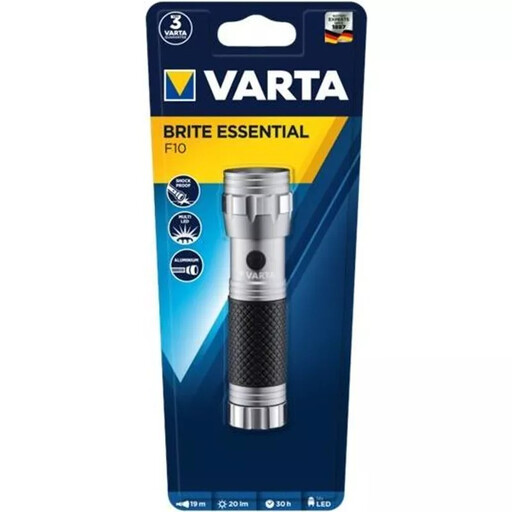
Why it stands out: The VARTA Brite Essential F10 is a compact and straightforward flashlight for daily use. It relies on a proven power source of standard AAA batteries, making it ready to use immediately without waiting for a recharge.
Key Features:
Who it's for: Ideal for users looking for a simple, reliable, and compact handheld light for the home, glove compartment, or toolbox, and who prefer the independence from charging cables.
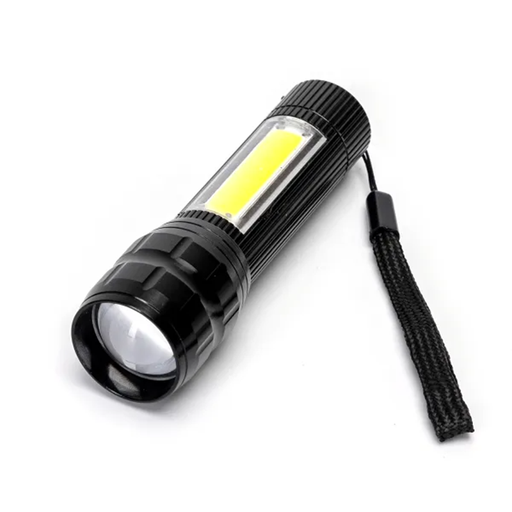
Why it stands out: This model from Aigostar is a versatile, rechargeable flashlight that combines a focusable main beam with a practical side light. This makes it a flexible tool for various scenarios.
Key Features:
Who it's for: A great choice for DIY enthusiasts, campers, and anyone looking for a flexible outdoor camping light with useful extra features and the convenience of rechargeability.
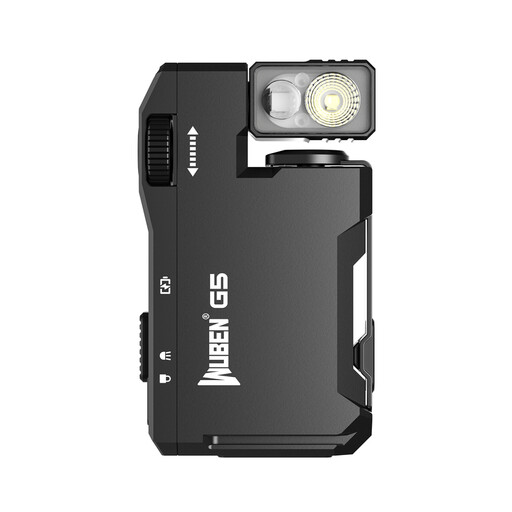
Why it stands out: The WUBEN G5 is designed for demanding conditions. With its high brightness, robust waterproof housing, and modern charging port, it meets the requirements of a tactical flashlight.
Key Features:
Who it's for: Perfect for outdoor enthusiasts, security personnel, or as part of a high-quality emergency flashlight kit. It is aimed at users who need maximum performance and reliability in all weather conditions.
Haven't found the right model for your needs yet, or are you looking for specific features? In our USB Flashlight category, you'll find a wider selection of rechargeable models for various applications.
1. What does the lumen rating mean for an LED flashlight? The lumen (lm) value is the unit of measurement for luminous flux and describes the total amount of light emitted by a light source. Simply put: the higher the lumen value, the brighter the flashlight shines. However, the perceived brightness also depends on the beam's focus.
2. Which IP rating is appropriate for an outdoor flashlight? For general outdoor use where the flashlight may be exposed to rain, a rating of at least IPX4 (protection against splashing water) is recommended. For more demanding activities such as fishing, boating, or use in extreme weather conditions, an IP67 or IP68 rating (protection against temporary or permanent submersion, respectively) offers the highest level of security.
3. How long does it take to charge a rechargeable flashlight? The charging time depends on the battery's capacity and the charger's power output. Smaller models are often fully charged in 2-4 hours. High-performance flashlights with large batteries can also be charged in 3-5 hours, especially via a modern USB-C port. Many models feature a charging indicator that shows the current status.