
Lieferung heute & morgen

Qualitätsgarantie

Willkommens-Angebote freischalten: KOSTENLOSE Lieferung | Bis zu 80 % RABATT | Kostenlose 30-Tage-JoyPlus-Testphase
App herunterladen
A reliable, rechargeable LED headlamp is an indispensable tool—whether for camping, household repairs, or as part of your emergency kit. However, the market is flooded with products whose marketing promises often suggest more than the technology can deliver. Before you make a decision, it's crucial to understand the most common pitfalls that lead to an unsatisfactory user experience.
This guide focuses on the objective criteria that separate a great headlamp from a subpar one, helping you make an informed choice.
The 3 Most Common Pitfalls When Buying a Headlamp:
To avoid these issues, you should base your selection on verifiable technical specifications. Three parameters are of central importance here.
Brightness, measured in lumens (lm), is a key indicator, but it should always be evaluated in the context of the available lighting modes. A practical LED headlamp should offer several brightness levels:
A red light mode is also advantageous as it preserves your night vision.
A modern rechargeable flashlight or headlamp should come standard with a USB-C port. This not only allows for faster charging but is also the established standard for most electronic devices, reducing the number of cables you need. Pay attention to the battery capacity, specified in milliampere-hours (mAh). Higher values generally mean longer runtime but can also increase the weight. Replaceable batteries (e.g., 18650 type) offer additional flexibility for long trips without a power source.
The IP rating indicates how well a housing is protected against the ingress of foreign objects (first digit) and water (second digit). For a durable outdoor lamp, a high protection rating is essential.
A lamp with IP68 certification offers maximum reliability under demanding conditions and is a worthwhile investment for anyone who needs to depend on their gear. Such a lamp can also serve as a robust EDC (Everyday Carry) lamp.
Based on the criteria above, we have compiled a selection of lighting solutions for specific user groups.
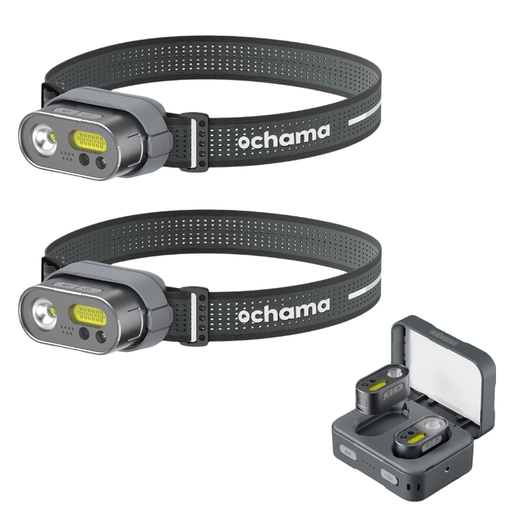
Why This Fits Their Persona: This set is ideal for campers and families looking for a straightforward, all-in-one solution. With two lamps and a central charging case, both devices are always ready to go. The gesture control is especially practical when your hands are dirty from cooking or setting up a tent.
This set bypasses the pitfall of outdated charging infrastructure with its included Type-C charging case, which charges both lamps simultaneously and serves as storage.
A complete system with two lamps and smart gesture control for hands-free operation.
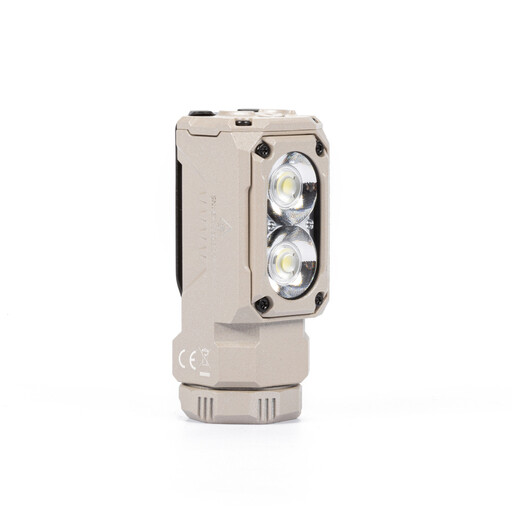
Why This Fits Their Persona: For tradespeople, mechanics, or demanding users who need maximum brightness and flexibility. The lamp can be used as a traditional headlamp or, thanks to its magnetic tail cap, attached to metal surfaces as a stationary work light. Its compact form makes it an ideal EDC lamp.
This model counters the pitfalls of misleading performance claims and a lack of durability with a high output of 1800 lumens and an IP68 certification, enabling its use in the toughest conditions.
High brightness, a magnetic base for hands-free work, and multifunctional use as a headlamp or flashlight.
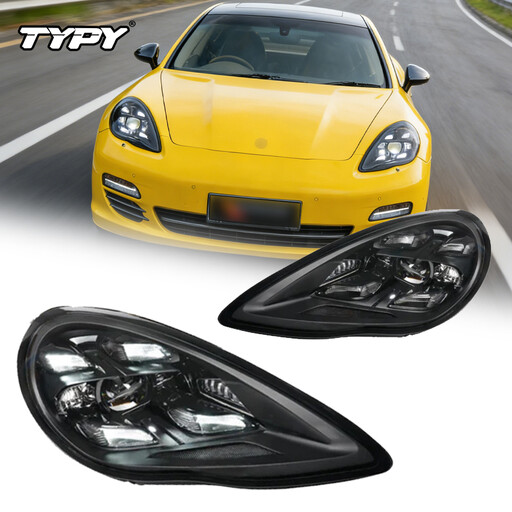
Why This Fits Their Persona: This solution targets a very specific audience: owners of a Porsche Panamera 970 series (2010-2013) looking to modernise their vehicle's lighting. It is a direct upgrade to modern LED matrix technology for improved visibility and aesthetics.
The common pitfall with auto parts is incompatibility. This product is advertised as "plug-and-play" for specific models, minimising the risk of complicated modifications or malfunctions.
Vehicle-specific upgrade for Porsche Panamera headlights to modern LED technology. Direct fit for the specified model years.
We have compiled a complete, real-time updated list of products that fully meet these strict selection criteria.
The required number of lumens depends heavily on the application. For most close-range activities, such as reading in a tent or minor repairs, 50 to 150 lumens are sufficient. For hiking on marked trails, 200 to 500 lumens are recommended. For navigating off-trail, trail running, or search operations, ratings over 500 lumens can be useful. However, more important than the maximum value is the availability of several well-spaced lighting modes.
The IP rating is an international standard that defines the degree of protection for an enclosure. The first digit (6) means the device is completely dust-tight. The second digit (8) means it is protected against continuous submersion in water. The exact conditions (water depth and duration) are specified by the manufacturer. An IP68-certified lamp offers very high protection and is suitable for use in all weather and demanding environments.
In most cases, yes. The USB-C standard is designed to be universally compatible. You can typically use the charger from your smartphone or laptop. However, it is advisable to check the manufacturer's specifications for the recommended charging power (voltage and amperage) to ensure optimal charging speed and maximise the battery's lifespan.