
Lieferung heute & morgen

Qualitätsgarantie

Willkommens-Angebote freischalten: KOSTENLOSE Lieferung | Bis zu 80 % RABATT | Kostenlose 30-Tage-JoyPlus-Testphase
App herunterladen
When temperatures rise, a rechargeable mini fan quickly becomes an indispensable companion. Whether in a stuffy office, a crowded train, or while relaxing in the park—a personal breeze can make all the difference. But the market is flooded with models whose advertising promises often disappoint more than they cool. Before you make a decision, it's crucial to know the most common pitfalls that can lead to buyer's remorse.
Many buyers are disappointed with their new device after a short time. This is often due to exaggerated marketing claims that don't hold up in practice. Pay special attention to these two points:
To find the right rechargeable handheld fan for your needs, you should focus on objective, technical parameters rather than marketing slogans.
The battery capacity, specified in milliampere-hours (mAh), is the most important indicator of potential runtime. A higher mAh value generally means longer usage.
Also, pay attention to the charging port. A small USB fan with a modern USB-C port is advantageous, as it often allows for faster charging times and is compatible with the charging cables of many current smartphones and laptops.
The fan's design determines how and where you can best use it.
Instead of making a one-size-fits-all recommendation, we have identified models tailored to specific user profiles.
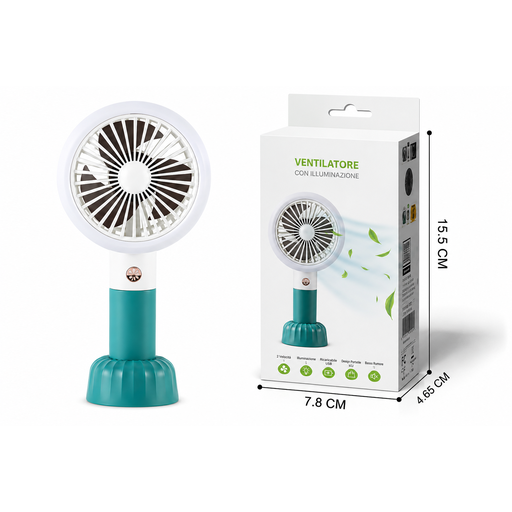
Why This Fits Their Persona: This model is a pragmatic choice for users seeking a simple and functional cooling solution for their desk or short commutes. It combines handheld and stand functions, covering basic needs without unnecessary frills.
The device makes no exaggerated promises about battery life. With a clear power rating of 5W and standard USB charging, it provides a transparent basis for runtime expectations.
The dual-use capability as both a handheld and desktop fan, thanks to the included stand, offers excellent flexibility for the price.
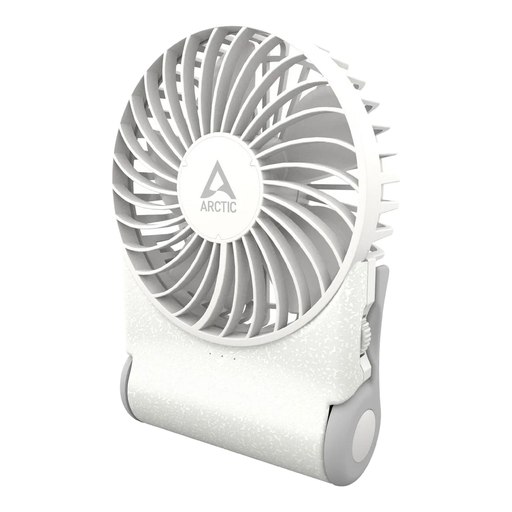
Why This Fits Their Persona: For people who are on the move all day and need to rely on their device. The high battery capacity is ideal for long commutes, travel, or outdoor events where a power outlet isn't always available.
This model counters the trap of unrealistic runtime claims with a verifiable, high battery capacity of 5000 mAh. According to the manufacturer, this allows for runtimes of up to 77 hours, creating a reliable foundation for extended use.
The stepless speed control allows for precise adjustment of airflow and noise level. The USB-C port ensures modern and convenient charging.
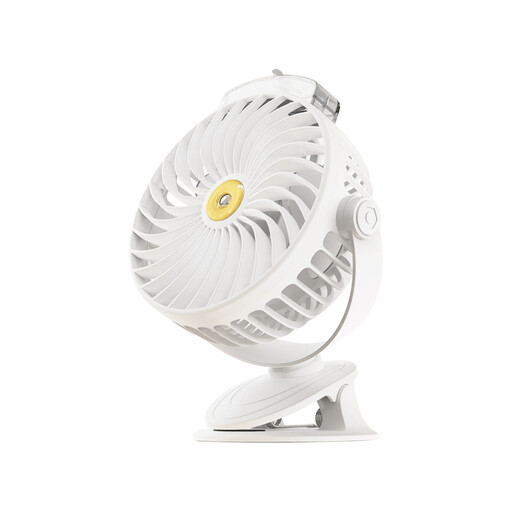
Why This Fits Their Persona: Perfect for users who need a flexible solution for different environments. The clip allows it to be attached to desks, shelves, or bed frames, while the base enables use on any flat surface.
This model avoids the trap of limited usability. While simple handheld fans serve only one function, this device offers genuine added value through its clip-on and stand design, adapting to various situations.
The combination of five speed levels and two misting modes provides individually adjustable and particularly effective cooling on hot, dry days.
We have compiled a complete, up-to-date list of products that fully meet these strict selection criteria and UK safety regulations.
The actual runtime depends heavily on the selected speed setting and the battery capacity (mAh). A model with 4000-5000 mAh should last for about 6 to 10 hours at a medium speed. Read the product specifications carefully and focus on the capacity, not just the maximum runtime claim.
Yes, mini fans with a built-in lithium-ion battery are generally allowed in carry-on luggage. The batteries must not exceed a certain capacity limit (usually 100 Wh), which is almost never the case with these devices. However, they are usually prohibited in checked luggage. Check your airline's specific regulations before your flight.
Not necessarily. Price alone is not a guarantee of quiet operation. The quality of the motor (brushless motors are often quieter) and the design of the rotor blades are crucial. Models that explicitly advertise quiet operation on multiple levels and feature precise speed control are often a good choice for noise-sensitive environments.