
Lieferung heute & morgen

Qualitätsgarantie

Willkommens-Angebote freischalten: KOSTENLOSE Lieferung | Bis zu 80 % RABATT | Kostenlose 30-Tage-JoyPlus-Testphase
App herunterladen
A rechargeable night light might seem like a simple purchase. In reality, however, useful helpers are quickly separated from disappointing duds. Whether you need a gentle nursing light in the baby's room, an orientation light in a dark hallway, or an automatic light for seniors, the requirements are diverse. Many products promise more than they deliver. This guide will show you what to look for to make an informed decision.
Before we dive into the important features, let's highlight the typical problems that lead to dissatisfaction. If you know what they are, you can actively avoid them.
To avoid the problems mentioned above, you should check three core technical parameters before buying. These are the primary determinants of a rechargeable night light's quality and real-world performance.
The battery capacity, measured in milliampere-hours (mAh), is the most important indicator of runtime. A higher value generally means longer use per charge.
Also, look for a modern USB-C port. It's more robust, often allows for faster charging, and the cable is reversible—a small but significant advantage in daily use compared to old micro-USB ports.
Light colour is measured in Kelvin (K). For a sleep-friendly environment, warm white light in the 2700 K to 3200 K range is ideal. It has a calming effect and disrupts the body's circadian rhythm less than cool white light (over 5000 K).
A good dimmable LED night light should offer stepless or multi-level brightness control. This allows you to adjust the light intensity precisely to your needs—from a subtle glow for sleeping to a brighter light for late-night diaper changes or getting out of bed.
A night light with a motion sensor (often called a PIR sensor) offers convenience and saves energy. It only activates when it detects motion in the dark and turns off automatically after a set time. Important parameters here are:
This feature is ideal for high-traffic areas like hallways, stairs, and bathrooms, or as an automatic sensor-activated closet light.
Based on the criteria above, we have identified a few models for specific use cases.
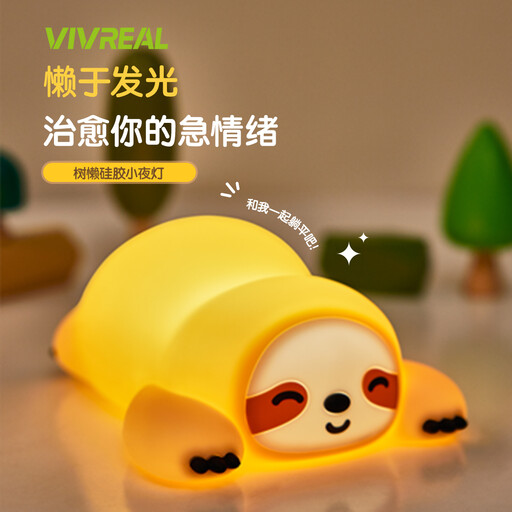
Why This Fits Their Persona: Ideal for parents looking for a safe, soft, and child-friendly light source. The sloth design is appealing, and the soft silicone material is safe for little hands.
The warm, flicker-free light and 3-level dimming prevent glare. The 1200 mAh battery with a USB-C port provides reliable runtime and easy handling.
Safe, soft silicone body; warm yellow, eye-friendly light; rechargeable via modern USB-C.
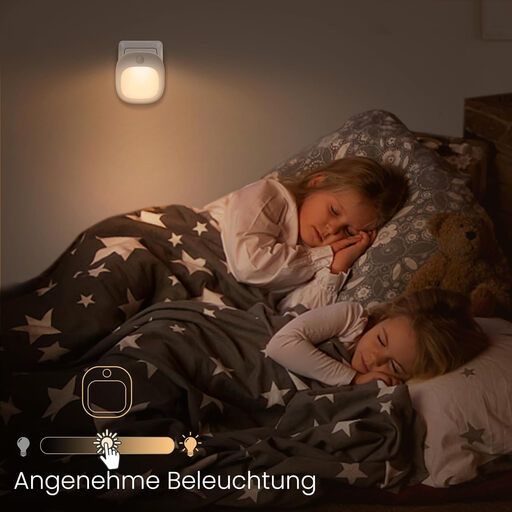
Why This Fits Their Persona: Perfect for homeowners and renters who need a practical, automatic lighting solution for multiple areas. The 2-pack allows you to outfit a hallway and bathroom at the same time.
The precise PIR sensor (3–5 m range) ensures reliable, automatic activation, bypassing the problem of impractical controls. The choice of 3 colour temperatures and 5 brightness levels prevents inappropriate lighting.
Integrated 500 mAh battery; adjustable light colour and brightness; reliable motion sensor; convenient 2-pack.
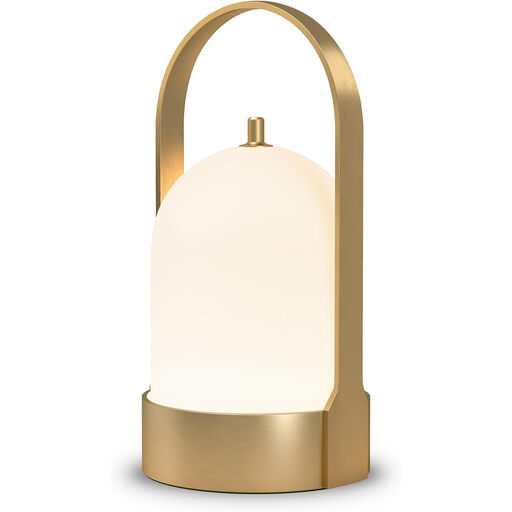
Why This Fits Their Persona: For users who want a portable, stylish, and powerful lamp for various purposes—from the nightstand and dining room to a covered patio.
The powerful 4000 mAh battery refutes empty promises about runtime (up to 80 hours on the lowest setting). The simple 4-level touch dimming is intuitive, and the 360° light creates a pleasant, glare-free atmosphere.
Very high battery capacity; IP44 certified (splash-proof); elegant design; 4-level touch dimming.
We've compiled a comprehensive, up-to-date list of products that meet these strict selection criteria and safety requirements.
The battery life depends heavily on the capacity (in mAh) and usage. A model with 1200 mAh might last for about 6 hours of continuous use at the highest brightness. However, in an energy-saving sensor mode where the light only turns on briefly a few times per night, a single charge can last for several weeks. Always check the manufacturer's specifications for runtime in different operating modes.
Yes, especially for high-traffic and functional areas like hallways, stairs, bathrooms, or as a sensor-activated closet light. It enhances safety by automatically providing light when you need it, while also saving energy by turning itself off. For bedrooms, a manually controlled, dimmable light is often the better choice.
For bedrooms, warm white light with a colour temperature between 2700 K and 3200 K is recommended. This light spectrum has a calming effect and is less disruptive to the production of the sleep hormone melatonin than cool, bluish light. A dimmable LED night light is particularly advantageous here, allowing you to adjust the intensity to the situation.