
Lieferung heute & morgen

Qualitätsgarantie

Willkommens-Angebote freischalten: KOSTENLOSE Lieferung | Bis zu 80 % RABATT | Kostenlose 30-Tage-JoyPlus-Testphase
App herunterladen
A rechargeable LED under-cabinet light is ideal for rooms without fixed wiring or where drilling is not an option. Typical applications include wall-mounted kitchen cabinets, wardrobes, shelves, hallways, mirrors and small work areas. However, it is worth taking a close look at the technical specifications and mounting method before buying. Some offers promote an extensive range of features but provide only incomplete information about important details.
The number of LEDs alone says little about the actual level of illumination. The key factor is the luminous flux in lumens. For example, a 42 cm LED light bar with approximately 150 lumens is designed as supplementary lighting for a cabinet, mirror or shelf, rather than automatically serving as the sole source of room lighting.
The beam angle also affects the result. Adjustable light direction can be useful when you want to illuminate the area beneath a cabinet precisely.
A USB-rechargeable LED under-cabinet light can be charged flexibly using a USB mains adapter, laptop or power bank. Nevertheless, buyers should check whether the battery capacity, charging method and required charging time are clearly stated. A higher capacity may enable longer operating times, but on its own it says nothing about the actual battery life. This depends, among other things, on brightness, sensor operation and frequency of use.
An under-cabinet light with a motion sensor can be practical in hallways or wardrobes. However, in areas with frequent movement, the sensor may be triggered more often than intended. When mounting with adhesive strips, the surface must be clean, dry and able to support the light. For damp rooms or areas exposed to heat and steam, follow the relevant safety instructions.
Light colour is specified in Kelvin:
Models with several colour temperatures offer greater flexibility. A dimmable cabinet light is also useful if the lighting is used at different times of day. Before buying, however, check whether it actually has a dimming function or whether you can only switch between different light colours.
Measure the available space before placing your order. A slim LED light bar measuring 20 or 30 cm will fit inside many cabinets and on numerous shelves. By contrast, a 42 cm light can illuminate a longer area more evenly. You should also check the overall height to ensure that doors, drawers or cabinet contents are not obstructed.
In rented properties, a wireless under-cabinet light with adhesive mounting or a detachable bracket is often a practical solution. Before attaching it, check whether the adhesive can be removed without leaving any residue. Take extra care with delicate wallpaper, open-pored wood or uncoated surfaces.
Battery capacity is specified in milliampere-hours. The available models include, for example, 800 mAh, 1,100 mAh or 2,000 mAh. These figures are meaningful only when comparing similar lights, as LEDs and control systems consume different amounts of energy.
You should also check for:
An LED cabinet light should not be covered permanently. Damaged batteries or swollen casings must no longer be used. The manufacturer's instructions are particularly important for kitchen areas near a sink or hob.

Why this product suits this profile: This 2-pack is suitable for small cabinets, shelves, hallways or two separate locations. Its compact design takes up very little space.
The specifications state 21 LEDs, an 800 mAh battery, a PIR sensor with a range of 3 to 5 metres and three light colours.
20 × 3.8 × 1 cm per light, USB charging and adhesive-strip mounting without drilling.
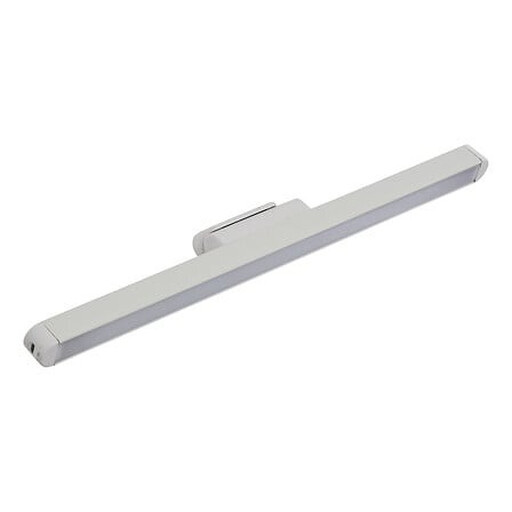
Why this product suits this profile: This longer light bar is designed for mirrors, cabinets, shelves and work areas where even supplementary lighting is required.
With approximately 150 lumens, 4,000 Kelvin and a clearly specified 2,000 mAh lithium battery, the key details are presented transparently.
USB charging, detachable light, adjustable light direction and 2.5 W output.
Why this product suits this profile: This set is designed for kitchens, bedrooms, wardrobes or hallways, with two lights that can be used in different areas.
PIR detection, USB charging and three selectable colour temperatures are clearly specified, rather than simply promoting generic sensor lighting.
41 LEDs, 1,100 mAh battery, 30 × 3.8 × 1 cm and a sensor range of 3 to 5 metres.
We have put together a complete, regularly updated list of products that fully meet these strict selection criteria and the safety regulations applicable in the EU.
Depending on the model, installation is carried out using adhesive strips, a magnetic surface or a bracket. The surface should be level, clean and dry. In rented properties, it is advisable to use a fixing method that can be removed again according to the manufacturer's instructions. Test the position before carrying out the final installation.
It is not possible to determine a fixed operating time from the battery capacity alone. Battery life depends on brightness, activation intervals, sensor operation and battery condition. When the brightness starts to fade, charge the light using the designated USB connection. Specific battery-life information should be checked directly in the relevant product details.
Compared with many older light sources, LEDs generally require very little electrical power. The 42 cm light is specified as having a power consumption of approximately 2.5 W. With battery-powered models, ongoing electricity costs mainly result from regular recharging. The actual cost depends on frequency of use, charging losses and the applicable electricity tariff.