Which type of microphone is right for you?

Storytelling from a fixed seat at the table

If the speaker stays seated and a computer handles the recording, you can position a desktop microphone in front of them. A cardioid pickup pattern favours sound from the front; it’s worth checking the actual seating position during a test recording.

Recording with a smartphone

A lavalier mic is an option if you want the voice to stay close to the microphone while the speaker moves their head. Check that the receiver or cable is compatible with your smartphone’s connection.

Recording a conversation without a computer

If you want to record the story without a computer or smartphone running, you could set up a standalone recorder. For a conversation at the table, get the storage, power supply and a test recording ready beforehand.

What should you look for when buying?

USB desktop microphone

A good fit if: the speaker is seated at a fixed computer desk and you can position the microphone in front of them.

Consider: it prioritises one directional voice; someone asking questions from across the table may be recorded more quietly.

Smartphone lavalier mic

A good fit if: you want the voice to stay close to the microphone as the speaker moves their head, and you want to record on a smartphone.

Consider: the connection must match the receiver version; a single transmitter prioritises one voice.

Standalone recorder

A good fit if: you want to record without a computer or smartphone running.

Consider: have the memory card and power supply ready for your recording session.

Priority What to check before buying Who it matters most to
A clear solo voice at the table Cardioid pickup pattern, stable positioning and connection to the recording computer; test it in the intended spot. If I mainly want to record one person telling a story while seated, I want their voice to come through clearly above all else. Around 36% of consumers would make a clear solo voice from a fixed position their top buying priority.
Recording with a smartphone Check the USB-C or Lightning receiver, or 3.5 mm connection and any required adapter, against your phone; record a test file. If I want to record using the smartphone I already own, the receiver needs to be compatible with it. Around 29% of consumers would prioritise recording on a smartphone with a lavalier mic.
Recording without a computer or phone Check for a compatible memory card, power supply, suitable placement and playback of a short test recording. If I want to capture the story without a computer or smartphone running, a standalone recorder is essential. Around 21% of consumers would name recording without these devices as their top priority.
Recording the story and the questions Check the seating arrangement and test both voices; look for an omnidirectional mode or a set with two transmitters if both people should wear their own microphone. If I want the person asking questions to be audible in the recording too, the setup needs to take both voices into account. Around 14% of consumers would prioritise a conversation with two audible voices.

Common buying pitfalls

  • “USB” doesn’t automatically mean it’ll connect to every smartphone

    USB-C and Lightning devices, as well as wireless receivers with different connections, aren’t necessarily interchangeable. A wired model may also need a compatible headset socket or adapter.

    Check the phone’s connection against the specific receiver version, and see whether you’ll need an adapter. Before your conversation, record a test file using the app you plan to use.

  • A microphone for one voice won’t automatically pick up two voices equally well

    A cardioid pickup pattern focuses the recording towards the front. An omnidirectional mode picks up sound from all directions, which can also capture more of the surrounding environment.

    Decide whether you want the questions included in the recording, then test your actual seating arrangement. If you’re using a single directional microphone, make sure the person asking the questions is included in the test recording.

  • When using a recorder, remember to prepare more than just the device

    The Zoom H1essential records to microSDHC or microSDXC cards; its specifications list two AA batteries. So, if you’re recording without a computer or phone, you’ll also need to plan for storage and power.

    Before your session, check that the card is inserted, the power supply is ready and you can play back a short recording.

Key brands at a glance

Audio-Technica

The models featured include a directional USB/XLR desktop microphone and a wired lavalier option.

  • Audio-Technica says the ATR2100x-USB offers USB and XLR connections, as well as direct headphone monitoring.
  • The ATR3350xiS has a 3 m cable and requires an LR44 battery; connections and what’s included apply to the specific model only.

RØDE

The NT-USB Mini is described as suitable for a fixed computer desk, while the Wireless Micro is a lavalier option for compatible smartphones.

  • RØDE lists a cardioid pickup pattern and headphone monitoring for the NT-USB Mini. The Wireless Micro is available with a USB-C or Lightning receiver.
  • The USB-C and Lightning versions are different variants; check that the receiver version matches your smartphone.

Zoom

The H1essential is a standalone recorder with built-in microphones and can also be used as a USB microphone.

  • Zoom lists tripod mounting for conversations, as well as simultaneous USB and SD recording.
  • For standalone use, you’ll need to plan for a memory card and power supply. Manufacturer specifications for recording formats are no substitute for testing with your actual seating arrangement.

CHERRY

The UM 6.0 ADVANCED is a USB desktop microphone with switchable pickup patterns.

  • The manufacturer says you can switch between cardioid and omnidirectional modes; it also has a desktop stand, headphone socket and gain control.
  • In omnidirectional mode, the microphone explicitly picks up sound from all directions, so the surrounding environment may be included in the recording.

Shure

The MV7+ is a USB-C/XLR option for a fixed recording position.

  • Shure lists a headphone socket and automatic level adjustment.
  • According to the German product page, the standard version isn’t supplied with a desk or arm mount, so check which mount you’ll need for your setup.

Joybuy products for recording at the table

The Joybuy products below include desktop microphones for computers, lavalier microphones for smartphones and standalone recorders. For each option, check that the connections, number of transmitters and accessories suit your recording plans.
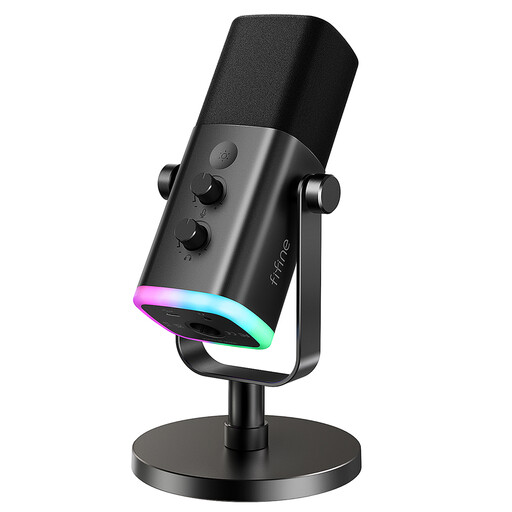
FIFINE AM8 USB/XLR dynamic microphone

FIFINE AM8 USB/XLR dynamic microphone

For one person sitting at a fixed computer desk, when you can position the microphone in front of the speaker.

The product specifications list a cardioid pickup pattern, USB-C and XLR connections, a desktop stand and a headphone socket. A separate XLR cable is required for the XLR connection.

View at Joybuy
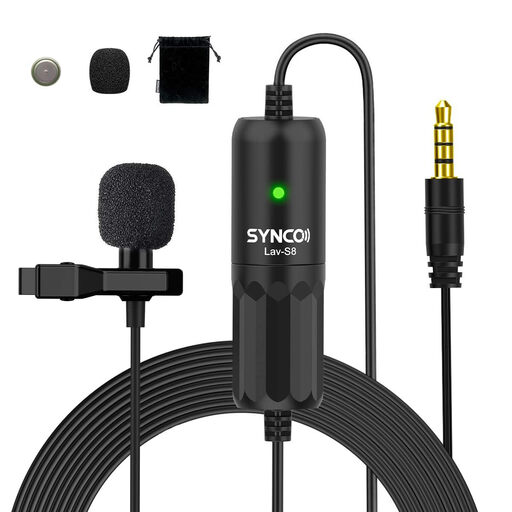
SYNCO S8 lavalier microphone

SYNCO S8 lavalier microphone

For recording on a smartphone, with the lavalier microphone clipped close to the speaker.

The product specifications list a 3.5 mm connection and an adapter kit. Whether you can connect the microphone directly depends on your device and the adapter you need.

View at Joybuy
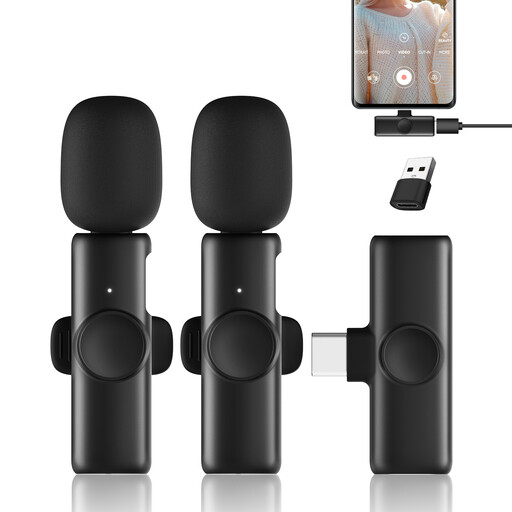
Moman MS1X(C) wireless lavalier microphone with two transmitters and one receiver

Moman MS1X(C) wireless lavalier microphone, 2TX and 1RX

For recording two people speaking, when using a compatible USB-C Android phone.

The product specifications list two transmitters, a USB-C receiver and a 2.4 GHz wireless connection. Before using this specific model wirelessly in Germany, check its frequency and conformity details against the applicable requirements.

View at Joybuy
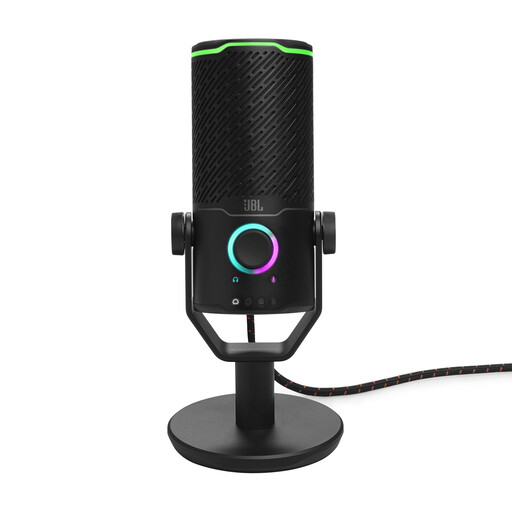
JBL Quantum Stream Studio USB-C microphone

JBL Quantum Stream Studio USB-C

For a computer desk where you want to switch between pickup patterns depending on the conversation.

The product specifications list four pickup patterns, including cardioid, bidirectional and omnidirectional, as well as monitoring. The flexible tube design and mute function are also listed.

View at Joybuy
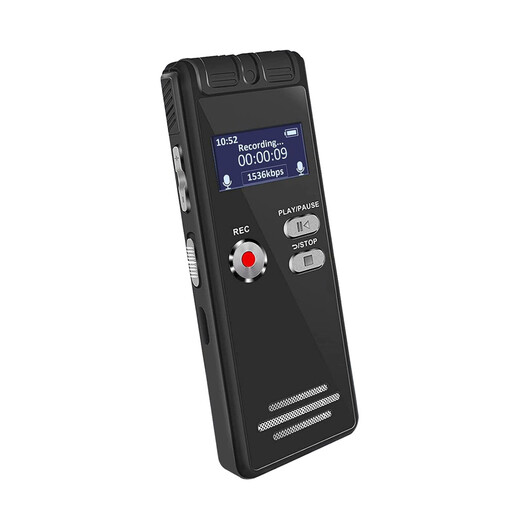
Rexsun portable digital audio recorder with 64 GB memory card

Rexsun portable digital audio recorder, 64 GB

For stories you want to record without a computer or smartphone running.

The product specifications list two omnidirectional microphones, USB-C and an included 64 GB memory card. Before your conversation, check that the recording starts and that you can play the file back afterwards.

View at Joybuy

Frequently asked questions

How do I set up a desktop microphone to record a recipe story?

Position a microphone with a cardioid pickup pattern so its recording side faces the speaker. Select it as the input on your recording device, then listen back to a short test using the actual seating arrangement. If you want the person asking questions to be audible too, test both voices.

What should I prepare for longer recordings with a recorder?

For the Zoom H1essential, you’ll need a compatible microSDHC or microSDXC card and a power supply; its specifications list two AA batteries. Before your conversation, check that the recording starts and that you can play the file back.

Is a manufacturer’s guarantee the same as your statutory rights when buying in Germany?

No. Your statutory rights are against the seller; a guarantee is an additional voluntary promise, subject to its own terms. The Verbraucherzentrale describes repair or replacement as possible remedies when goods are faulty.

Can I simply record a private story about a recipe and share it?

Section 201 of the German Criminal Code (StGB) covers recording another person’s private spoken words without authorisation, as well as making a recording created in this way accessible to others. Before recording, check that the speaker is happy to be recorded, and separately confirm who may have access to the file. This doesn’t replace checking any other potential publication or data protection issues.

Can I use any imported wireless microphone in Germany?

Not just because it’s described as a “wireless microphone”: permitted use depends on the specific frequency band and the conditions of the applicable general allocation. In April 2026, the German Federal Network Agency replaced previous allocations for certain wireless microphones with Notice 37/2026. For a specific model, check its frequency and conformity details against the current requirements.