
Lieferung heute & morgen

Qualitätsgarantie

Willkommens-Angebote freischalten: KOSTENLOSE Lieferung | Bis zu 80 % RABATT | Kostenlose 30-Tage-JoyPlus-Testphase
App herunterladen
A recliner should remain comfortable and practical over time, whether it’s in your living room, bedroom, home office or home cinema. Yet some common decisions when buying one can lead to disappointment later on: the chair won’t fit through the door, it takes up more space when reclined than you expected, or the upholstery feels different after a short while from how it looked in the product photos.
So if you’re looking to buy a recliner or TV chair, don’t focus only on colour and price. The key considerations are the dimensions, reclining mechanism, weight capacity and suitability for everyday use.
A chair with a footrest takes up considerably less room when upright than when fully reclined. On some models, the overall depth increases from around 94 cm to as much as 164 cm. Before buying, check:
An XXL recliner may have a wide seat, but it could also have disproportionately large armrests or a very deep seat. This can make it difficult for shorter people to sit comfortably. The actual seat width, seat depth, seat height and shape of the backrest are what matter.
An electric recliner can be adjusted comfortably using a remote control, but it needs power and has extra mechanical components. Moving parts also need to be kept clear. A manual recliner, on the other hand, has no motor and doesn’t need to be near a socket. Your choice should depend on the level of convenience you want and where you plan to put the chair, rather than on any blanket claim about quality.
A reclining chair should come with clear information about the backrest and footrest angles. On an electric model with two motors, you can often adjust the backrest and footrest independently. This is useful if you want a different position for reading than for watching TV.
Manual models are usually adjusted using a side lever or pull tab. Check that you can easily reach the controls from your preferred side of the chair. A rocking recliner may also offer a rocking motion. This feature needs a stable, level surface and shouldn’t be confused with continuously adjustable reclining.
The weight capacity should suit how you plan to use the chair. Product listings may include details such as:
These figures are taken from the relevant product listings. Do not exceed the stated maximum weight capacity. You should also leave enough space around the chair for the footrest to move and for you to get up safely.
Information about the materials used is more helpful than general claims such as ‘luxurious’ or ‘exceptionally comfortable’. Materials listed may include high-density foam, elastic foam, spring packs, corduroy, chenille or textured fabric upholstery.
A chair with a cup holder and side pockets can be handy in the living room or home cinema, keeping your remote control, book or smartphone close to hand. However, cup holders may need extra cleaning if drinks are spilled. Check the care instructions: for example, spot-cleaning corduroy covers with a mild cleaning product and a damp cloth is recommended.
A massage chair without a massage function is essentially a classic recliner or TV chair without a massage unit. If you don’t need massage motors, you can focus on the backrest, footrest, seat width and upholstery.
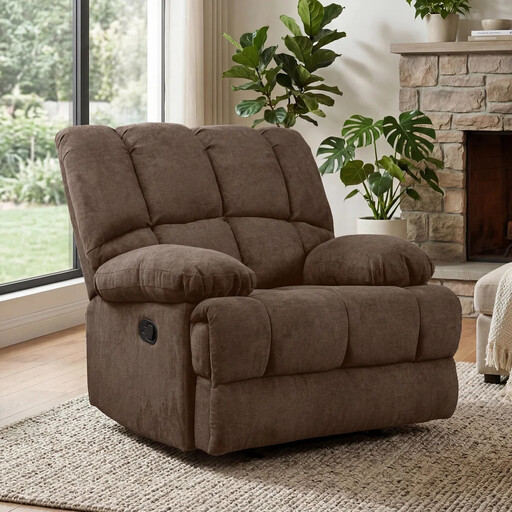
Why this product suits these needs: The manual mechanism doesn’t need a power socket, making it suitable for the living room, bedroom, office or home cinema. Its stated width is designed to provide a spacious seat.
The product details specify the sitting and reclined positions, a manual pull mechanism and a maximum weight capacity of 350 lb. This makes it easier to assess the space and ease-of-use requirements before you buy.
Chenille upholstery, high-density foam, backrest adjustment from 90° to 150° and a frame that arrives around 90% pre-assembled.
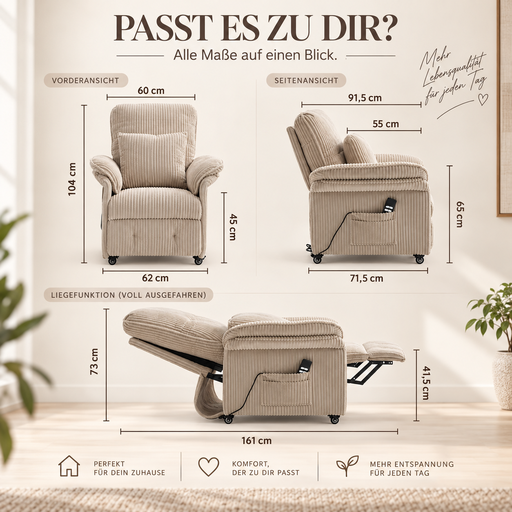
Why this product suits these needs: Two motors let you adjust the backrest and footrest separately. This is useful if you regularly read, watch TV or relax in different positions.
The backrest recline, from 95° to 175°, and footrest adjustment, from 90° to 180°, are clearly specified. Four castors make it easier to move the chair, and the two rear castors can be locked.
Steel frame, high-density foam, corduroy upholstery, two side pockets and a stated maximum weight capacity of 200 kg.
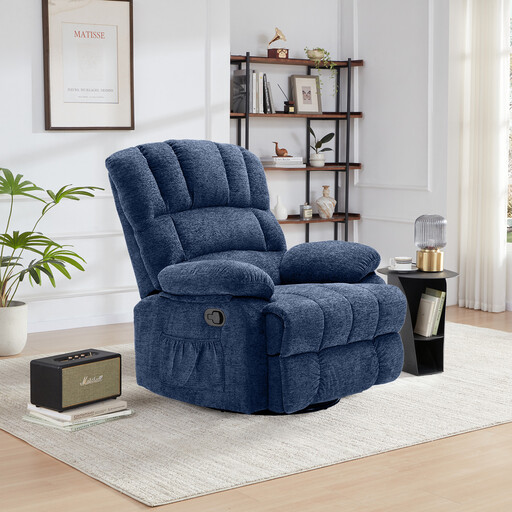
Why this product suits these needs: The combination of swivel, rocking and manual reclining makes this a flexible choice if you want to position the chair for watching TV, reading or taking a short rest.
The product details specify a maximum backrest recline of 160°, a rocking motion of 30° and the dimensions in both upright and fully extended positions. This makes it easier to plan how much space you’ll need.
Extra-wide seat, padded armrests, spring pack and tool-free assembly using plug-in connectors.
We’ve put together a complete, regularly updated list of products that meet these strict selection criteria and fully comply with the safety regulations in force in the EU.
As well as the overall dimensions, you should allow for the fully reclined depth. On some models, this can be around 164 cm. It’s also a good idea to leave clear space in front of the chair so the footrest doesn’t hit any furniture and you can get up comfortably.
An electric recliner offers convenient adjustment, often allowing you to move the backrest and footrest separately. However, it needs a power socket, and you’ll need to take care with cables and moving parts. A manual recliner doesn’t rely on mains power and has a simpler design. The right choice depends on where you’ll put it and how you want to operate it.
There’s no one-size-fits-all answer. A chair’s lifespan depends on how many hours it’s used each day, the user’s weight, the mechanism, upholstery, care and assembly. Choosing a chair with a suitable weight capacity, regularly checking its fixings and following the care instructions can all help you use it as intended.