
Lieferung heute & morgen

Qualitätsgarantie

Willkommens-Angebote freischalten: KOSTENLOSE Lieferung | Bis zu 80 % RABATT | Kostenlose 30-Tage-JoyPlus-Testphase
App herunterladen
A recliner should provide a reliable place to relax in your living room, bedroom, home office or home cinema. In practice, unclear measurements, exaggerated comfort claims and underestimated running costs often lead to disappointing purchases. Check a few technical details before you buy and you’ll find it easier to choose a model that suits how you plan to use it and the space you have available.
Manufacturers often give the width and depth with the chair closed. But when you recline it and extend the footrest, a recliner needs considerably more space. A model with a starting depth of around 94 cm can extend to about 164 cm. Before buying, measure at least the following clearances:
A swivel recliner also needs extra space to move from side to side. In smaller homes, a space-saving sofa or compact chaise longue may be a better choice.
The term isn’t based on a single technical standard. More useful details include the seat width and height, backrest angle, padding and maximum load capacity. The user’s height matters too: if the seat is too short, the footrest may not extend far enough to support the lower legs. If you’re considering an XXL recliner, check that the seat width genuinely suits your build and that it isn’t simply the overall dimensions that are larger.
An electric recliner needs to be plugged in and has motors, cables and a remote control. Its electricity use depends on how often you use it and on the motor. A manual TV chair, on the other hand, doesn’t need electricity and is usually easier to move when you change homes. Massage and comfort features, USB ports and cup holders can be useful, but shouldn’t distract you from the essentials, such as stability, padding and ease of use.
A manual reclining chair with a footrest is often operated using a side handle or by leaning back and applying pressure. An electric model usually allows finer adjustments. The KAUFHOF chair has two independent motors, so you can adjust the backrest and footrest separately. The stated adjustment ranges are 95 to 175 degrees for the backrest and 90 to 180 degrees for the footrest.
If you’re considering a motorised recliner, also check the following:
According to the product details, KAUFHOF models don’t have a lift-assist function. This is an important distinction for anyone who needs extra help getting up.
The maximum load capacity needs to suit how the chair will actually be used, so don’t cut it too fine. The KAUFHOF Electric Recliner mentioned above has a maximum load capacity of 200 kg. It has a steel frame, high-density foam padding and a corduroy cover. The HONEYOU Oversized Rocking Recliner, by contrast, has a stated maximum load capacity of 350 lb and manual adjustment up to 150 degrees.
A rocking recliner should be placed on a level surface. The rocking motion isn’t the same as a locking function. If you have children or pets, make sure their hands and paws can’t get caught in the moving parts.
Corduroy, chenille, microfibre and faux leather all differ in feel, cleaning requirements and suitability for everyday use. If you have pets, a hard-wearing, easy-clean fabric can be a good choice. The URBAN MEUBLE Lounge Chair, for example, is described as having a scratch-resistant fabric and an integrated space for cats or small dogs. Be sure to check the care instructions and the maximum load for the additional space.
Outdoor furniture has different requirements. The Beliani Brescia II garden sun lounger is made from oiled acacia wood, is 176 cm long and has a maximum load capacity of 120 kg. It doesn’t fold and should be protected from moisture and during the colder months. An upholstered living room chair isn’t automatically suitable for outdoor use.
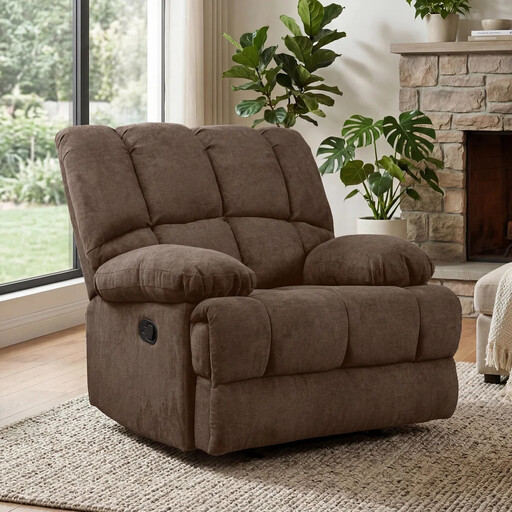
Why it suits this profile: This manual recliner is suitable for the living room, bedroom, home office or home cinema, and doesn’t need to be plugged in. According to the product details, the backrest adjusts from 90 to 150 degrees.
Details of its extended dimensions, manual controls and load capacity make it easier to plan where and how you’ll use it, without hidden motor or power requirements.
Manual adjustment, chenille cover, high-density foam and a stated load capacity of up to 350 lb.
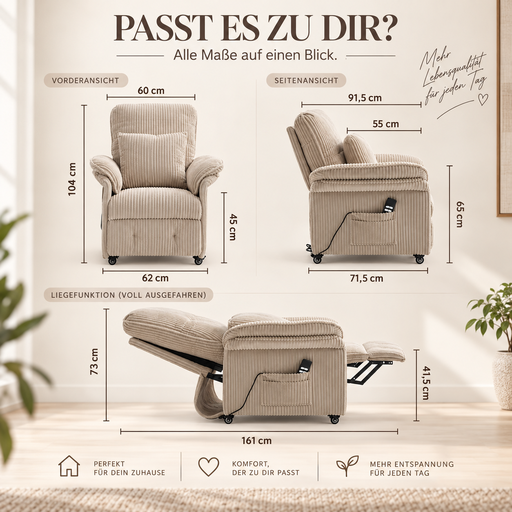
Why it suits this profile: Two independent motors let you adjust the backrest and footrest separately. Four castors make it easier to move the chair between rooms, and the two rear castors can be locked.
The adjustment ranges are clearly stated for each part. This makes it easier to judge whether you’ll be able to find the sitting or reclining position you want.
Steel frame, high-density foam, corduroy cover, 200 kg maximum load capacity and two side pockets.
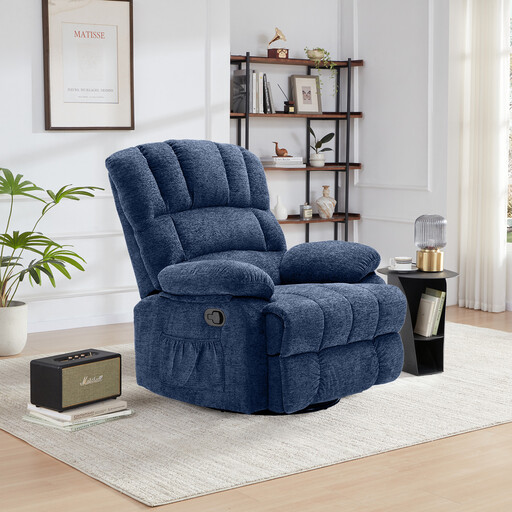
Why it suits this profile: This swivel recliner combines 360-degree rotation with a maximum recline of 160 degrees and an additional rocking motion of 30 degrees.
The recline angles and extended dimensions of 105 × 164 × 81 cm are specified, so you can check in advance whether the rocking and reclining functions will fit your room.
Extra-wide seat, padded armrests, spring pack and tool-free assembly according to the product description.
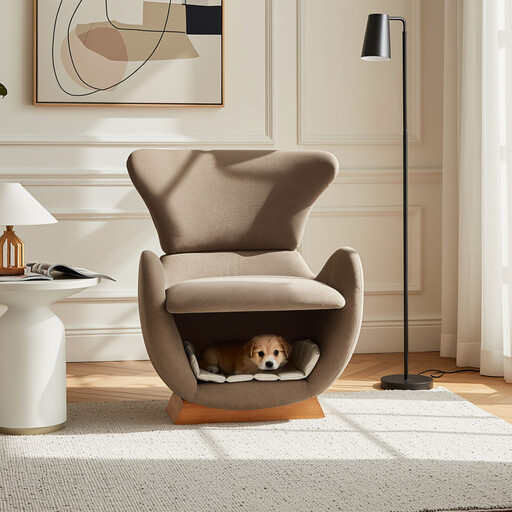
Why it suits this profile: Measuring 66 × 69 × 76 cm, this lounge chair is suitable for smaller rooms. Beneath the seat is a 33 × 47 × 23 cm space for cats or small dogs.
Its compact overall dimensions and stated load capacity of 150 kg make it easier to plan your space than vague claims about space-saving design.
Solid wood frame, high-density foam, scratch-resistant cover and integrated space for pets.
We’ve put together a complete, regularly updated list of products that meet these strict selection criteria and fully comply with the safety regulations in force in the EU.
As well as the space it takes up when upright, you’ll need to allow for its full extended depth. For a model with a starting depth of 94 cm that extends to around 164 cm, remember to leave a safe gap between the chair and other furniture, as well as a clear walkway.
A manual chair doesn’t rely on a power socket and has fewer electrical components. An electric recliner, on the other hand, lets you adjust the backrest and footrest separately and smoothly. The right choice depends on how easy you want it to be to operate, where you’ll put it and how often you plan to use it.
Follow the manufacturer’s instructions when spot-cleaning fabric covers with a mild cleaner and a damp cloth. Harsh or abrasive cleaning products can damage the surface. Wooden models, such as an acacia garden sun lounger, need regular care with a suitable wood oil and should be protected from prolonged exposure to moisture.