First, check the format of your classic soundtracks: vinyl LPs and singles need speeds of 33⅓ and 45 rpm respectively, while shellac records require a suitable 78 rpm setting and a compatible SP stylus. Then match the record player’s connections to your audio system and decide how much automation you want. You’ll also need a level surface, with some space between the player and your speakers.
Which record player is right for you?
Listeners with an existing audio system
If you want to play vinyl through your speakers, check that their inputs match the phono, line or Bluetooth output on the specific model. The specifications for Audio-Technica, Sony and Dual models show that connection options vary.
Vinyl newcomers sharing a player
If several people will be playing LPs or singles, straightforward automation can make the player easier to use. Audio-Technica, Sony and Dual list automatic functions for certain models; check exactly which steps are automated on each one.
Owners of historic records
If your collection includes 78 rpm shellac records, check both the speed and whether the stylus is suitable. Dual lists 78 rpm for the CS 418, while Audio-Technica describes compatible SP styli for shellac records.
What should you look for when buying?
Start with the records you actually want to play. Then choose connections, controls and a place to set up the player that suit your audio system and shared room.
| What matters |
What to check before buying |
Who should consider this? |
| Connecting to your audio system |
Check your system’s inputs and the specific model’s phono or line output. Bluetooth requires a compatible playback device. |
If I want to use the player with my existing audio system, its output needs to match the system’s inputs. Around 36% of consumers put a suitable connection first. |
| The right record format |
Check the speed and record format. For 78 rpm shellac records, you’ll also need to check compatibility and whether a suitable SP stylus is appropriate. |
If my collection includes shellac records, I need more than the right speed: the stylus must be suitable too. Around 29% of consumers prioritise record format. |
| Ease of use |
Check whether starting, stopping and returning the tonearm are automatic or need to be done manually. |
If several people use the player, I want each listening session to involve as few complicated steps as possible. Around 21% of consumers pay particular attention to ease of use. |
| Finding a place in a shared room |
Measure the space you have, allowing room for the dust cover to open, and leave some space between the player and the speakers. |
In a shared room, I need a level surface where the player won’t sit right next to the speakers. Around 14% of consumers prioritise finding a suitable place for the player. |
Avoid common buying mistakes
-
Assuming ‘vintage’ means a particular record format
Classic soundtracks may be available on vinyl or historic shellac records. A player that only supports 33⅓ and 45 rpm won’t play 78 rpm shellac records.
Start by checking the records in your collection, then make sure the speed and stylus are compatible.
For shellac records, you may need an additional compatible SP stylus or another suitable player.
-
Treating phono and line connections as interchangeable
Phono and line inputs require different signal paths. Whether a player has a switchable phono preamplifier depends on the specific model.
Check your audio system’s inputs against the player’s output setting before choosing a model.
Depending on your system and connections, you may need a suitable phono preamplifier.
-
Placing the record player right next to a speaker
In the AT-LP120XUSB setup guide, Audio-Technica warns against vibrations and acoustic sound pressure near speakers. This advice applies to that model and isn’t a measurement of other record players.
Choose a level surface away from your speakers and follow the setup guidance for the model you choose.
A look at the leading brands
The details below apply to the specific models mentioned. You’ll still need to check that the record formats and connections suit your needs.
Audio-Technica
The AT-LP70XBT is a fully automatic record player for 33⅓ and 45 rpm, with Bluetooth and a switchable phono preamplifier.
- Audio-Technica says the stylus on the integrated AT-VM95C can be replaced with another stylus in the VM95 series.
- The AT-LP70XBT is listed for 33⅓ and 45 rpm; 78 rpm playback isn’t specified.
Sony
Sony says the PS-LX310BT offers fully automatic playback with Bluetooth, plus switchable phono and line outputs.
- Sony lists automatic start, tonearm return and stop.
- Sony lists the PS-LX310BT for 33 and 45 rpm only. The cartridge head isn’t replaceable according to the specifications, and no USB connection is listed.
Dual
The CS 329 is a fully automatic model, while the CS 418 is a manual alternative with speeds of 33, 45 and 78 rpm and a detachable headshell.
- Dual describes the CS 329 as factory-set and lists three speeds and a detachable headshell for the CS 418.
- The CS 329 is listed for 33 and 45 rpm. The CS 418 doesn’t have automatic start and stop, and its listed stylus isn’t specified as suitable for shellac records.
Denon
Denon describes the DP-300F as a wired, fully automatic record player with a switchable phono preamplifier.
- Denon lists automatic playback and tonearm return, as well as speeds of 33⅓ and 45 rpm.
- These model specifications don’t list playback of 78 rpm shellac records.
Joybuy products for listening together
This selection includes record players for vinyl at the speeds listed for each model, with one model also supporting 78 rpm. If you’re playing shellac records, check separately that the stylus is suitable.
 No image available
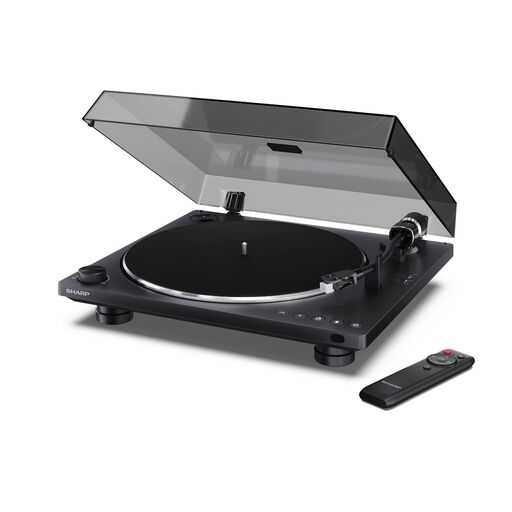
SHARP RP-TT95 record player
An option for vinyl, with built-in speakers or the option to connect to an external audio system.
33 and 45 rpm; built-in stereo speakers; line output and headphone socket; auto stop; Bluetooth 5.4; USB-C recording function.
View product at Joybuy
 No image available
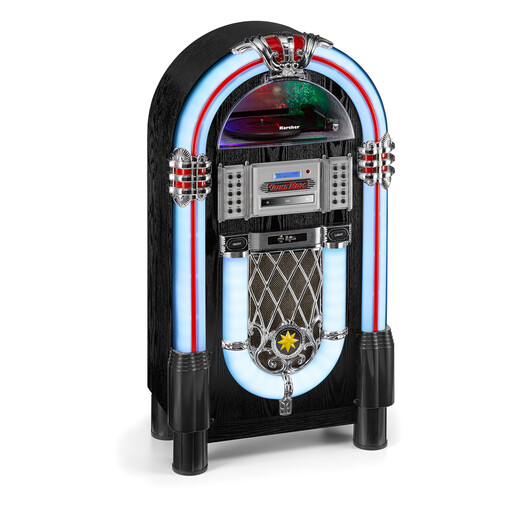
KARCHER 6608D jukebox with record player
For a listening spot where you want to play vinyl through built-in stereo speakers.
33, 45 and 78 rpm; built-in stereo speakers; CD player; Bluetooth audio; DAB+/FM radio; USB and SD playback. If you’re playing shellac records, you’ll also need to check that the stylus is suitable.
View product at Joybuy
 No image available
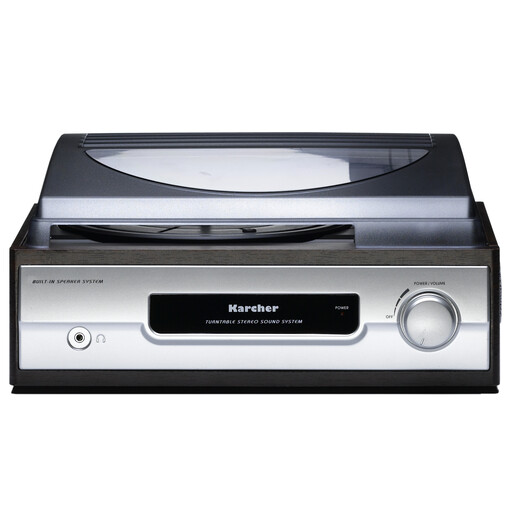
Karcher KA 8050 record player
An option for sharing your vinyl with auto stop and built-in speakers.
33/45 rpm; built-in speakers; RCA line output; headphone socket; Bluetooth 5.4; USB-C recording function.
View product at Joybuy
 No image available
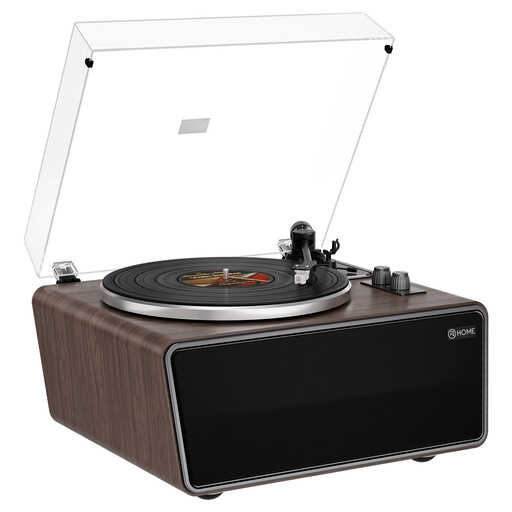
XJ-HOME XJ-H01 all-in-one record player
For playing vinyl through four built-in speakers or connecting to an external audio system.
33⅓ and 45 rpm; four built-in speakers; phono/line RCA outputs; AT-3600L (MM) cartridge.
View product at Joybuy
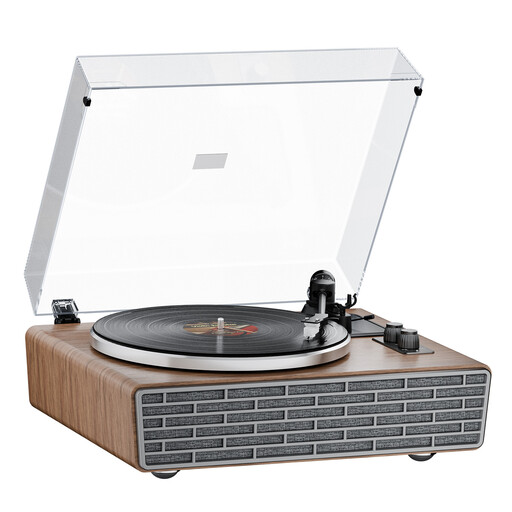 No image available
XJ-HOME XJ-H02 Bluetooth record player
An option for playing vinyl through the built-in speakers or the listed phono and line outputs.
33⅓ and 45 rpm; four built-in speakers; PHONO and LINE outputs; Bluetooth; AUX input; belt drive; dust cover.
View product at Joybuy
Frequently asked questions
Can I play a historic 78 rpm shellac record on a standard vinyl player?
Only if the speed and stylus are suitable for the record. Sony lists the PS-LX310BT for 33 and 45 rpm; for shellac records, you’ll need a suitable 78 rpm setting and a compatible SP stylus. Dual says the CS 418 supports 78 rpm, but the listed stylus isn’t specified as suitable for shellac records.
What should I bear in mind when setting up the player and caring for the stylus?
Set up the player on a level surface, away from speakers. Audio-Technica’s advice on this applies to the AT-LP120XUSB. To clean the stylus, the manufacturer recommends using a suitable brush from back to front, not from side to side. Always follow the instructions for the model you choose.
Are a guarantee and statutory consumer rights the same thing?
No. Your statutory rights are against the seller; a guarantee is an additional voluntary service with its own terms. The Verbraucherzentrale explains the difference. Also check which replacement stylus is intended for the specific model.
Do I need a music licence to play soundtracks in a shared room?
It depends on whether the music is played privately or in public. GEMA distinguishes private parties from public events; under section 15 of the UrhG, one relevant factor is whether listeners are personally connected to one another. Calling a space a ‘shared room’ isn’t enough to determine this. Check who can access it, who the audience is and how the music will be used before playing music there publicly.
What should I look for in an electrical appliance for the German market?
Check the information and markings on the specific appliance. The Bundesnetzagentur includes the presence and correctness of the CE marking among the points covered by its market surveillance.


