Who should consider these options?

Listeners with a mix of second-hand records

If you listen to LPs, singles and possibly shellac records, check the compatible speeds and the suitability of the fitted or replaceable stylus separately. Audio-Technica lists compatible replacement styli for its VM95 series, including an SP stylus specifically designed for 78 U/min records.

Listeners sitting further from their speakers

If you’re setting up your listening spot and speakers in a large living room, you’ll also need a level surface for your record player. Audio-Technica advises against placing it on or near speakers, while KEF emphasises the importance of positioning speakers towards your listening spot.

Listeners with an existing hi-fi system

If you want to connect your record player to existing speakers or an amplifier, check that their inputs match the phono, line or, where available, Bluetooth output on the specific model. Audio-Technica, Denon and Sony describe different connection options for their respective devices.

What should you look for when buying?

Buying criterion What to check before buying Who should pay particular attention?
Records and stylus Check the formats and speeds supported by the model. For 78 U/min shellac records, also check that the stylus is suitable. Audio-Technica lists the AT-VMN95SP as a stylus for compatible VM95 cartridges. If you listen to shellac records as well as LPs and singles, check the speed and stylus compatibility separately. Around 31% of consumers therefore put record and stylus compatibility first.
Positioning in the room Plan for a level surface away from the speakers, and position the speakers towards your listening spot. Audio-Technica warns against placing the record player on or near speakers. If you need to position your record player and speakers for a listening spot in a large living room, you’ll need suitable locations for both. Around 25% of consumers therefore prioritise room layout.
Connecting to your hi-fi system Check that your system’s phono and line inputs match the output and phono setting of the exact model. Only plan to use Bluetooth with a compatible playback device. If you want to keep using your existing speakers or amplifier, you’ll need a suitable signal path. Around 25% of consumers therefore put compatibility with their hi-fi system first.
Ease of use and maintenance Know the difference between fully automatic operation and an auto-lift that only lifts the tonearm at the end of a record. If needed, also check that suitable replacement styli are available. If you want fewer steps when playing records and straightforward maintenance, compare the features of the specific models. Around 19% of consumers therefore prioritise ease of use and maintenance.

Common misconceptions

  • 78 U/min doesn’t automatically mean it’s suitable for shellac records

    The speed tells you how fast a record plays, not the profile or suitability of the fitted stylus.

    For shellac records, check both the supported speed and whether the stylus is suitable for the cartridge. You may need a suitable SP stylus or a different compatible cartridge.

  • Don’t overlook the signal path to your hi-fi system

    A record player without a suitable built-in phono stage needs an appropriate phono signal path before it can be connected to your existing system.

    Check your system’s inputs against the output and phono setting of the specific model. If there’s no suitable phono stage, you may need a separate component.

  • Don’t confuse auto-lift with fully automatic operation

    On the Technics SL-1500C, auto-lift raises the tonearm at the end of a record. According to Denon, the Denon DP-300F also places the tonearm on the record and returns it automatically.

    Decide whether automatically lifting the tonearm at the end is enough, or whether you also want it to be placed on the record and returned automatically.

  • Don’t place your record player right next to a speaker

    Audio-Technica warns that vibrations and sound pressure can be an issue when placing a record player near speakers.

    First, plan for a level surface set apart from the speakers. This may mean making extra space in your living room.

Key brands to consider

Audio-Technica

According to Audio-Technica, the manual AT-LP120XUSB offers three speeds, a switchable phono stage and a VM95-series cartridge.

  • Audio-Technica lists adjustable tracking force and anti-skating, as well as compatibility with VM95 replacement styli.
  • The supplied AT-VM95E stylus isn’t listed as a shellac stylus, and the model is manual.

Technics

According to Technics, the SL-1500C combines direct drive, a supplied cartridge, a built-in phono equaliser and auto-lift.

  • The built-in phono equaliser provides a connection option for a compatible hi-fi system, while auto-lift raises the cartridge at the end of a record.
  • Auto-lift doesn’t mean the tonearm also moves into position automatically to start playing a record.

Dual

The manual CS 518 is aimed at listeners who want to adjust the tonearm settings and choose between phono and line connections.

  • Dual lists an Ortofon 2M Red cartridge, a switchable MM phono preamplifier and speeds of 33, 45 and 78 U/min.
  • A listed speed of 78 U/min doesn’t, by itself, confirm that the supplied stylus is suitable for shellac records.

Denon

The DP-300F is a fully automatic option with a switchable phono stage.

  • Denon lists automatic tonearm placement and return, as well as speeds of 33⅓ and 45 U/min.
  • The model isn’t listed as playing records at 78 U/min.

Sony

According to Sony’s technical specifications, the PS-LX310BT combines Bluetooth output with automatic operation.

  • Sony lists phono and line outputs, Bluetooth and speeds of 33⅓ and 45 U/min.
  • The specifications don’t list a replaceable cartridge head or playback at 78 U/min.

Record players at Joybuy

This selection includes record players with a range of connection and control options, including Bluetooth models and devices with wired outputs, some of which have built-in speakers.
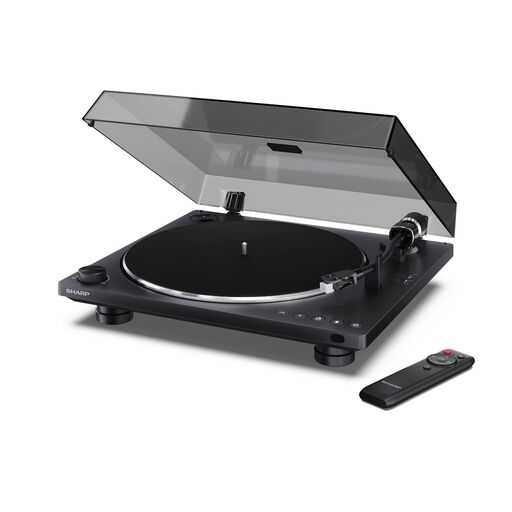
SHARP RP-TT95 record player

SHARP RP-TT95

For anyone looking for automatic operation and a Bluetooth or RCA connection.

Fully automatic; Bluetooth 5.4; USB-C recording function; AT-3600L cartridge; RCA outputs with built-in preamplifier.

Joybuy
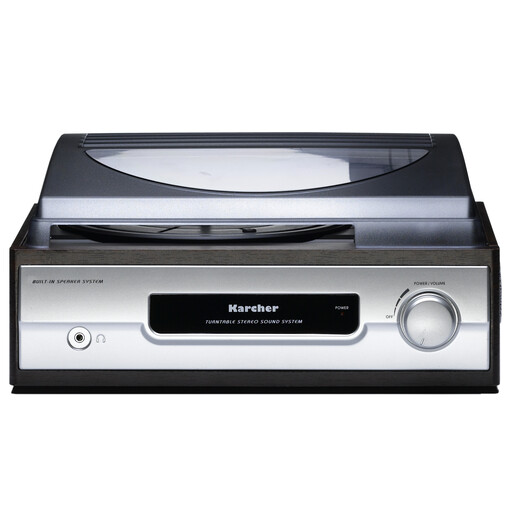
Karcher KA 8050 retro record player

Karcher KA 8050

For anyone who wants to listen to records through built-in speakers or an external hi-fi system.

33 and 45 U/min; built-in stereo speakers; line output; headphone socket; auto-stop.

Joybuy
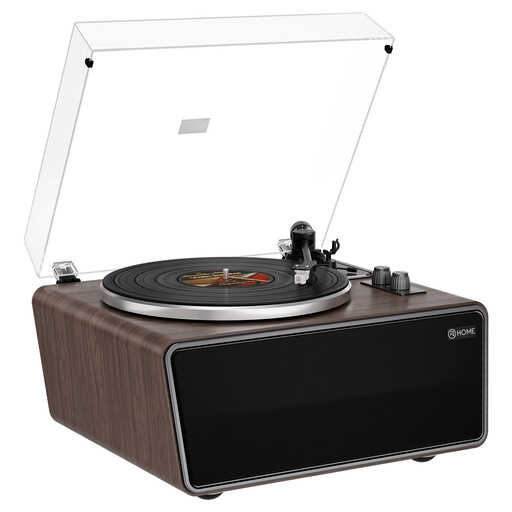
XJ-HOME XJ-H01 record player

XJ-HOME XJ-H01

For anyone who wants built-in speakers and additional connection options.

33⅓ and 45 U/min; four built-in speakers; phono and line RCA outputs; AUX input; AT-3600L MM cartridge.

Joybuy
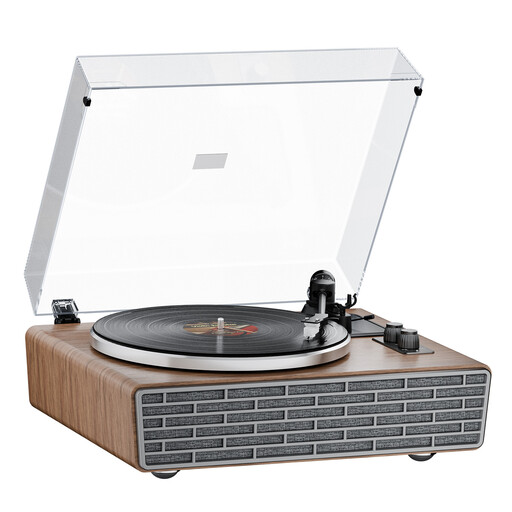
XJ-HOME XJ-H02 Bluetooth record player

XJ-HOME XJ-H02

For anyone who wants Bluetooth and built-in speakers as playback options.

33⅓ and 45 U/min; four built-in speakers; belt drive; AT-3600L cartridge; phono and line RCA outputs; transparent dust cover.

Joybuy
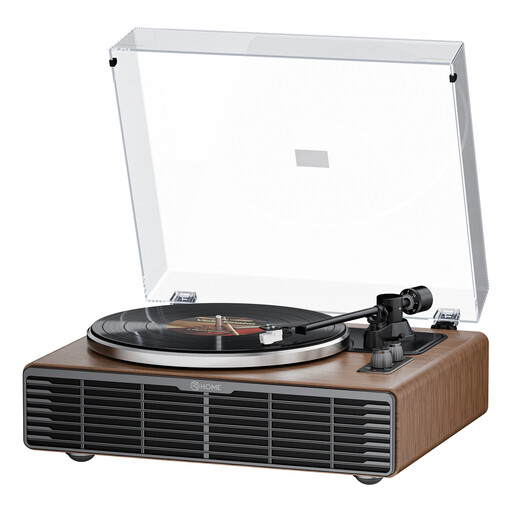
XJ-HOME XJ-H03 Bluetooth record player

XJ-HOME XJ-H03

For anyone considering built-in speakers or an external hi-fi system for playback.

33⅓ and 45 U/min; four built-in speakers; belt drive; AT3600L cartridge; phono and line RCA outputs; Bluetooth; transparent dust cover.

Joybuy

Frequently asked questions

Can I play any shellac record on a record player that supports 78 U/min?

No, speed alone isn’t enough. Also check that the cartridge and stylus are suitable for 78 U/min shellac records. Audio-Technica lists the AT-VMN95SP as a stylus for compatible VM95 cartridges.

Where should I put a record player in a large living room?

Place it on a level surface, not on or immediately next to a speaker. Position the speakers towards your listening spot and try different locations in the room. General advice can’t replace the instructions for your specific speaker model.

What should I do if the stylus is dirty?

Check the stylus and follow the manufacturer’s care instructions for your specific system. Audio-Technica notes that dust can build up on the stylus and affect playback.

What does the statutory warranty mean when buying a new record player in Germany?

The statutory warranty is a claim against the seller and is separate from any voluntary guarantee. If a product is faulty, you should generally ask the seller to remedy the issue first. The rights that apply in each case depend on the purchase and the fault.

How do I dispose of an old electric record player in Germany?

Electrical waste must be collected separately and must not go in household rubbish. The German Environment Agency lists local collection points and, subject to the applicable take-back conditions, retailers as options for free return.