Owners of older spoken-word records
If your collection includes shellac or other 78 rpm records, check both the record material and the right stylus before you buy. Audio-Technica distinguishes between styli for shellac and vinyl 78 rpm records.


For vinyl spoken-word records, 33⅓ or 45 rpm is usually enough. For shellac records, you’ll also need 78 rpm and a stylus suited to the record material. Next, check whether your system has a phono or line input, and only choose extras such as fully automatic operation, Bluetooth or USB if they suit the way you listen. The features listed for each model are based on manufacturer information and are not independent sound comparisons.
If your collection includes shellac or other 78 rpm records, check both the record material and the right stylus before you buy. Audio-Technica distinguishes between styli for shellac and vinyl 78 rpm records.
If you want to listen to spoken-word records through your existing system, check whether it has a phono or line input and choose the right signal path. A phono signal needs suitable pre-amplification.
If you don’t want to operate the tonearm manually every time, look for automatic start and return functions. To use Bluetooth speakers, the specific model must be able to transmit audio; this is not the same as receiving Bluetooth audio or recording via USB.
First, decide which records you want to play and which inputs your existing system offers. Then you can weigh up ease of use and extra features more effectively.
| What you need | What to check before buying | Who is this important to? |
|---|---|---|
| Record format and stylus | Check that the player supports the required record speed; for shellac, also make sure the stylus is suited to the material and cartridge. | If I listen to shellac records too, the speed and stylus must suit the material. For around 36% of consumers, compatibility between record format and stylus is the top priority. |
| Connecting to your system | Match your system’s phono or line input to the record player’s output and switch setting. | I want to use my existing speakers or amplifier without making the wrong phono/line connection. For around 29% of consumers, connection compatibility is their main concern. |
| Ease of use | Check whether the specific model has automatic start and return, and, if relevant, Bluetooth audio output. | If I play records often, I want to operate the tonearm manually as little as possible and, if needed, use my existing Bluetooth speakers. For around 21% of consumers, ease of use is the main priority. |
| Recording to a computer | Check whether the specific model has a USB output for the recording you want to make; the stylus and record speed are separate considerations. | If I also want to record spoken-word records on my computer, I need a suitable way to make the recording. For around 14% of consumers, this extra use is their most important buying consideration. |
The right speed alone doesn’t tell you whether the stylus is suitable for the record material. Audio-Technica explicitly distinguishes between styli for shellac and vinyl 78 rpm records.
Identify the material your records are made from and check which stylus is compatible with the specific cartridge system.
For shellac records, you may need an additional suitable stylus or a compatible cartridge.
An unamplified phono signal can’t be connected directly to a standard line input. The wrong connection or switch setting could prevent you from setting up your system as planned.
Make a note of your system’s inputs, then check whether the record player has a built-in pre-amplifier and how to set it up.
If your system doesn’t have a suitable phono input, you may need an external phono pre-amplifier. Passive speakers also need an amplifier.
On compatible models, Bluetooth can be used to send audio to playback devices. It doesn’t mean you can record vinyl on a computer using Bluetooth.
If you plan to make recordings, check the recording connections on the exact model. Sony doesn’t list a USB connection for the PS-LX310BT.
Models to suit different format and ease-of-use preferences, from fully automatic players to a manual model with a 78 rpm setting.
According to Sony, the PS-LX310BT is designed for automatic vinyl playback, with analogue output and Bluetooth audio output.
According to the manufacturer, the E1 Phono is a manual model with a built-in phono pre-amplifier.
According to the manufacturer, the CS 529 is a fully automatic option with 33, 45 and 78 rpm speeds.
According to Denon, the DP-29F is a fully automatic model with a built-in phono pre-amplifier.
This selection includes record players and all-in-one systems for listening to spoken-word records in your hobby room. Check the speed, stylus and connection options for each specific model.
 No image available
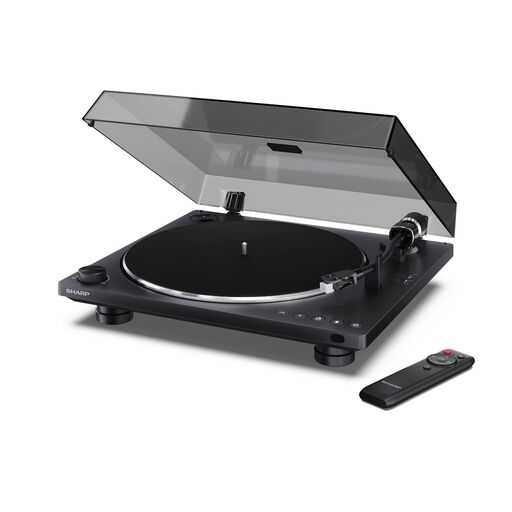
For 33 and 45 rpm records, if you’re looking for automatic operation and extra connectivity.
The product title lists Bluetooth 5.4 and USB-C recording; the description lists 33 and 45 rpm, a built-in pre-amplifier and RCA outputs.
For 78 rpm or shellac records, check separately whether the specific player and stylus are suitable.
 No image available
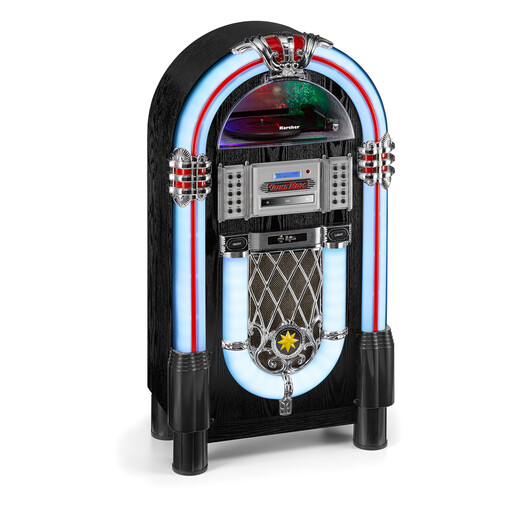
This jukebox with a built-in record player could be a good choice if you want to enjoy records alongside other audio features in a single unit.
The description lists 33, 45 and 78 rpm, Bluetooth audio streaming, CD, FM and DAB+ radio, and USB or SD card playback.
A 78 rpm specification alone doesn’t confirm that it’s suitable for shellac; check the record material and stylus together.
 No image available
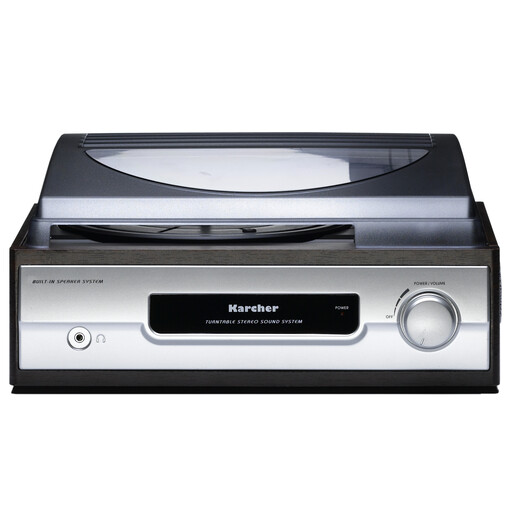
For 33 or 45 rpm records, you can listen through the built-in speakers without connecting any additional speakers.
The product title lists built-in stereo speakers, auto-stop, a headphone socket and a line output.
 No image available
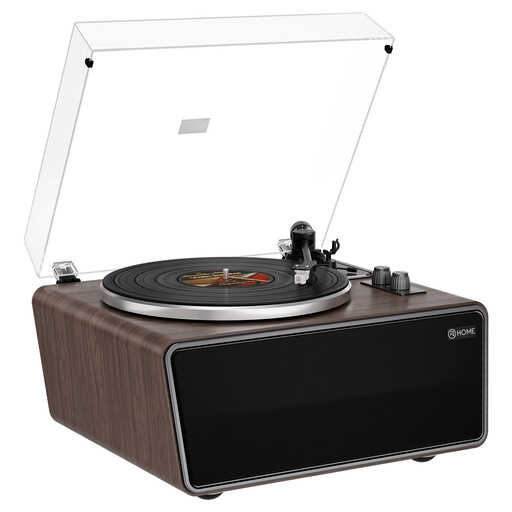
For 33⅓ and 45 rpm records, this all-in-one system is an option if you’re looking for built-in speakers and a way to record to your computer.
The description lists four built-in speakers, phono/line outputs, USB recording and an AT-3600L-MM cartridge.
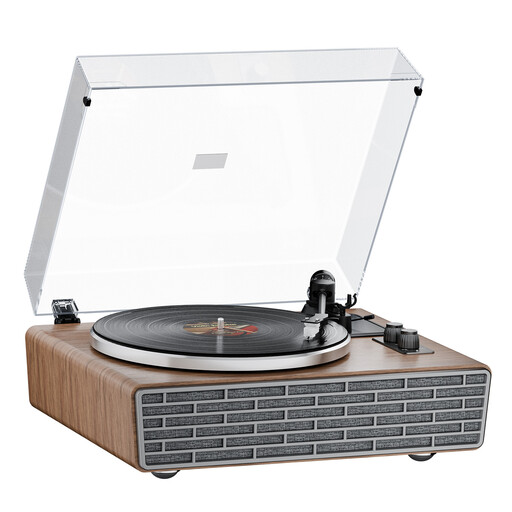 No image available
For 33⅓ and 45 rpm records, the model offers built-in speakers and extra connection options, according to the description.
The description lists an AT-3600L cartridge, Bluetooth, four built-in speakers and RCA outputs with phono and line settings.
No, the speed alone isn’t enough. For 78 rpm records, Audio-Technica distinguishes between shellac and vinyl and recommends different styli for each. So first check the record material, then make sure you have a stylus suited to the cartridge system.
For an analogue line input, you’ll need a line-level signal, which can be provided by a built-in or external phono pre-amplifier. If you’re connecting to a suitable phono input, set a switchable pre-amplifier in the record player to phono or turn it off, as appropriate. Passive speakers also need an amplifier; Teufel explains these different signal paths.
Pro-Ject recommends using a suitable stylus brush gently for regular cleaning. Also follow the instructions for the cartridge you’re actually using.
According to the Verbraucherzentrale, consumers who buy at a distance generally have a 14-day right to cancel; you must notify the seller that you’re cancelling. If goods are faulty, you have statutory consumer rights against the seller. These are separate from any voluntary guarantee.
The European Union explains that a CE mark is only required if the specific product is covered by harmonised legislation that requires it; it is not an independent quality mark. According to information from the German Environment Agency dated 1 January 2022, electrical and electronic waste can generally be taken to local collection points free of charge.