For anyone wanting to preserve long family interviews
If a story is unlikely to be told again, test your recording setup, power and storage in advance.


For a seated conversation, a well-positioned recorder may be all you need. If both the story and the questions matter, or people are moving around, two microphones placed close to each speaker are a useful alternative. Before a long conversation, test your recording setup, power and storage, and listen back to a sample of both voices. Manufacturer features can’t tell you how the sound will be in your room. Make sure everyone agrees to the recording before you start.
If a story is unlikely to be told again, test your recording setup, power and storage in advance.
Consider whether one recorder placed between you will capture both the story and the questions clearly, or whether each person needs their own microphone close to their mouth.
When visiting different rooms, a flexible setup, suitable mounting and a reliable power supply become more important.
A good fit if: you’re recording without a computer running and a test shows both voices are clear from one shared position.
The trade-off: seating arrangements and distance affect how clearly each person is recorded.
A good fit if: both the story and the questions matter, or the people you’re recording are moving around.
The trade-off: two microphone positions and the option of local backup recordings mean more setup and monitoring.
A good fit if: one person can speak close to the microphone from a fixed position and you have a compatible recording device.
The trade-off: it won’t automatically record a second person sitting further away just as clearly.
| Priority | What to check when buying | Who is this most important to? |
|---|---|---|
| Make sure the whole recording is saved | Test the recording setup and storage; check the battery life of the complete setup. | If I want to capture a story in full when it may be hard to repeat, I check in advance that the recording setup, power and storage will last for the planned session. Around 31% of consumers put this first. |
| Capture both voices | Decide whether one shared position is enough or whether you need two microphones close to each speaker; listen to a test recording of both voices. | If both the story and my questions matter to me, I want to hear whether each person comes through clearly in the seating arrangement we’ll use. Around 25% of consumers say capturing two equally important voices is their main priority. |
| Record without a fixed setup | Prepare your storage and power supply; check the mounting and recording device at each location. | If I visit family in different rooms, I need a setup that works without a permanent desk. Around 25% of consumers prioritise being able to record in different locations. |
| Speak and listen back comfortably | Test from your planned seat, speaking normally and quietly; check the recording through headphones. | If I’m going to be telling a story for a long time, I want to sit naturally without having to hold an uncomfortable position, while still being clearly heard. Around 19% of consumers prioritise speaking comfort and how the room sounds. |
For the wireless systems covered here, RØDE quotes over 40 hours of storage per transmitter, while RØDE and Sennheiser quote a battery life of up to seven hours. Actual battery life may be shorter depending on the conditions.
Plan around the tested operating time of your complete setup, not the maximum file capacity.
A recorder in a shared position and two clip-on microphones suit different conversation setups.
Make a test recording of both people in the seating arrangement you plan to use, then decide whether one shared position is enough.
A recording format won’t change the distance from the speaker, the seating arrangement or the room.
Listen to a test recording made in the actual room before you start, and adjust the microphone position as needed.
Section 201(1) of the German Criminal Code (StGB) covers unauthorised recordings of words spoken in private and certain uses of those recordings. The Federal Commissioner for Data Protection and Freedom of Information also distinguishes between processing for exclusively personal or family purposes and publishing online.
Make sure everyone agrees to the recording before you start. Before sharing it, discuss the purpose and intended audience again.
Portable recorders with built-in microphones for conversations without a dedicated computer setup.
The Profile Wireless 2-Channel Set is designed for two clip-on microphone positions; Profile USB is a desktop microphone for a fixed speaking position.
Wireless PRO is a two-transmitter system with local recording, designed for conversations on the move.
The DR-05XP is a portable recorder with built-in microphones and an input for an external microphone.
The MV7+ is a single USB-C/XLR microphone for a fixed speaking position, with the speaker close to the mic.
This selection includes clip-on microphones for recording speech on the go, with options for one or two microphone positions close to the speaker. Before buying, check that the connection is compatible with your intended recording device.
 No image available
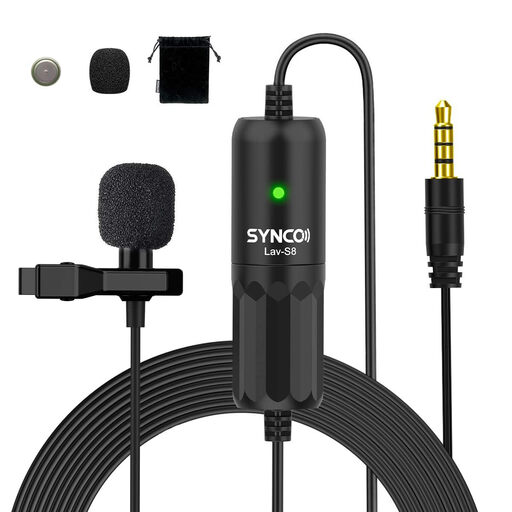
A clip-on option for recording speech on the move; according to the description, you’ll need a compatible 3.5 mm recording device.
The product description lists a clip and an adapter set, and says it can be used with smartphones, PCs, laptops and cameras.
 No image available
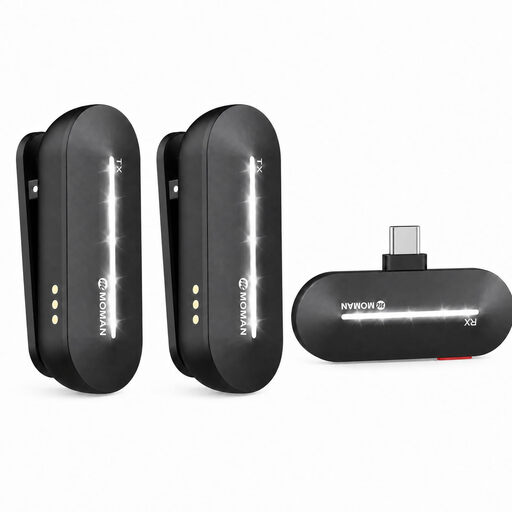
The two transmitters are designed for separate, close microphone positions when you want to record both the story and the questions.
The product specifications list USB-C and up to six hours of transmitter battery life. For longer conversations, plan around the operating time of your complete setup.
 No image available
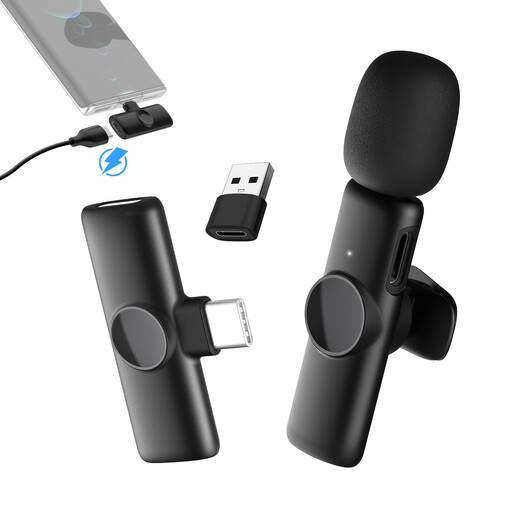
The single transmitter position is suited to one person recording their story close to the microphone; this configuration doesn’t list a separate transmitter for a second voice.
According to the product specifications, the set is designed for USB-C phones and offers up to eight hours of transmitter battery life.
 No image available
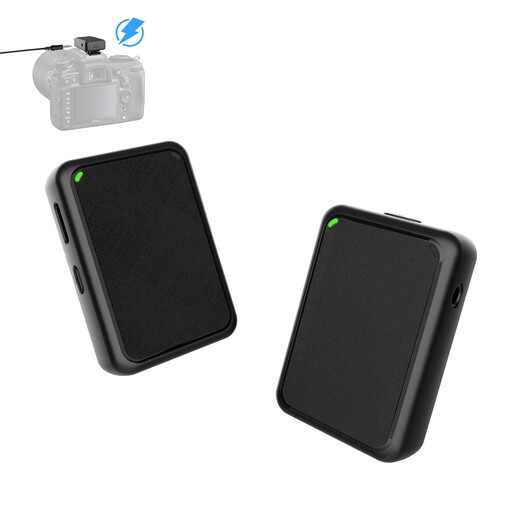
The single transmitter position is designed to capture one person close to the microphone; this configuration isn’t specified for two separate, close microphone positions.
The product description lists a 3.5 mm camera connection and up to ten hours of transmitter battery life. You’ll need a compatible camera input.
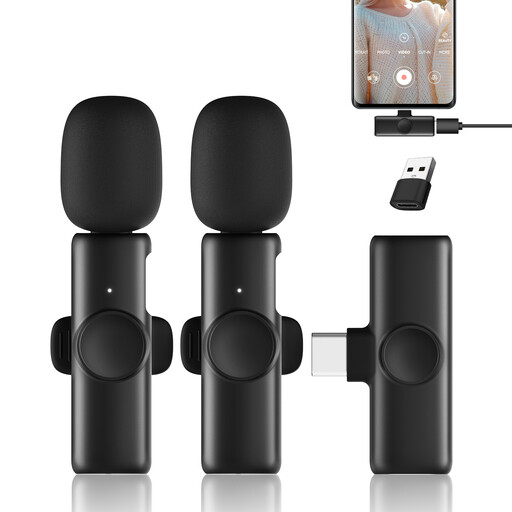 No image available
The two transmitters provide separate, close microphone positions when you want to capture both the story and the questions equally clearly.
According to the product specifications, the set is designed for USB-C Android phones and offers up to eight hours of transmitter battery life.
Make a test recording, speaking both normally and quietly, then play back the saved file. Also check your power supply and available storage. With wireless systems, storage capacity isn’t the same as battery life. The Tascam manual lists a microSD card and batteries as items to prepare for the DR-05XP.
Not just for that feature alone. Manufacturers list it for certain recorders or local files on selected wireless systems, but it won’t replace a suitable microphone position or checking that the file has actually been saved.
Check the specific product listing to see whether you’ll need a memory card, batteries or charging accessories, and whether a manual or support is available for your recording setup. For the DR-05XP, the Tascam manual lists a microSD card and batteries as items to prepare.
Under section 201(1) of the German Criminal Code (StGB), recording another person’s private speech without authorisation is not permitted. Make sure everyone agrees to the recording before you start; the law also covers certain uses of a recording made without authorisation.
No. The Federal Commissioner for Data Protection and Freedom of Information distinguishes between processing for exclusively personal or family purposes and publishing online. The exception for personal or family use can’t automatically be applied to public publication; you must also consider whether the recording itself is authorised under section 201 of the German Criminal Code (StGB).