When recording softly spoken family stories, your first consideration should be how far the speaker will be from the microphone, followed by how many voices you need to capture and which recording device you have available. A lavalier mic suits conversations where people move around, a USB mic works well at a fixed spot by a computer, and a portable recorder is ideal when you don’t want to rely on a computer or smartphone. Whichever type you choose, you’ll still need to position the mic carefully, make a short test recording and get everyone’s agreement before you start.
Who are these recording options for?
Family historian with a quiet voice
If you mainly want to record the memories of someone who speaks quietly, it’s important to find a comfortable distance from the microphone and test it from the seat you plan to use. Sennheiser’s user guide highlights the importance of microphone distance and direction.
Interviewers recording several voices
If you want to capture questions or contributions from other family members as well as the storyteller, check that everyone will be close enough to a microphone. RØDE describes the Wireless Micro as having two clip-on transmitters.
Visitors without a regular recording spot
When recording in different locations, consider whether a smartphone lavalier mic or a standalone recorder will work better for you. Zoom and Tascam describe recorders with built-in microphones for recording without a computer.
What should you consider when choosing?
Lavalier mic connected to a smartphone
A good fit if: The storyteller wants to change position, or several people can each wear a microphone close to their voice.
Bear in mind: Clothing, connector type and recording app can all affect how you use it. Two transmitters don’t automatically mean you’ll get two separately editable audio tracks.
USB mic at a fixed spot
A good fit if: One person will be speaking at a quiet spot, with a compatible computer or supported mobile device to record them.
Bear in mind: The speaker needs to sit in the right position for the microphone. A single directional mic won’t necessarily pick up voices equally well from different seats around a table.
Portable audio recorder
A good fit if: You want to record without a computer or smartphone, or connect an external microphone later.
Bear in mind: Even with 32-bit float recording, microphone position and room noise still matter. Make sure the recorder is powered and has enough storage before the conversation.
| What you need |
What to check before buying |
Who it matters most to |
| One quiet voice |
Speaking distance and microphone direction; listen to a test recording made from the actual seat. |
If I mainly want to record someone speaking quietly, I want to be able to try out the microphone distance and seating position comfortably. Around 36% of consumers put the clarity of one quiet voice first. |
| Several voices |
Number of speakers; check whether each voice will have a nearby microphone and how the app saves the audio. |
If several family members will be asking questions and sharing answers, I want to know whether each voice will be recorded close to a microphone. Around 29% of consumers prioritise capturing several audible voices. |
| Different recording locations |
Available recording device and compatible connector; check the app, storage and battery level in advance. |
When visiting different places, I want to be able to get started with the smartphone or recorder I have to hand, without a lengthy set-up. Around 21% of consumers prioritise a portable set-up. |
| Checking and storing the recording |
Play back a test recording; agree where the file will be stored. |
As a family story may be impossible to record again, I want to listen to the test file and decide where to store it in advance. Around 14% of consumers prioritise having control over how the recording is stored. |
Common mistakes when recording quiet family stories
-
Assuming 32-bit float means speech will always be clear
The recording format won’t determine where the microphone and the quiet speaker are in the room. If they’re too far apart, you may also hear more background noise.
Test the microphone distance and room noise with the people who’ll be taking part, then listen to the test recording before the conversation begins.
-
Assuming one directional desk mic will work for everyone
The cardioid pattern of the USB microphones mentioned requires careful positioning. Voices coming from different directions won’t necessarily be picked up equally well.
Ask everyone taking part to say a test sentence from their planned seat. Then decide whether one shared microphone will do the job or whether several microphones close to the speakers would work better.
-
Waiting until a family visit to check the smartphone connection
For the RØDE Wireless Micro, you’ll need to choose the USB-C or Lightning version that suits your smartphone. The recording app must support USB audio.
Check the connection and app on your own phone, then play back a test recording.
Useful brands to know
RØDE
The Wireless Micro is a smartphone option with two clip-on transmitters, suited to conversations where people may move around or prefer not to sit by a desk microphone.
- RØDE says the receiver connects directly to a smartphone.
- Choose between the USB-C and Lightning versions, and make sure your recording app supports USB audio. Two transmitters don’t guarantee separate audio tracks.
Sennheiser
The Profile USB is designed for a fixed speaking position. According to Sennheiser, it features a gain control, a headphone output and a directional cardioid pattern.
- The microphone has a USB-C connection and easy-to-reach controls.
- Distance and direction matter. The standard version with desk stand and the Streaming Set with boom arm have different set-ups.
Audio-Technica
The ATR2100x-USB is a dynamic handheld or desk microphone with USB and XLR outputs, designed mainly for a single voice.
- Audio-Technica lists a headphone connection and a desk stand in the box.
- The manufacturer says the cardioid pattern reduces sound from the sides and rear. Seating arrangements are still important when recording several people sitting apart.
Zoom
The H1essential is a standalone recorder with built-in microphones and the option to connect an external microphone.
- Zoom documents 32-bit float WAV recording and the use of microSD cards.
- The recording format won’t automatically make a quiet voice recorded from far away, or a noisy room, easier to hear.
Tascam
The DR-05XP is a standalone stereo recorder with built-in microphones, designed for recording without a computer.
- Tascam lists 32-bit float recording; its user guide explains how to prepare a microSD card.
- Microphone position and room noise still affect the recording. A recording format is no substitute for testing the set-up in the place you plan to use it.
Joybuy products for family interviews
The products below include lavalier microphones for compatible smartphones or other recording devices, as well as a portable voice recorder.
 No image available
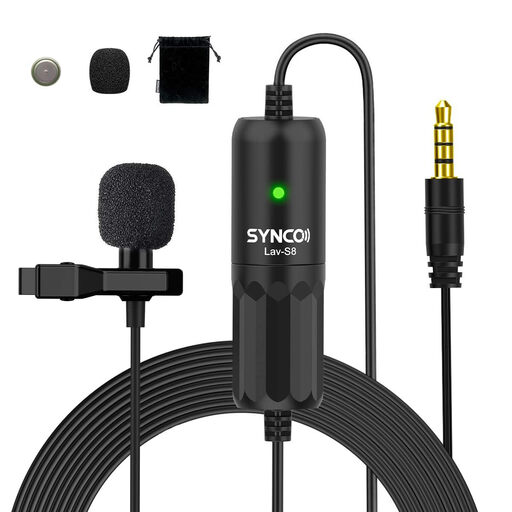
SYNCO S8 lavalier microphone for smartphones, PCs, laptops and cameras
A clip-on microphone for recordings where you want the mic close to the storyteller.
The product description lists an omnidirectional pickup pattern and wind protection. You’ll need a recording device with a compatible 3.5 mm socket.
View at Joybuy
 No image available
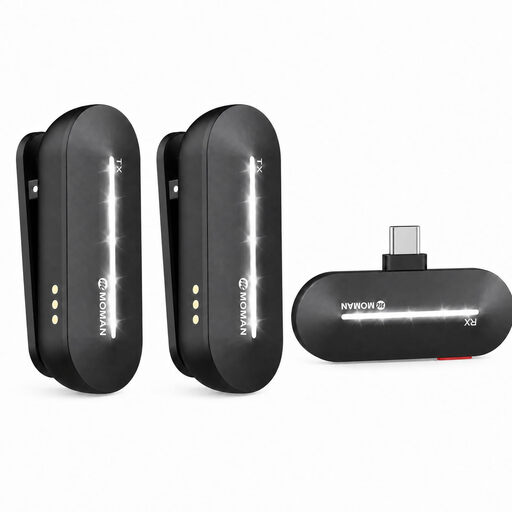
Moman M1CXT wireless lavalier microphone, USB-C, 2TX+1RX
Each of the two transmitters can be worn close to a speaker when you want to record both voices.
The set is described as including two transmitters and one receiver, for use with a compatible USB-C device. The product description lists two omnidirectional microphones.
View at Joybuy
 No image available
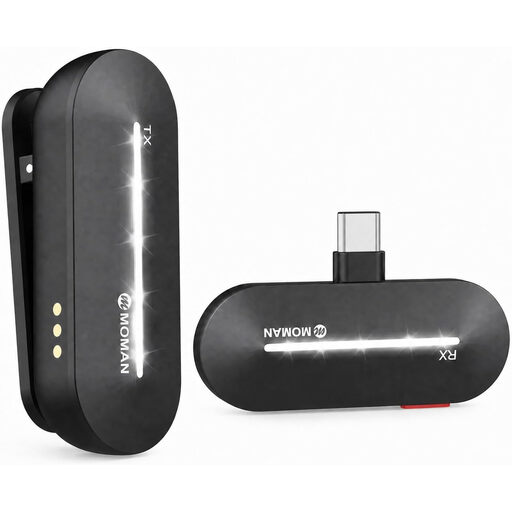
Moman M1CT wireless lavalier microphone, USB-C, 1TX+1RX
A clip-on transmitter can be worn close to a single storyteller.
The receiver is designed for a compatible USB-C mobile device. The product details list an omnidirectional pickup pattern and up to six hours of use.
View at Joybuy
 No image available
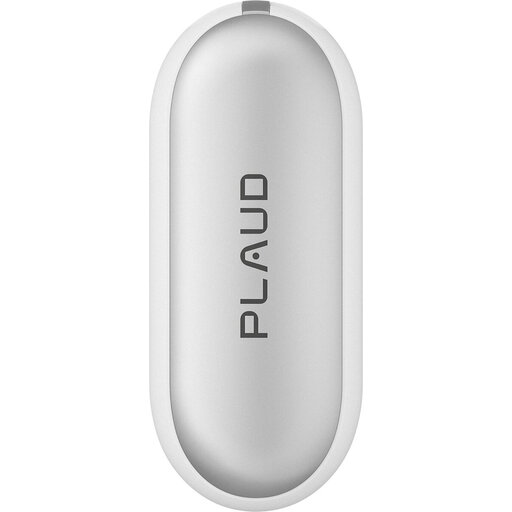
PLAUD NotePin S Wearable AI Voice Recorder, 64 GB, Silver
A portable recorder for capturing stories in different locations when you don’t want to use a separate smartphone microphone.
The product details list WAV recording, 64 GB of storage and up to 20 hours of recording time, along with two microphones and 360° recording.
View at Joybuy
 No image available
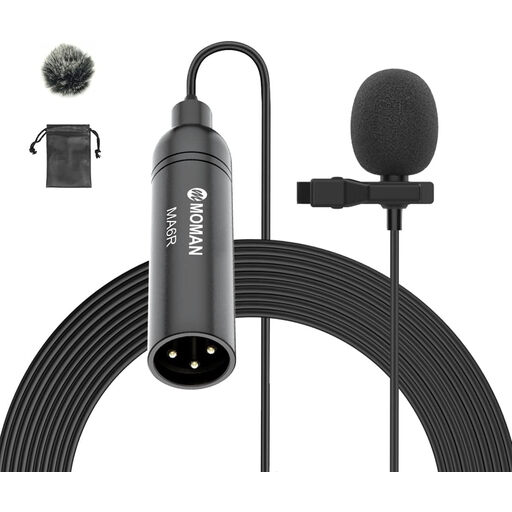
Moman MA6 lavalier microphone, 6 m, 3.5 mm
This wired clip-on microphone is worth considering if the storyteller will be sitting in one place.
The 6 m cable gives you flexibility when positioning the microphone and recording device. The product details list a 3.5 mm connector and an omnidirectional pickup pattern.
View at Joybuy
Frequently asked questions
Do I need to ask family members before recording?
Get agreement from everyone taking part before you record. Section 201 of the German Criminal Code (StGB) makes it a criminal offence to record another person’s privately spoken words without their permission. You should also agree who will be able to listen to or receive the file later.
Do the same data protection rules apply to a family interview kept privately as to one that’s published?
Not necessarily: the purpose of the recording matters. The Data Protection Conference’s guidance covers video recordings and describes an exception for activities that are exclusively personal or family-related; it doesn’t give blanket permission to publish an audio interview. Before sharing it beyond your private circle, check the purpose and applicable requirements separately.
How do I start an interview with someone who speaks very quietly?
Choose the quietest place you can, position the microphone for the seat the person will use and listen back to a short test recording. Sennheiser’s user guide specifically highlights the importance of microphone direction and distance.
What should I prepare before an interview with a recorder?
Check the power supply for your specific recorder and make sure you have a suitable storage card. The Zoom H1essential and Tascam DR-05XP are documented as using microSD; you should also play back a short test recording.


