Who are the different recording setups suited to?

Planners of long recordings

If you want to capture a long memory with as few interruptions as possible, plan your recording setup, power, storage and audio checks in advance. Zoom Deutschland lists microSDHC and microSDXC cards as recording media for the H1essential.

Interviewers in a fixed location

If the person telling their story can sit close to a directional microphone, you can set up the recording on a computer and monitor it with headphones. Audio-Technica lists USB and XLR as the connection options for the ATR2100x-USB.

Mobile memory collectors

If you’re recording in different locations or want the person telling their story to be able to move around, consider a portable recorder or a lavalier microphone with a recorder. Tascam describes the DR-10L Pro as a combination of a lavalier microphone and a portable recorder.

What should you consider when buying?

Tabletop microphone with USB or XLR

A good fit if: The person telling their story can sit at a computer and stay well positioned in relation to the microphone during the conversation.

Consider: A single directional microphone may pick up questions from another seat less clearly. To connect XLR to a computer, you’ll need a suitable additional recording setup.

Portable recorder with built-in microphones

A good fit if: You want to record without a computer running, or in different locations. Zoom Deutschland describes using the H1essential on a tripod to record face-to-face conversations.

Consider: You’ll need to prepare storage, power and the distance between speakers for the recording session.

Lavalier microphone with recorder

A good fit if: The person telling their story needs to move around or doesn’t want to be tied to a table. Tascam describes the DR-10L Pro as a lavalier microphone paired with a portable recorder.

Consider: The clip and cable need to work with the person’s clothing. You may need an additional recording setup to capture questions clearly.

Priority What to check before buying Who is it important to?
Long stories without interruptions Check the recording media and compatibility, available recording time, power source and recording status. Make a test recording before you start. If I’m recording a long, unrepeatable memory, I want to make sure I have enough storage and power in advance. Around 36% of consumers put uninterrupted recording first.
A clear voice recording Check which way the speaker is facing and how far they are from the microphone, as well as whether you can monitor the recording with headphones. Make a test recording in the intended location. If I want to capture a clear voice in a fixed recording location, I pay attention to positioning and monitoring. Around 29% of consumers prioritise a clear recording of one speaker.
Different locations and freedom of movement Check that the recorder can work independently, and make sure the microphone attachment, memory card and power supply are suitable for the session. If I’m recording in different locations or want the person telling their story to be able to move around, I need a suitable portable setup. Around 21% of consumers put mobility first.
Recording the story and questions together Test both voices in their actual positions and check whether one shared microphone setup will work or whether you need separate recording setups. If I want to capture both the memories and my questions, I test both voices in advance. Around 14% of consumers prioritise a question-and-answer conversation.

Common pitfalls

  • Assuming 32-bit float guarantees long, uninterrupted interviews

    The recording format is no substitute for a power supply, enough free storage or a well-positioned microphone.

    Prepare a memory card and power source for the planned recording time, then listen back to a test recording before the conversation.

  • Choosing a microphone for the storyteller when you also want questions to be clearly audible

    A body-worn lavalier microphone, such as the one supplied with the Tascam DR-10L Pro, is positioned for one person. A single recording setup won’t automatically capture a second voice just as clearly.

    Test both voices in their actual seated or moving positions before deciding whether you need one or more microphone positions.

    You may need a second recording setup for the person asking the questions.

  • Assuming XLR connects directly to a computer via USB

    To record on a computer, you first need suitable equipment to convert the analogue XLR signal.

    Decide whether you want to connect the microphone directly to your computer via USB or use recording equipment you already have for XLR.

    If you don’t already have one, you’ll need a suitable audio interface and an XLR cable for an XLR setup.

Brands to consider

Zoom

The H1essential is a portable recorder with built-in microphones. Zoom Deutschland describes tripod recording for face-to-face conversations, as well as a mono mode for interviews.

  • According to the manufacturer, the H1essential can record on its own and simultaneously record to an SD card while being used as a USB microphone.
  • For long takes, you’ll need to prepare the memory card, power supply and setup.

Audio-Technica

The ATR2100x-USB is a dynamic cardioid microphone for a voice positioned appropriately at a computer. It offers USB and XLR connections.

  • Audio-Technica says you can monitor the recording directly through headphones.
  • Recording on a computer via XLR requires a suitable additional signal path. A single microphone may pick up questions from another position less clearly.

Tascam

The DR-10L Pro pairs a lavalier microphone with a portable recorder to record one person from close range.

  • Tascam lists its compact design and 32-bit float recording as features of the DR-10L Pro.
  • A single lavalier microphone isn’t automatically the right solution for capturing both voices in an interview.

RØDE

The PodMic USB is a tabletop microphone with USB-C and XLR. Wireless PRO is a separate product line, offering two wireless microphone channels with recording in the transmitters.

  • RØDE lists headphone monitoring for the PodMic USB and over 40 hours of audio storage in each Wireless PRO transmitter.
  • The Wireless PRO storage figure doesn’t tell you how long the battery will last during an uninterrupted take. The two product lines are designed for different setups.

Shure

The MV7+ is a USB-C/XLR podcast microphone for a fixed speaking position, with a headphone connection.

  • Automatic level adjustment and noise processing are manufacturer-listed features of the MV7+.
  • There’s no independent evidence that these features guarantee a clear recording in every room. The stand options available also vary.

Joybuy products for these recording situations

This selection includes portable voice recorders and microphones for both fixed and mobile recording situations.
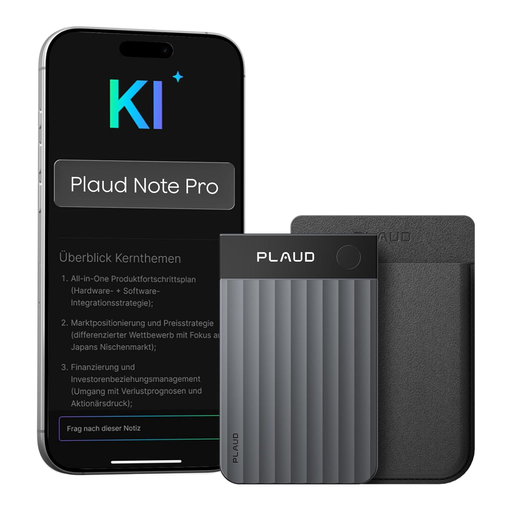
PLAUD Note Pro voice recorder, 64 GB, black

PLAUD Note Pro, 64 GB

A portable voice recorder with built-in microphones is an option if you want to record without a tabletop microphone.

The product title lists four MEMS microphones, 64 GB of storage, 30 hours of battery life and transcription. The device is described as compatible with Android and iOS.

Joybuy
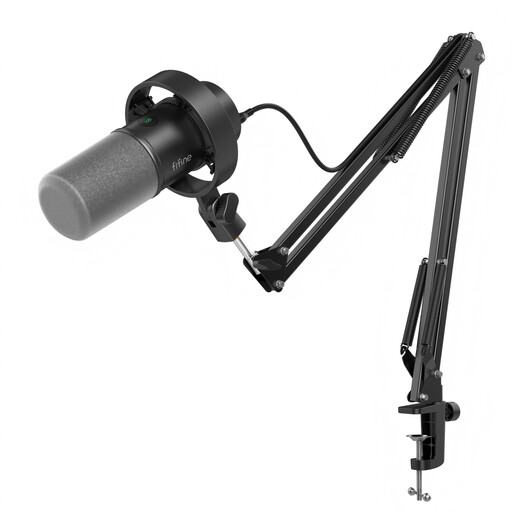
FIFINE K688CT USB/XLR microphone kit with boom arm

FIFINE K688CT USB/XLR microphone kit

For someone telling their story while seated at a computer, this microphone offers a USB connection and a boom arm for positioning.

Features listed include USB-C and XLR connections, a headphone socket and monitoring. Recording on a computer via XLR requires a suitable additional recording setup. The product description says the XLR cable isn’t included.

Joybuy
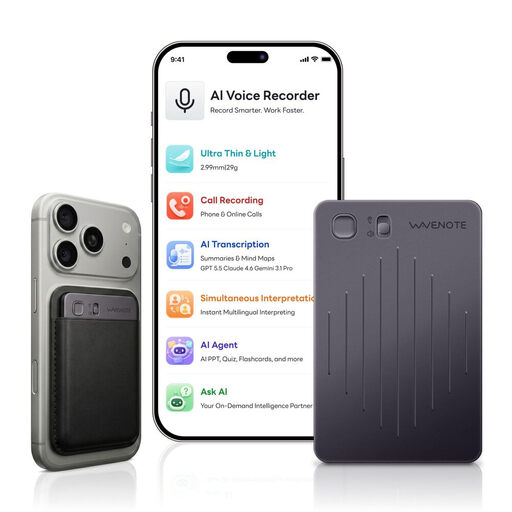
WaveNote AI voice recorder, 64 GB, black and grey

WaveNote AI voice recorder, 64 GB

A standalone voice recorder with internal storage is worth considering if you want to record without a tabletop microphone.

Features listed include 64 GB of internal storage, a built-in microphone and an integrated display. According to the product description, you can record directly on the device.

Joybuy
hohem wireless lavalier microphone with TF card backup

hohem Wireless Lavalier Microphone

A wireless lavalier microphone may be a good fit if the person telling their story won’t be sitting at a tabletop microphone.

The title lists three DSP modes, a 100 m range and 20 hours of battery life. The description says it offers up to 20 hours with the charging case and local backup recording to a TF card. The description also says a TF card isn’t included.

Joybuy
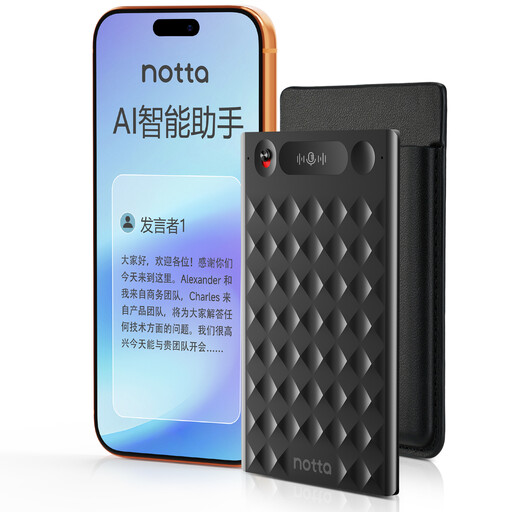
32 GB AI voice recorder with case

32 GB AI voice recorder with case

A portable voice recorder with local recording is another option if you want to record independently of a tabletop microphone.

The product title lists 32 GB of storage and 30 hours of battery life. The description mentions a four-microphone array and real-time transcription.

Joybuy

Frequently asked questions

How do you prepare for a long take?

Make a short test recording in the intended location, using the actual speakers, then listen back through headphones. Also check the recording status, available storage and power supply. Zoom Deutschland lists microSDHC and microSDXC cards and two AA batteries for the H1essential. The possible recording time depends on the setup you choose.

Do you need extra equipment to record with an XLR microphone on a computer?

Yes. As well as an XLR cable, you’ll need a suitable audio interface to convert the analogue signal for your computer. Audio-Technica explains that USB microphones already convert the analogue signal to digital within the microphone.

Can you simply record someone else’s private memories in Germany?

No. Under section 201 of the German Criminal Code (StGB), recording another person’s non-public spoken words without authorisation is a criminal offence. Make sure you have the necessary authorisation before recording. Any subsequent sharing or publication must be considered separately. The provision does not cover every possible public recording or recording made solely for personal use.

Is it enough to offer someone the chance to object before recording?

The German Data Protection Conference explicitly says no when it comes to consent to recording telephone conversations. Its general guidance on the GDPR says that processing based on consent requires a freely given, informed and affirmative action. This does not mean that every personal recording of memories is subject to the same data protection rules.

What extra costs should you compare when buying?

Check that the contents of the box suit your setup. You may need an audio interface to record via XLR on a computer, or suitable storage media and a prepared power source for a recorder. What else you need depends on the specific model and accessory package.