
Lieferung heute & morgen

Qualitätsgarantie

Willkommens-Angebote freischalten: KOSTENLOSE Lieferung | Bis zu 80 % RABATT | Kostenlose 30-Tage-JoyPlus-Testphase
App herunterladen
A rectangular baking tin is a staple in many kitchens, as it can be used for bread, cakes, quiches, gratins and oven-baked dishes. But not every tin delivers the right results. It’s easy to choose a model based on its colour, marketing claims or low price, while overlooking important details such as internal dimensions, coating and cleaning instructions.
Three common buying and usage pitfalls are particularly worth bearing in mind:
Steel is sturdy and suitable for bread tins, cake tins and deep oven dishes. Aluminium is relatively lightweight and heats up quickly. Ceramic and stoneware retain heat for longer and can go straight from the oven to the table. Silicone is flexible and makes it easier to release baked goods, but for stability it should be placed on a reinforced frame or baking tray.
Choose a material that suits how you plan to use the tin:
Rectangular baking tins can be shallow or deep. Shallow models are suitable for tarts, quiches and traybakes. Deeper tins are better for lasagne, oven-baked dishes, tall sponge cakes or bread.
Check these three details:
A rectangular baking tray is not automatically comparable to a deep oven dish. The usable depth and capacity can differ considerably.
For coated tins, check the manufacturer’s guidance on temperature limits, dishwasher use and suitable kitchen utensils. A PFOA-free coating describes a material property, but doesn’t mean the surface is scratch-resistant. Use wooden or silicone utensils, and let the tin cool before cleaning it.
With silicone baking tins, it’s particularly important to check the permitted temperatures. According to the product details, the 5five Silitop Silicone Loaf Tin 26 cm is suitable for use in the oven up to 220 °C, in the microwave and in the freezer down to −20 °C. The integrated steel frame is designed to keep the tin stable when filling it.
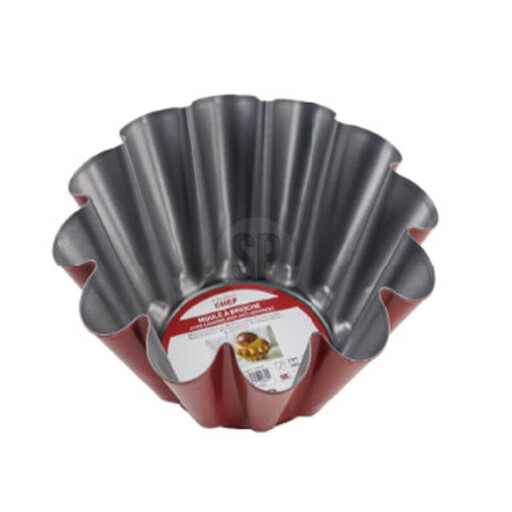
Why it suits this profile: Measuring 23 × 23 × 9 cm, this compact steel tin has a deep shape that’s ideal for cakes, bread and smaller oven-baked dishes.
The internal dimensions and 9 cm depth are clearly stated. Despite the non-stick surface, the care instructions recommend greasing the tin and washing it by hand.
Steel construction, a non-stick surface and a capacity suited to deeper bakes and oven dishes.
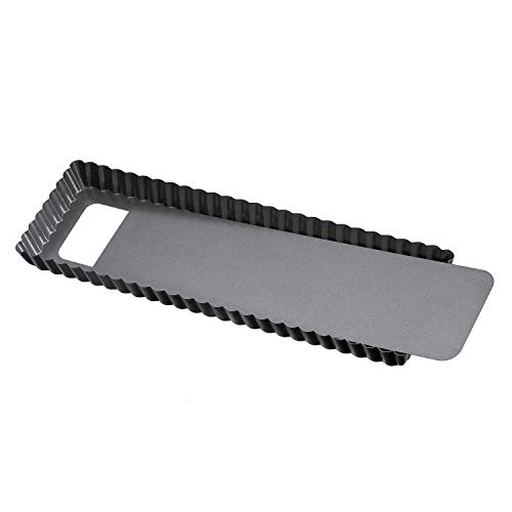
Why it suits this profile: Measuring 35 × 13 cm, this rectangular quiche tin has a removable base and is designed for tarts, quiches and cakes.
The removable base makes it easier to release delicate bakes. The maximum temperature is listed as 250 °C; metal utensils should be avoided.
Steel with a non-stick coating, an enamelled base, a 1-litre capacity and a stated 10-year guarantee on the coating.
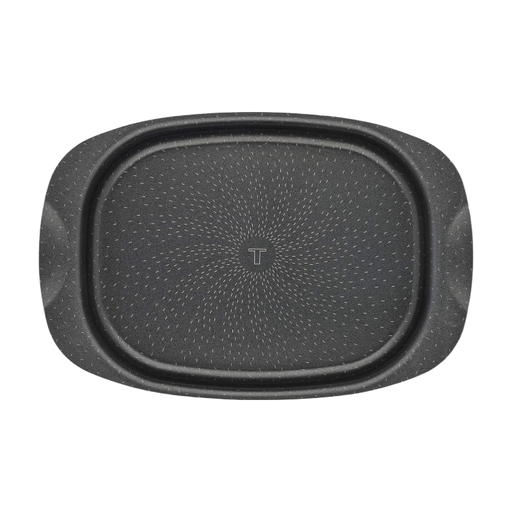
Why it suits this profile: With a capacity of 4.75 litres, this rectangular oven dish is ideal for families and anyone who enjoys making lasagne, pasta bakes or gratins.
The capacity is clearly stated. A matching lid makes storage and transport easier; hand washing is recommended to protect the coating.
36 × 24 cm, 4.75 litres, recycled aluminium and a lid for storage or transport.

Why it suits this profile: According to the product details, this 35 cm loaf tin is designed for loaves weighing up to 1,500 g, as well as sweet and savoury bakes.
The tin is expressly not intended for use on hobs or over naked flames. Hand washing and soft sponges help protect the coating.
We’ve put together a comprehensive, regularly updated list of products that meet these strict selection criteria and fully comply with the safety regulations in force in the EU.
For several people, around 3 to 5 litres is a practical capacity, particularly for lasagne, gratins and oven-baked dishes. For cakes or bread, depth is also important. Check that the external dimensions will fit in your oven.
It depends on what you’re making. Silicone often makes it easier to release soft cakes and is flexible. Steel is more rigid and is well suited to bread and heavy doughs. An integrated frame can make a silicone tin easier to handle.
There’s no set lifespan. It depends on the temperature, how often you use the tin and how well you care for it. Wooden or silicone utensils, hand washing and avoiding abrasive cleaners can reduce the risk of scratches. Manufacturer guarantees apply only under the conditions specified.