
Lieferung heute & morgen

Qualitätsgarantie

Willkommens-Angebote freischalten: KOSTENLOSE Lieferung | Bis zu 80 % RABATT | Kostenlose 30-Tage-JoyPlus-Testphase
App herunterladen
Efficient waste separation is a vital contribution to environmental protection, but in the kitchen, it can quickly lead to a cluttered collection of different bins and bags. A well-designed recycling bin for waste separation solves this problem by combining multiple containers into a single, hygienic, and visually appealing unit. This guide introduces various models and provides practical tips to help you choose the right system for your household.
The right waste separation system depends on the size of your household, the available space in your kitchen, and your local recycling regulations. Here are three key criteria to guide your decision.
The most fundamental decision is the number of inner containers.
The material affects not only the look but also the durability and hygiene of the bin. A stainless steel bin is robust, rust-resistant, and easy to clean. Models with an anti-fingerprint coating further reduce cleaning efforts.
Two features are crucial for convenience:
Capacity is measured in litres and should match the size of your household. For a one- to two-person household, systems with a total volume of 30 to 40 litres are often adequate. Families of four or more will benefit from models with 50 litres or more to avoid emptying them too frequently. Measure your intended space carefully to ensure the kitchen bin with a separation system fits and that the lids can open completely.
Here is a selection of models that are well-suited for modern households due to their functionality and design.
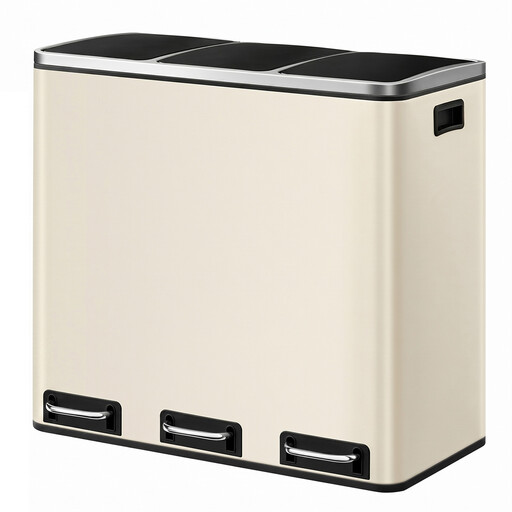
Why this model stands out: With three separate 18-litre compartments, this model offers a comprehensive solution for detailed waste separation. The total capacity of 54 litres is ideal for families who want to separate recyclables, general waste, and organic waste directly in the kitchen.
Advantages:
Who is it for? This model is an excellent choice for environmentally conscious households and families looking for an all-in-one solution for separating three different waste streams, all while preferring a modern design in a subtle beige.
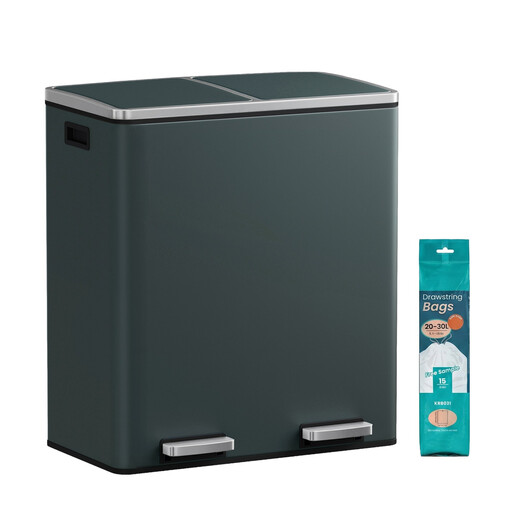
Why this model stands out: With a generous total volume of 60 litres, split into two 30-litre compartments, this recycling bin is aimed at larger households. Its sturdy stainless steel construction and clean design make it a durable addition to any kitchen.
Advantages:
Who is it for? Ideal for families or households of 3-5 people who need a simple, high-capacity solution for separating general waste and recyclables. The greenish-grey colour adds a subtle accent.
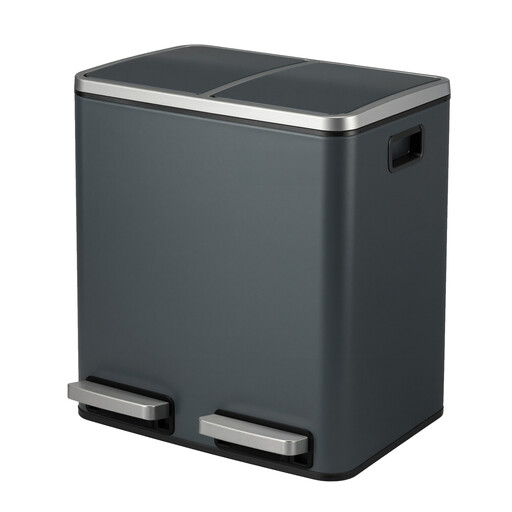
Why this model stands out: This compact model is specifically designed for kitchens with limited space. Despite its smaller footprint, it provides an efficient two-compartment separation option and impresses with thoughtful details like separate pedals and side handles.
Advantages:
Who is it for? A fitting solution for singles, couples, or small families living in an apartment or house with a compact kitchen who are looking for a functional dual-compartment separation system.
Freestanding bins aren't the optimal choice for every kitchen. If you prefer an invisible, fully integrated solution that utilises cabinet space, there are special built-in systems available.
For space-saving, integrated solutions, discover our selection of Under-Cabinet Recycling Bins.
1. How many compartments are needed for waste separation? The number of compartments required depends on local regulations. In most regions, separation of general waste, recyclables (e.g., plastic, metal), paper, and organic waste is standard. A kitchen bin with a separation system with two or three compartments covers the most common waste types found in the kitchen (general waste, recyclables, organic waste). Paper is often collected separately.
2. What are the advantages of a pedal bin? A pedal bin allows you to open the lid with your foot. This is particularly hygienic as it requires no hand contact with the bin. It also leaves both hands free to dispose of waste conveniently, which is especially practical while cooking.
3. How do you clean a stainless steel bin? To clean a stainless steel bin, a soft, damp cloth is usually sufficient. For tougher grime, a mild, pH-neutral cleaner or a special stainless steel cleaner can be used. To avoid scratches, do not use abrasive sponges or harsh cleaning agents. Afterwards, wipe with a dry cloth to prevent water spots.